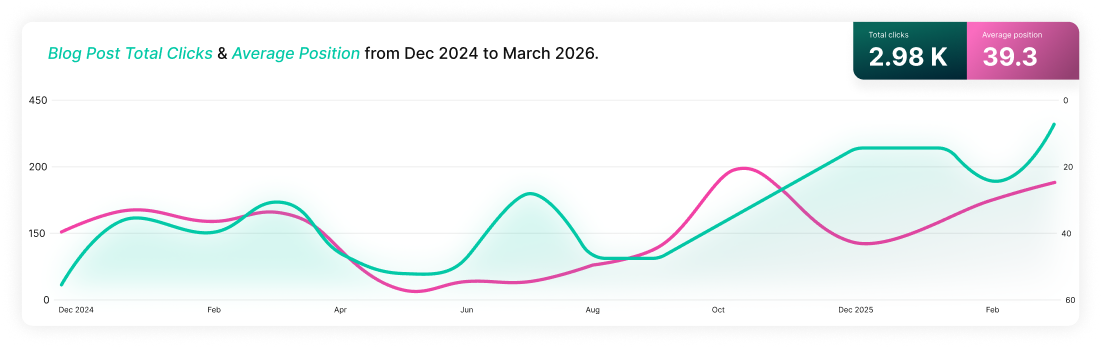
How Scopic Studios Built a Quality-Controlled Programmatic SEO Framework That Drove 200K+ Impressions and Earned Over 100 Backlinks
Scopic Studios turned structured statistics content into a repeatable SEO growth system – expanding organic visibility, strengthening topical authority, and earning links naturally without relying on volume-first messaging.
The Rundown
Scopic Studios launched a programmatic SEO initiative to test whether structured, statistics-led content could scale responsibly and deliver meaningful organic growth. The framework combined templated production with editorial review, technical QA, source discipline, and performance monitoring so that every page served a distinct purpose and maintained a consistent quality threshold.
Rather than publishing volume for its own sake, the goal was to build useful, citation-friendly resources that could expand keyword coverage, strengthen topical authority, and generate long-term search visibility. The result was a repeatable content system that proved capable of growing a large library of structured pages while also earning backlinks naturally and improving the site’s organic footprint over time. These are the results to date, and they continue to grow every day.
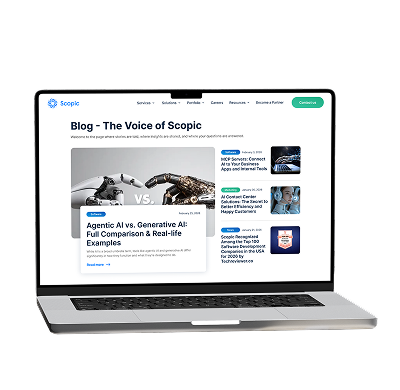
Key results over 6 months:

200K
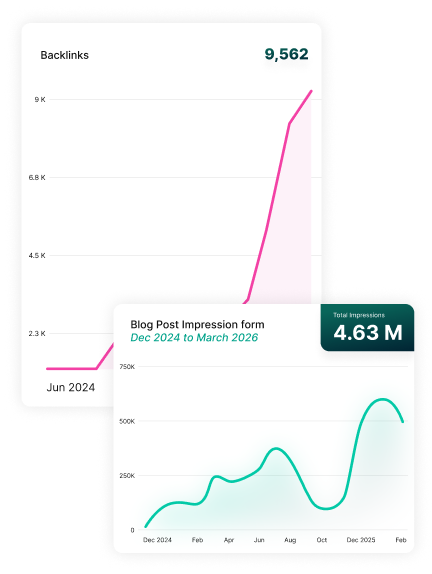
organic impressions in the core reporting windows

4.9x
improvement in production efficiency

109
earned backlinks to statistics-driven content
In the PM’s Words…

Deniz Aray
Marketing Lead at Scopic Studios
Programmatic SEO works when automation supports strategy — not when it replaces it. Our focus was to build a framework that could expand coverage while preserving editorial standards, source discipline, and technical quality. What made the initiative valuable wasn’t only broader visibility; it was the ability to create useful, link-worthy resources that continued to mature and attract attention over time.
The Challenge
Scaling Organic Visibility Without Sacrificing Quality
Many SEO teams want broader keyword coverage, but scaling content introduces real risk. Without clear structure, strong editorial controls, and technical oversight, large-scale publishing can lead to thin pages, duplicated intent, or content that feels built for search engines instead of users. As a newly launched website, Scopic Studios, needed a way to expand its organic footprint while protecting quality, usefulness, and brand credibility.
Broaden coverage across many search themes
Traditional workflows made it difficult to cover a large number of relevant topics quickly and consistently. The team needed a way to expand into multiple keyword clusters without turning the process into a bottleneck.
Maintain quality and governance at scale
Every page needed a clear purpose, factual sourcing, and meaningful value for the reader. That required human review, de-duplication checks, and standards that prevented templated content from becoming repetitive or thin.
Prove that the model could create long-term SEO value
It was not enough to publish pages. The initiative had to show that structured content could get indexed, rank for meaningful queries, attract backlinks naturally, and improve performance as the content aged.
The Solution
Building a Programmatic SEO System With Strategy, Governance, and QA
Here’s how we made it happen:
Strategic cluster planning
The initiative started with careful topic and keyword selection. Instead of generating pages around arbitrary variations, the team focused on statistics, trends, benchmarks, and marketing-related informational topics that were both useful to readers and naturally suited to structured page formats.
- Mapped target themes into topical clusters to build broader relevance and authority
- Assigned a distinct search intent and angle to each page to reduce duplication risk
- Recently started using AI tools to enhance visual quality, making pages more attractive and scroll-stopping
- Prioritized citation-friendly formats such as benchmarks, trends, and statistics roundups
Template-driven production with editorial review
Templates helped standardize structure, but they were only one part of the process. Each page still required editorial checks to ensure clarity, usefulness, and factual consistency. This made the framework scalable without letting it drift into generic or low-value content.
- Applied a consistent page framework to keep content organized and easy to scan
- Used source discipline to maintain trustworthy statistics and a consistent citation approach
- Reviewed pages for clarity, accuracy, usefulness, and overlap before publishing
- Removed or refined weak content patterns that risked thin or repetitive pages
Technical QA, indexation monitoring, and iteration
Publishing was only the beginning. The team tracked how pages were indexed, how they gained visibility, and which topics showed the strongest traction. That created a feedback loop for internal linking, refresh priorities, and future expansion decisions.
- Monitored indexation and visibility in Google Search Console to catch issues early
- Tracked ranking coverage and topic performance across a representative URL set
- Used internal linking and content refreshes to strengthen promising pages over time
- Treated older content performance as a signal for where the framework was compounding
Services Involved
SEO
Copywriting
Analytics Setup & Reporting
Website Maintenance
Generative AI
Drum Roll Please…
The Results
The initiative showed that programmatic SEO can support meaningful organic growth when it is paired with governance, editorial review, and technical oversight. Instead of treating scale as the headline, Scopic Studios focused on building a framework that could expand visibility, create link-worthy resources, and strengthen long-term topical authority.
Older content consistently outperformed newly published pages, which reinforced the expected SEO maturation curve. Statistics-driven pages also proved capable of attracting natural backlinks, supporting the idea that useful, citation-friendly informational content can create value beyond rankings alone. Operationally, the structured publishing framework also improved production efficiency by 4.9x compared with traditional workflows, allowing the team to expand cluster coverage while maintaining editorial review, QA, and content governance. Together, these results showed that the framework was not just operationally repeatable – it was strategically credible.