Listen to article
Common Real Estate SEO Terminology
| Term | Definition |
| NAP (Name, Address, Phone) | Your business name, address, and phone number. |
| Google Business Profile (GBP) | Your free Google business listing for Search, Maps, and the Local Pack. |
| Local Pack (Map Pack) | The map and local business listings shown for location-based Google searches. |
| Schema Markup (Structured Data) | Code that helps search engines better understand your website’s content. |
| MLS Syndication | The distribution of MLS listings to real estate websites and listing platforms. |
| 301 Redirect | A permanent redirect that sends users and search engines from one URL to another. |
| Backlink | A link from another website pointing to your website. |
| Local Citation | An online mention of your business’ name, address, and phone number. |
| E-E-A-T | Google’s framework for evaluating Experience, Expertise, Authoritativeness, and Trustworthiness. |
| AI Overview / Answer Engine Optimization (AEO) | Optimizing content to be understood and cited by AI-powered search experiences. |
| Keyword Difficulty (KD) | A metric that estimates how difficult it is to rank for a keyword. |
| Alt Text | A description of an image that improves accessibility and helps search engines understand it. |
| Internal Linking / Site Silo | Linking related pages to improve navigation and strengthen your site’s structure. |
| Organic Search | Unpaid traffic earned through search engine optimization. |
What Is SEO in Real Estate?
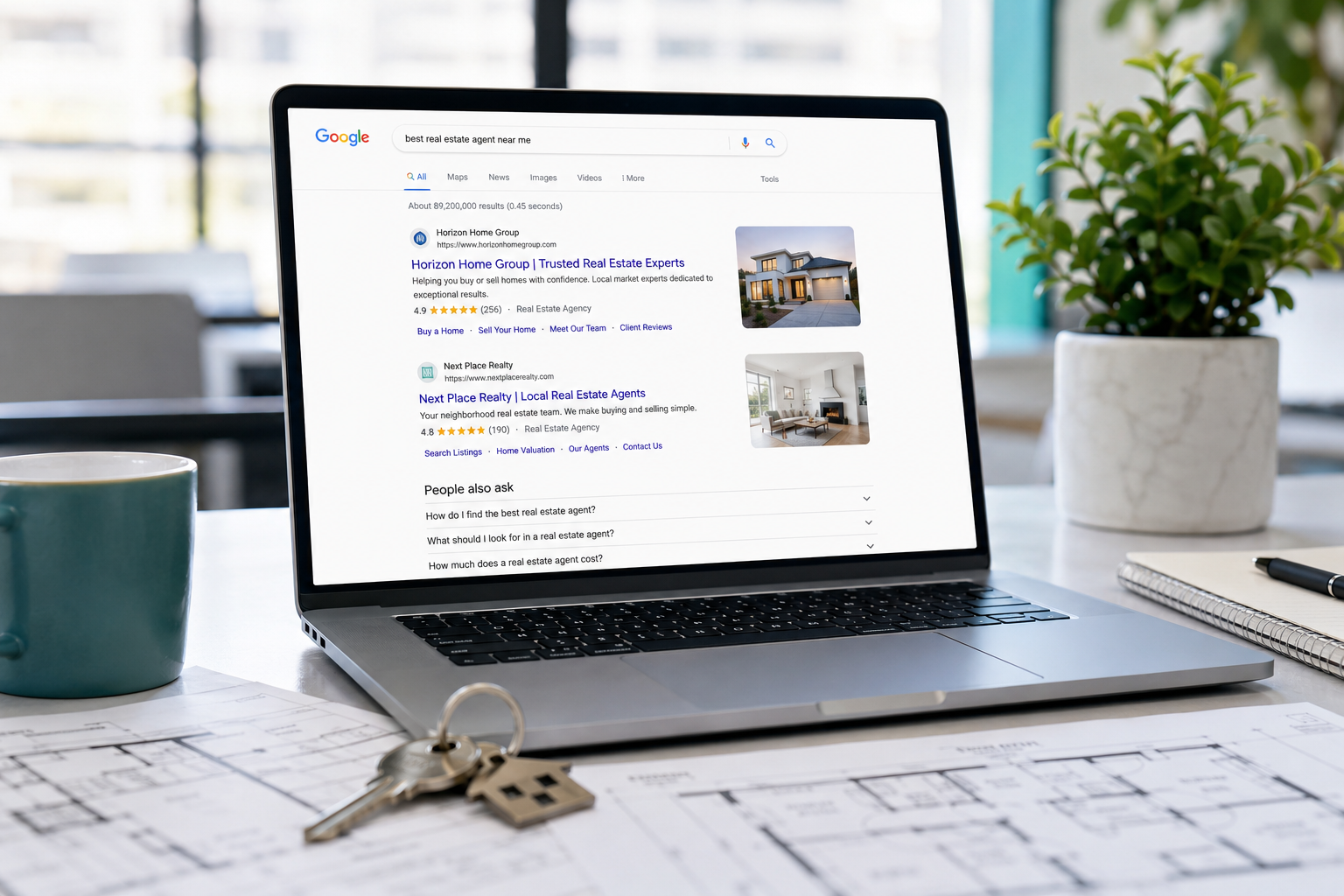
SEO in real estate is the process of optimizing your real estate website and content to gain greater online visibility and attract more buyers. It helps your business appear in search results when potential buyers and sellers are actively looking for real estate services, making it easier to connect with qualified leads.
The opportunity is huge. A recent report shows that 52% of buyers found their home online and 70% used mobile or tablet devices during their search.
So how can real estate SEO be applied to your business?
Don’t worry, we’re not going to compare vendors; instead, our guide provides practical, implementable SEO strategies for agents and brokers managing their own websites.
Why Real Estate SEO Matters for Agents and Brokers
Unlike many other industries, real estate SEO is almost entirely local.
Most people aren’t just searching for “homes for sale.” They’re searching for homes in a specific city, neighborhood, school district, or even a particular community. That means SEO for real estate agents needs to focus on showing up for highly localized searches rather than broad, national keywords.
There’s another challenge, too. Real estate websites are constantly changing as new listings are added, properties are sold, and market conditions shift. Keeping your website fresh, accurate, and optimized helps search engines understand that your content is current and relevant.
Whether you’re an independent agent or part of a larger brokerage, investing in real estate agent SEO can help you attract more qualified buyers and sellers, build trust in your local market, and generate leads long after you’ve published content.
Local SEO for Real Estate: The Foundation
Local SEO for real estate is where most opportunities exist. Rather than trying to rank everywhere, your focus should be on becoming the go-to real estate expert in the communities you serve.
The following strategies help you strengthen your local presence and connect with more buyers and sellers in your market.
Google Business Profile Optimization
Your Google Business Profile is one of the most important tools for improving your local visibility. It helps your business appear in Google Search and Maps when potential buyers and sellers are looking for real estate services in your area.
Start by claiming and verifying your profile, then complete every section with accurate information. Choose the category that best describes your business, define the service areas you cover, and keep your business hours, phone number, and website up to date.
GBP also lets you publish Posts to share updates, announcements, events, and offers directly on your profile. According to Google, these posts help customers find up-to-date information about your business and can influence their decision to visit.
If you’re an individual agent working under a brokerage, don’t assume the brokerage’s profile is enough. According to BrightLocal, eligible agents can often maintain their own Google Business Profile, giving both the brokerage and the agent an opportunity to appear in local search results.
Local Citations and Real Estate Directory Listings
Local citations are simply mentions of your business’ name, address, and phone number across the web. Keeping this information consistent on your website, GBP, and online directories helps search engines verify your business and supports your local rankings.
In addition to general business directories, make sure your business is listed on real estate-specific platforms like Zillow, Realtor.com, and Redfin. These are trusted resources for buyers and sellers and can help increase your visibility.
If you serve multiple offices or markets, keeping each location’s information accurate and consistent becomes even more important. This is a key part of local SEO for multiple locations, where each office needs its own online presence.
Neighborhood, City, and Community Pages
A single “Service Areas” page can tell visitors where you work, but it usually isn’t enough to rank well for local searches. Instead, create dedicated pages for each city, neighborhood, or community you serve. This gives search engines and potential clients more relevant information about each location.
To make these pages valuable, go beyond simply listing the city name. Include local market insights, nearby schools and amenities, neighborhood highlights, and other information that demonstrates your knowledge of the area.
These pages also create opportunities to strengthen your website’s internal linking, making it easier for both users and search engines to navigate your content while reinforcing your authority across the markets you serve.
Review Generation and Management
Reviews are one of the strongest signals of trust for both potential clients and search engines. Rather than waiting for reviews to come in on their own, make requesting them part of your process.
After each successful closing, ask every client to leave an honest review on your Google Business Profile or other relevant platforms.
Just as importantly, respond to every review, both positive and negative. Thank clients for their feedback, address concerns professionally, and show potential customers that you’re engaged and responsive. Avoid “review gating,” or only asking satisfied clients for reviews, as this goes against Google’s guidelines.
If managing reviews and your overall local presence feels overwhelming, many top local SEO agencies offer reputation management as part of a broader local SEO strategy.
Local SEO vs. National SEO Strategy
When it comes to local SEO vs national SEO for real estate agents, the answer is almost always local first.
Most individual agents and brokerages simply can’t compete with national real estate platforms like Zillow or Realtor.com for broad, high-volume keywords. Fortunately, they don’t need to.
Instead, focus on SEO strategies for local real estate markets by targeting the cities, neighborhoods, and communities you serve. These searches may have lower search volume, but they attract people who are actively looking to buy or sell in your area, making them far more valuable.
As your local authority grows, you’ll be in a much stronger position to earn qualified traffic and generate consistent leads.
Real Estate Listing Pages: On-Page and Local SEO Considerations
Your listing pages are often some of the most visited pages on your website, making them an important part of your real estate SEO strategy. But optimizing them goes beyond adding property details and photos.
Small improvements can help search engines better understand your listings, improve the user experience, and keep your website performing well even after a property sells.
The following best practices will help you get more value from every listing page while supporting your overall SEO efforts.
Structured Data for Listings
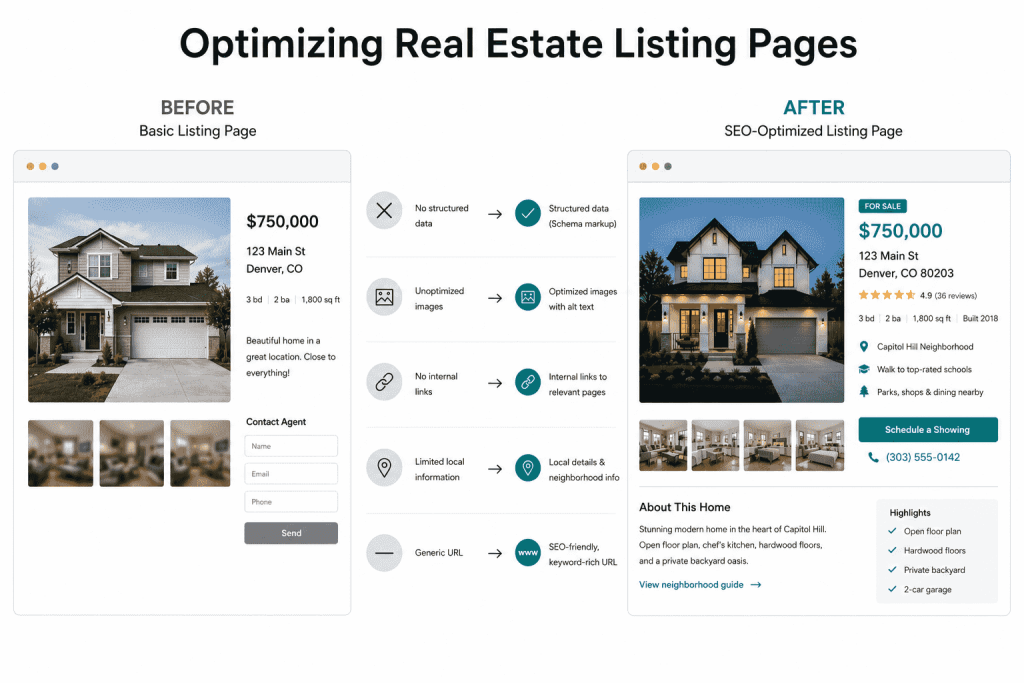
Adding structured data to your listing pages helps search engines better understand important property details without relying solely on the page’s text.
Using RealEstateListing or Product schema allows you to clearly identify information such as the property’s price, location, availability, and key features, making it easier for search engines and AI-powered search experiences to interpret your content.
While schema markup doesn’t guarantee higher rankings, it gives search engines more context about your listings and can improve how your content appears in search results. Google’s structured data documentation provides additional guidance on implementing structured data correctly.
As you optimize your listing pages, don’t overlook other on-page SEO best practices. The right on-page SEO tools can help you identify opportunities to improve technical SEO, metadata, and overall page performance.
Image Optimization for Listings
Property photos play a major role in real estate SEO. Large image files can slow down your website, so compress your images before uploading them to improve page speed without sacrificing quality.
It’s also important to add descriptive alt text to every listing photo. Instead of using generic text like “living room,” describe what the image shows, such as “Modern living room with hardwood floors in downtown Austin home.” This helps search engines better understand your images while improving accessibility.
We’ll discuss photos, videos, and virtual tours in more detail below, but optimizing your listing images is an important first step toward improving both your search visibility and the overall experience for potential buyers.
Handling Sold and Off-Market Listing URLs
When a property sells or is taken off the market, don’t simply delete the listing page. Even if the property is no longer available, that page may still have backlinks, search visibility, and SEO value.
Instead, set up a 301 redirect to a relevant page, such as the property’s neighborhood page, a similar active listing, or a “Recently Sold” page. This helps preserve the page’s link equity while providing visitors with a better experience than landing on a dead page.
Leaving old listing URLs to return a 404 error throws away the authority they’ve built over time. Redirecting them instead helps maintain your website’s SEO performance and supports a stronger internal linking structure as your inventory changes.
Using Visual Content as an SEO Asset
Visual content plays a much bigger role than simply showcasing a property. It creates a better experience for potential buyers, keeps them engaged with your website, and can support your overall real estate SEO efforts.
When it comes to SEO for real estate, the goal isn’t just to add more visuals. It’s to make them work for both your visitors and your search performance.
Here’s how to get the most value from your photos, videos, and virtual tours.
Photo Optimization for Listings and Site Pages
High-quality listing photos are essential for attracting buyers. In fact, according to the National Association of REALTORS®, 81% of buyers rated listing photos as the most useful feature during their online home search.
As discussed in the previous section, optimize every image before uploading it by compressing file sizes, using descriptive file names, and adding specific alt text that accurately describes the photo.
Apply these best practices not only to listing pages but also to neighborhood and community pages, where strong visuals can help showcase the areas you serve while supporting your overall SEO.
Video and Virtual Tours as Engagement Signals
Buying a home is a major decision, and buyers want to picture themselves living there before they ever schedule a showing. Video walkthroughs and 3D virtual tours help bring a property to life, giving buyers a better sense of the layout, flow, and overall feel of the home in a way that photos alone can’t.
These experiences also encourage visitors to spend more time exploring your website, creating a more engaging experience for both users and search engines.
Internal Linking Optimization for Real Estate Websites
A strong internal linking strategy is an important part of SEO for real estate websites because it helps both visitors and search engines navigate your content more effectively.
Instead of treating each page as a standalone resource, connect your listings, neighborhood pages, blog articles, and agent profiles in a way that reflects how people actually search for real estate.
For example, a neighborhood page can link to active listings in that area, nearby communities, relevant blog posts, and the agents who specialize there. As mentioned, when a property is sold, redirect the listing to a relevant page rather than letting it return a 404 error. This preserves valuable link equity while strengthening your site’s overall structure.
It’s also important to use breadcrumbs where appropriate and regularly check for orphan pages (pages that have no internal links pointing to them) as they’re much harder for users and search engines to discover.
As your website grows, maintaining a clear internal linking strategy becomes even more important. These best practices are especially valuable for internal linking for large websites. The best internal linking automation tools can also help streamline the process by identifying opportunities and reducing manual work.
Content Strategy for Real Estate Websites
Listings are important, but they shouldn’t be the only content on your website. A strong real estate SEO strategy includes content that answers common questions, showcases your local expertise, and provides value throughout the home buying and selling journey.
For SEO for real estate websites, the most effective content goes beyond keywords. It reflects firsthand knowledge of the communities you serve while giving search engines and potential clients more reasons to visit your website.
Market Update and Local Trend Posts
Real estate markets are constantly changing, and your content should reflect that. Regularly publishing updates on local home prices, inventory levels, days on market, and other market trends gives both potential clients and search engines a reason to keep coming back to your website.
Whenever possible, base your insights on trusted local sources rather than broad national housing trends. Local data is more relevant to your audience and demonstrates that you understand the market they care about most.
Buyer and Seller Guides
Many people begin their home search by looking for answers, not listings. Creating buyer and seller guides allows you to reach potential clients earlier in their journey by answering common questions before they’re ready to make a move.
Focus on topics specific to your market, such as what to expect during the buying or selling process, financing options, closing timelines, and local requirements. These guides also strengthen the rest of your website by giving your neighborhood pages and listings valuable resources to link to.
Neighborhood Guides Beyond the Location Pages
Neighborhood pages and neighborhood guides serve different purposes. While a neighborhood page is designed to help you rank for local searches and convert visitors, a neighborhood guide gives you the opportunity to show what it’s actually like to live there.
Go beyond basic facts by sharing insights only a local expert can provide. Highlight the community’s character, popular restaurants and parks, local events, schools, commute options, or anything else that helps buyers understand what daily life is really like.
FAQ Content
FAQ pages are another valuable way to attract potential buyers and sellers before they’re ready to contact an agent. Instead of answering general real estate questions, focus on the questions people ask about your specific market, such as local closing costs, property taxes, school districts, or the home-buying process in your area.
Providing clear, concise answers helps visitors quickly find the information they’re looking for while creating additional opportunities to appear in search results.
As we’ll discuss below, structuring your answers to directly address common questions can also improve their chances of being featured in AI-powered search experiences and other direct-answer formats.
Earning Local Backlinks and Citations
Building authority isn’t just about creating great content. It’s also about earning recognition from other trusted local websites.
Mentions from local news outlets, community organizations, industry publications, and relevant real estate directories can strengthen both your credibility and your search visibility.
Continue building consistent local citations by keeping your business information accurate across directories and look for opportunities to contribute valuable local content that others naturally want to reference.
High-quality content is often the first step, which is why many businesses invest in professional SEO copywriting services to create resources that attract links over time.
Optimizing for AI Overviews and Answer Engines
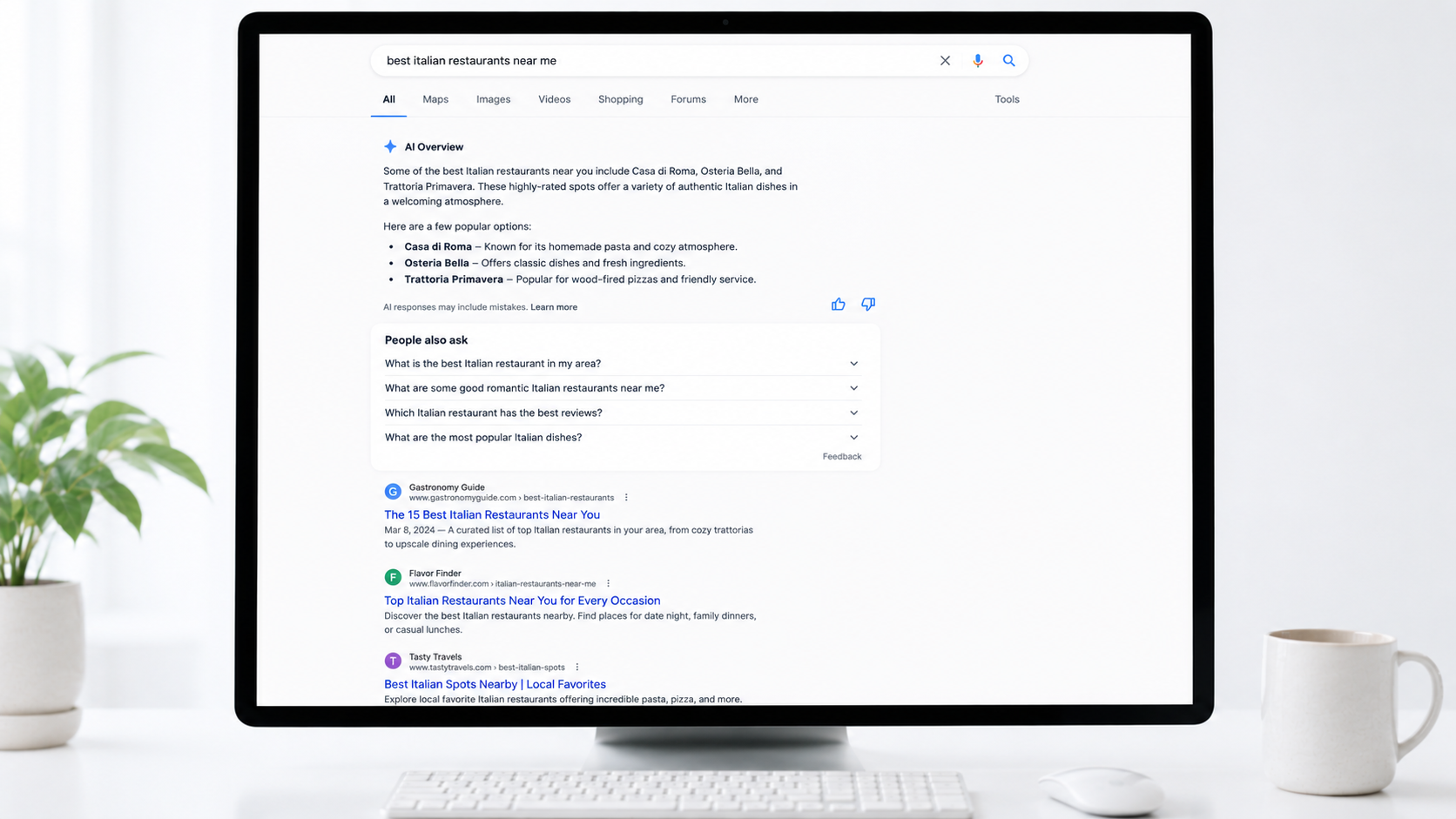
Search is changing. Today, people don’t just find information through traditional search results; they also get answers from AI Overviews and AI-powered search engines.
That means your content needs to do more than rank well. It needs to be clear, trustworthy, and easy for AI systems to understand and cite.
The good news is that many of the same practices that improve traditional SEO also support AI visibility. By structuring your content with users in mind, you can increase your chances of appearing in both search results and AI-generated answers.
Writing for Direct-Answer Citability
AI Overviews and other answer engines often favor content that answers a question clearly before diving into additional details. A good approach is to begin each section with a concise, self-contained answer to the heading, then expand on it with supporting information, examples, and context.
In fact, this guide follows that same approach. The opening definition answering “What is SEO in real estate?” provides a direct answer first, then builds on it throughout the rest of the article.
This type of answer-first structure is one of several AI SEO tactics that boost organic visibility, helping your content become easier for both readers and AI systems to understand.
FAQ Schema and Structured Q&A Content
A well-written FAQ section can help both users and search engines quickly find the answers they’re looking for.
Instead of using marketing-style headings, write questions the way people actually search, such as “How long does SEO take for real estate agents?” or “Is local SEO worth it for real estate?” Then provide clear, direct answers before adding any additional context.
When appropriate, you can also mark up your FAQ section with FAQPage schema to help search engines better understand your content and the relationship between each question and answer.
If you’re using AI tools for local SEO to identify common search questions or analyze keyword opportunities, use those insights to shape your FAQ content around the language your audience actually uses.
Common Real Estate SEO Mistakes to Avoid
Even a strong SEO strategy can be undermined by a few common mistakes. These real estate SEO tips highlight the issues to avoid so your website has the best chance of improving its search visibility.
Publishing Unedited MLS Listing Descriptions
Publishing the same MLS listing description that appears on dozens of other websites gives search engines very little reason to rank your page over anyone else’s. Instead, rewrite each listing with unique details, highlight the property’s most valuable features, and include local context that helps buyers better understand the home and its location.
Letting Sold Listings 404 Instead of Redirecting
When a property sells or is taken off the market, don’t simply delete the page. Those listings often have existing rankings, backlinks, and authority that can still benefit your website.
Instead, redirect the URL to a relevant neighborhood page, similar active listing, or recently sold properties page.
Incomplete or Outdated Google Business Profile
An incomplete or outdated GBP can make it much harder to appear in local search results, even if your website is well optimized. Incorrect business hours, missing contact information, the wrong category, or an unclaimed profile can all reduce your visibility in Google’s local map pack.
Keeping your Google Business Profile accurate and up to date is one of the easiest and most impactful improvements you can make for local real estate SEO.
Inconsistent NAP Across Directories and Listings
Your business name, address, and phone number should match everywhere they appear online, including your website, GBP, and directory listings. Even small inconsistencies can weaken your local SEO and make it harder for search engines to trust your business information.
It should come as no surprise, then, that keeping your business information consistent across every platform helps strengthen your local search visibility.
Thin or Disconnected Neighborhood Pages
Neighborhood pages should do more than exist. They should connect to relevant listings, nearby communities, and related blog content.
A strong internal linking structure helps search engines understand your local expertise while making it easier for visitors to explore your website.
Generic Content With No Local Expertise
Generic content doesn’t help you stand out in a competitive real estate market. Share local insights, neighborhood knowledge, and firsthand experience to create content that’s more valuable to readers and more likely to earn trust from search engines.
The more authentic and locally relevant your content is, the more likely it is to build credibility and attract qualified buyers and sellers.
Buying Low-Quality Backlinks Instead of Earning Local Ones
Buying backlinks from unrelated or low-quality websites is a common SEO mistake.
Instead, focus on earning mentions from local news outlets, community organizations, industry publications, and other reputable websites that are relevant to your business.
Chasing Broad National Keywords Instead of Local Ones
Trying to rank for broad national keywords puts you in direct competition with large real estate platforms like Zillow and Realtor.com. Focus on location-specific keywords that reflect the neighborhoods, cities, and communities where you actually do business.
Neglecting Mobile Speed and Basic Technical Health
Even great content won’t perform well if your website has technical issues. Slow-loading pages, oversized images, broken links, incorrect redirects, and accidental noindex tags can all limit your visibility, especially since many homebuyers begin their search on mobile devices.
Following a regular technical SEO checklist can help you identify and fix these issues before they affect your rankings.
When to Bring in Outside SEO Help
Managing SEO in-house can work well, especially if you have the time to consistently create content, optimize pages, and monitor performance. However, if you’re managing multiple office locations, dealing with technical SEO issues, or simply don’t have the bandwidth to execute everything consistently, it may be time to work with a real estate SEO agency.
Choosing the best real estate SEO company starts with understanding the qualities, experience, and services that align with your business goals.
Whether you’re ready to invest in professional SEO services or simply have questions about your strategy, contact us to learn how we can help.
FAQs About Real Estate SEO
What are the benefits of implementing real estate SEO?
Real estate SEO helps your website rank higher in search results, attract qualified local traffic, and generate more leads without relying solely on paid advertising. It also builds long-term visibility and credibility in your target market.
What is the difference between local SEO and national SEO for real estate agents?
Local SEO focuses on helping agents rank for searches in specific cities, neighborhoods, or service areas, while national SEO targets broad, highly competitive keywords. For most real estate agents, a local SEO strategy delivers better results.
What is the ROI of real estate SEO?
The ROI of real estate SEO depends on your market, competition, and strategy, but it can provide long-term value by generating consistent organic traffic and qualified leads. Unlike paid ads, SEO continues to deliver benefits long after content is published.
What are the most effective SEO strategies for local real estate markets?
The most effective strategies include optimizing your Google Business Profile, creating location-specific content, earning local backlinks, building internal links, and maintaining accurate business information across the web.
Does a real estate company need a full-time SEO person?
Not necessarily. Many real estate businesses manage SEO in-house, while others work with an agency or consultant depending on their goals, team size, and available resources.
How long does it take to see results from real estate SEO?
Most businesses begin seeing meaningful improvements within three to six months, although competitive markets may take longer. Consistent optimization and content creation typically produce the best long-term results.
Is SEO for commercial real estate different from residential real estate SEO?
Yes. While both follow the same SEO fundamentals, commercial real estate SEO often targets different audiences, keywords, and search intent than residential real estate SEO.
About Real Estate SEO Guide
This guide was authored by Baily Ramsey, and reviewed by Sonja Somborac, SEO Specialist at Scopic Studios.
Scopic Studios delivers exceptional and engaging content rooted in our expertise across marketing and creative services. Our team of talented writers and digital experts excel in transforming intricate concepts into captivating narratives tailored for diverse industries. We’re passionate about crafting content that not only resonates but also drives value across all digital platforms.