
SEO has changed and AI is no longer a nice-to-have but an engine powering strategies that rank in 2026. From keyword research to content planning and rank tracking, AI SEO tools are compressing workflows that used to take days into minutes.
But with dozens of platforms claiming to be the best AI SEO tool on the market, how do you know which ones actually deliver?
We tested the most talked-about tools across real SEO workflows. Here’s what we found.
How We Chose and Tested These AI SEO Tools
We don’t rely on marketing pages or feature checklists. To build this guide, our internal SEO team spent six weeks running hands-on tests across 14 client domains and 3 in-house staging environments, mapping to real-world workflows we manage daily.
Rather than evaluating features in a vacuum, we fed each tool an identical sandbox dataset: a seed list of 2,500 unorganized keywords, 5 direct competitor domains in a high-volatility niche, and a 10-article content calendar blueprint. We tracked the time saved, data variance compared to raw Google Search Console logs, and the actual utility of the AI outputs over a continuous 30-day monitoring window.
Each tool was then scored against six core criteria:
-
AI depth: Does it do meaningful AI work, or just rebrand existing filters?
-
Ease of use: Can a non-developer get value in the first session?
-
Data reliability: Are keyword volumes, difficulty scores, and competitor insights trustworthy? Finding reliable data can be especially challenging when vetting the
best seo tools for small businesses -
Free access: Is there a trial or free plan to test before committing?
-
Pricing fairness: Is the value proportional to cost, especially for smaller teams?
-
Workflow fit: Does it reduce manual work, or create new steps?
Because we wanted to find tools that genuinely move the needle, AI depth and workflow fit were weighted most heavily in our final rankings. Those two factors determine whether a tool actually changes how your team works or just adds another monthly subscription to your balance sheet.
8 Best AI SEO Tools at a Glance in 2026
| Tool | Best For | Free Access | Starting Price |
| SE Ranking | All-in-one SEO for growing teams | Free trial (14 days) | $103/mo |
| SEMrush | Enterprise competitor research | Free plan (limited) | $139/mo |
| ClusterView | AI keyword clustering & strategy | Free trial available | $15/mo |
| Surfer SEO | AI content optimization & writing | Free trial available | $119/mo |
| DataforSEO | Developers & data-heavy workflows | Pay-as-you-go | From $50/mo |
| Ahrefs | Deep keyword & backlink intelligence | No free plan | $129/mo |
| Keyword Insights | Intent-based clustering at scale | Free credits on sign-up | From $58/mo |
| ChatGPT | Zero-budget starting point | Free plan available | Free / $20/mo |
1. SE Ranking
Best for: Growing SEO teams that need a full-stack platform without enterprise pricing
How It Works
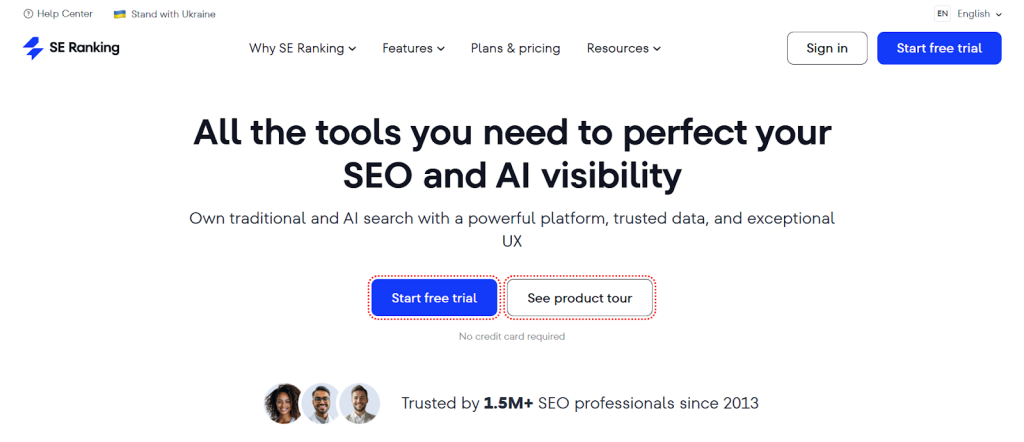
SE Ranking covers keyword research, site audits, rank tracking, backlink monitoring, and competitor analysis in one platform. Its AI layer adds content suggestions and on-page optimization guidance that goes beyond keyword density. You input a domain or keyword set and get a structured overview of where you stand and what to prioritize.
The standout is balance: enterprise-grade data depth at a price that doesn’t need a VP sign-off. The UI is clean, the learning curve is gentle, and it scales well as teams grow, making it an ideal baseline tool for executing a structured SEO framework without overcomplicating the workflow.
Pros:
- Genuine all-in-one coverage: audits, rank tracking, backlinks, and competitor research
- Audit recommendations are specific enough to act on immediately
- Gentle learning curve for non-specialists
- Strong value at its price point
Cons:
- AI content features are lighter than dedicated writing tools like Surfer
- Data depth trails SEMrush and Ahrefs in some competitive markets
What Our Team Said
“SE Ranking gave us a reliable all-in-one dashboard. The audit recommendations were specific enough to act on immediately, and rank tracking refreshed consistently. For a mid-sized team juggling multiple domains, it covered about 80% of what we needed without jumping between tools.” – SEO Specialist
Pricing
- Essential: $103/month
- Pro and Business, and flexible tiers for larger teams
- 14-day free trial, no credit card required
2. SEMrush

Best for: Competitive intelligence, enterprise SEO campaigns, and teams that need breadth of market data
How It Works
SEMrush aggregates data across organic search, paid ads, backlinks, and content performance into one platform. AI features include the SEO Writing Assistant for real-time on-page optimization, a Keyword Magic Tool, and AI-driven topic research for content planning.
Where SEMrush earns its reputation is competitor analysis. You can break down any competitor’s organic keyword strategy, traffic trends, and top-performing pages in minutes. For agencies running multi-client campaigns, or in-house teams in competitive industries, the data breadth is hard to match.
Pros:
- Unmatched breadth of competitor and market data
- AI Writing Assistant speeds up editorial workflows
- Mature, well-documented platform with constant feature updates
Cons:
- Expensive, especially for small teams
- Steep learning curve to use the full platform well
- Free plan is very limited; no full-feature trial
What Our Team Said
“SEMrush is what we reach for when we need to understand a competitor’s full SEO footprint. The data is extensive, the domain comparison features are excellent, and the AI Writing Assistant made our editorial team faster. The cost is the main barrier but if competitive SEO is core to your strategy, the ROI is there.” — Content Strategist
Pricing
- Pro: $139/month
- Guru and Business plans for larger organizations
- Limited free plan available; no full-feature trial
3. ClusterView
Best for:SEO teams and consultants who need to turn keyword research into a structured content strategy, fast, without getting buried in manual spreadsheets
How It Works
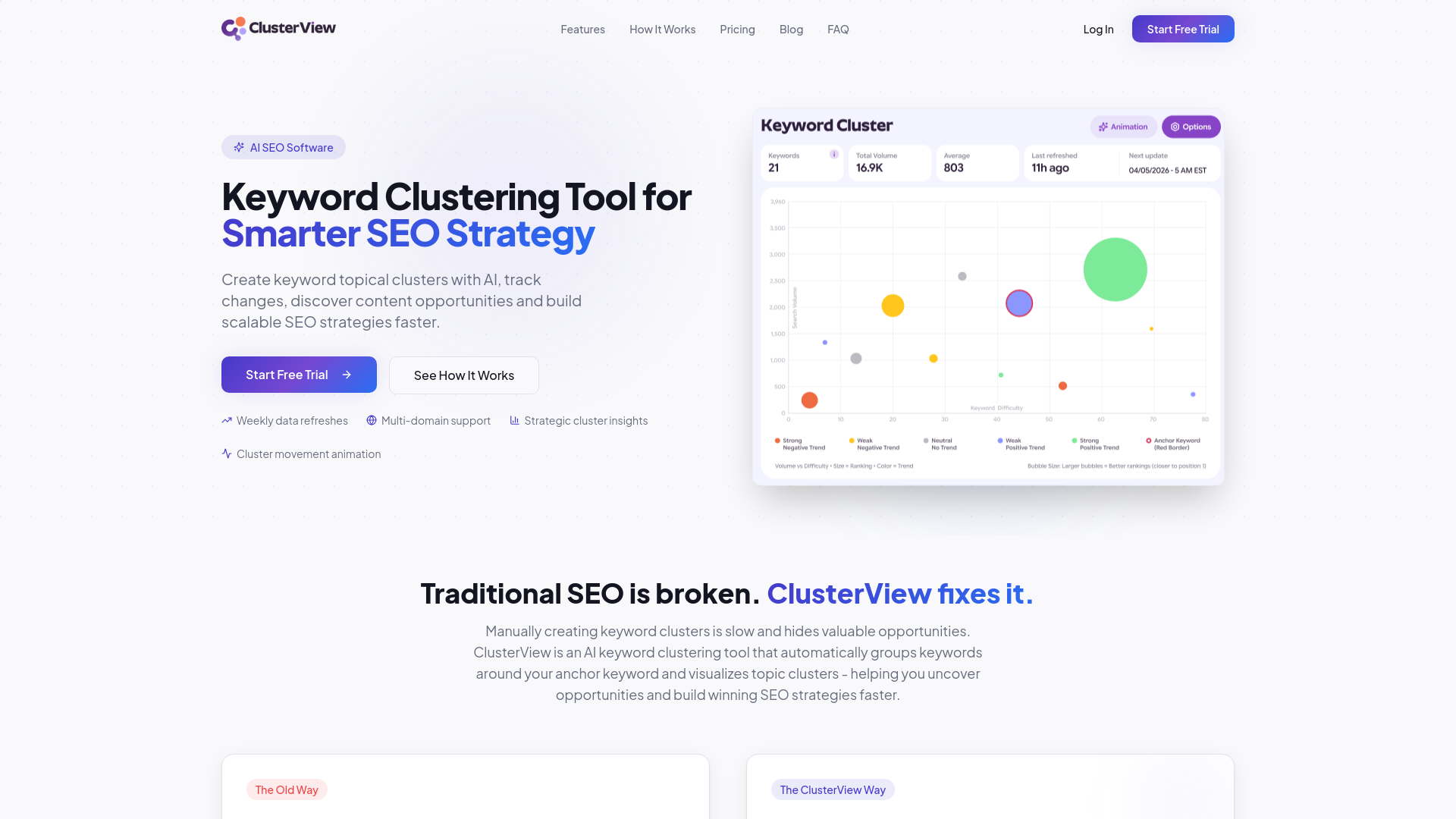
ClusterView is built around one focused use case: AI keyword clustering. You enter an anchor keyword, and its AI engine groups related terms into structured topical clusters based on semantic relationships and search intent and not just surface-level word matching.
Each cluster surfaces search volume, keyword difficulty, current ranking position, and weekly trend data side by side. The AI Topic Generator then converts those clusters into specific content ideas and blog angles, so you move from keyword research to editorial calendar without a manual translation step.
Rank tracking refreshes weekly and automatically. Multi-domain support and team collaboration are built in, making it practical for agencies and in-house teams alike.
Pros:
- Purpose-built AI clustering, not a bolt-on feature
- AI Topic Generator turns clusters directly into content ideas
- Automated weekly rank tracking, no manual exports
- Affordable entry point with a free trial on every plan
Cons:
- Focused tool, so no site audit or backlink features
What Our Team Said
“ClusterView was very useful for me as an SEO PM to quickly visualize all my important clusters and understand the performance of our strategies, find relevant keyword gaps, and access reliable data from multiple sources in one intuitive dashboard. The AI-driven technology saves me so much time in keyword research, clustering, and monitoring.” — SEO PM
Pricing
- Basic: $15/month
- Free trial available – All plans include a free trial
- Paid tiers scale with team size; pricing is transparent and usage-based
4. Surfer SEO
Best for: Content writers and strategists who want AI-guided optimization at the article level
How It Works
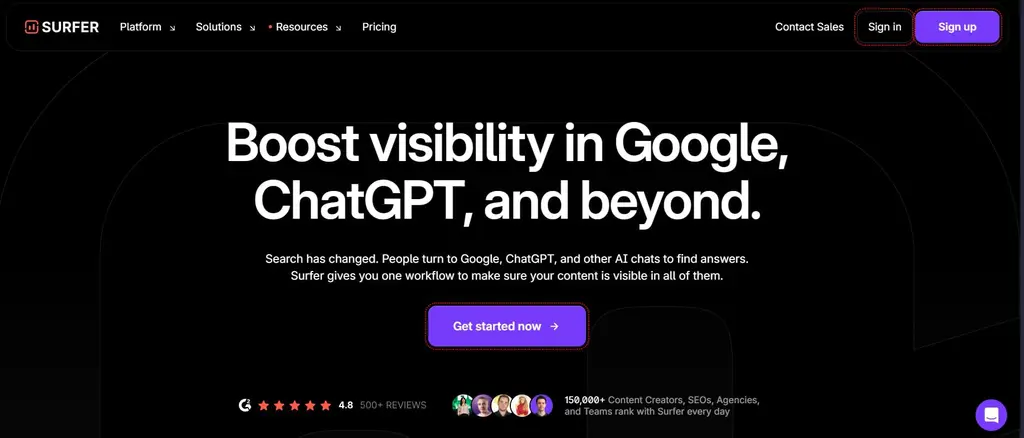
Surfer SEO is purpose-built for on-page content optimization. Input a target keyword and it analyzes top-ranking pages to surface the factors correlated with high rankings: word count, heading structure, semantic terms, and more. The Content Editor gives writers a real-time optimization score as they draft.
The AI Outline Generator and AI writing features have become standard in many content teams’ workflows, particularly for scaling blog output. Surfer includes keyword research and a SERP analyzer, but content optimization is its core strength.
Pros:
- Real-time content score removes guesswork from optimization
- AI Outline Generator makes briefing writers fast
- Easy for writers to adopt without SEO training
Cons:
- A writer’s tool, not a strategy tool; assumes keyword research is done
- No standard free plan
- Pricing is steep for solo writers
What Our Team Said
“Surfer SEO is what we use when we’re in the weeds writing. The real-time content score removes the guesswork from optimization. That said, it works best when you already have a keyword strategy in place — it’s a writer’s tool, not a strategist’s tool.” — SEO Copywriter
Pricing
- Standard: $119/month
- Scale and Enterprise plans available
5. DataforSEO
Best for: Developers, data teams, and agencies that need raw, scalable SEO data via API
How It Works
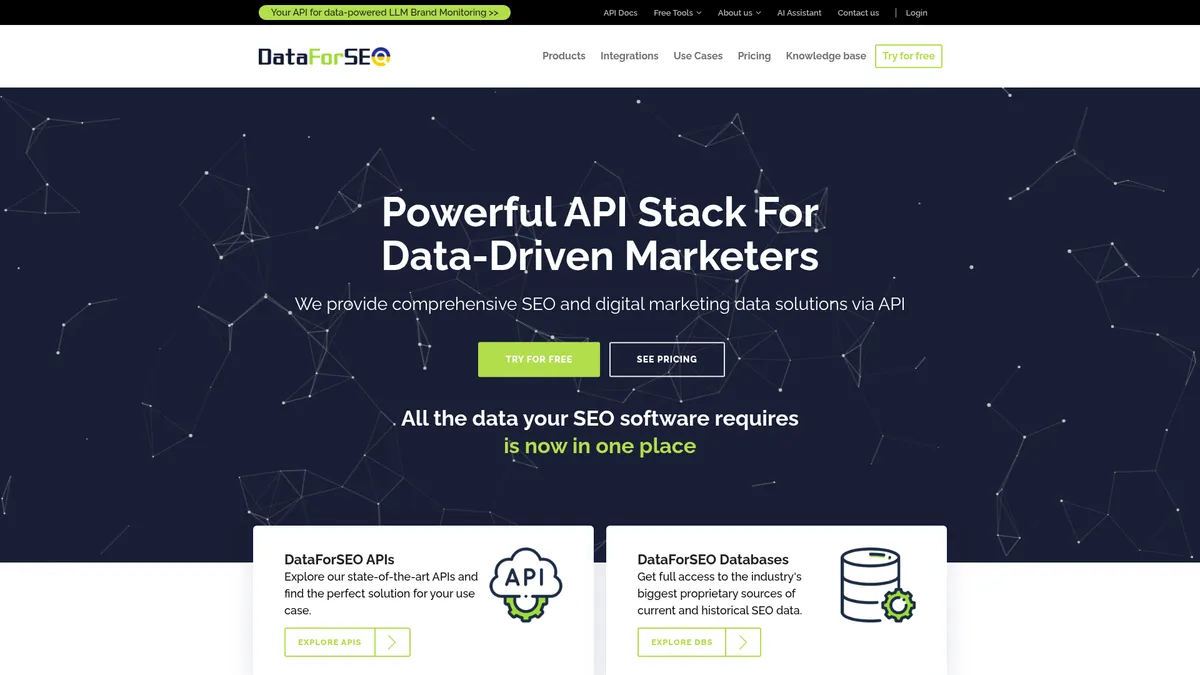
DataforSEO is not a GUI platform but an API-first data layer that gives developers direct access to SERP data, keyword metrics, backlink data, and more. You query the API and receive structured JSON results you can pipe into custom dashboards, tools, or automated pipelines.
For agencies building proprietary SEO systems, data science teams needing custom workflows, or businesses that need data at scale without per-seat SaaS pricing, it’s uniquely flexible. The trade-off is a technical setup requirement.
Pros:
- Most flexible data source for custom workflows and dashboards
- Pay-as-you-go, no per-seat pricing
- Scales from small scripts to enterprise pipelines
Cons:
- Requires developer resources; no ready-made interface
- No traditional free trial
- Costs can be hard to predict at high call volumes
What Our Team Said
“DataforSEO isn’t for everyone, but if you have developers on your SEO team or need a custom reporting workflow, it’s the most flexible data source we’ve used. The pay-as-you-go model means you’re not locked into a monthly seat cost you only partially use.” — Marketing PM
Pricing
- Pay-as-you-go; costs scale with API call volume
- Plans from $50/month depending on usage
- No traditional free trial; developer test environment available
6. Ahrefs
Best for: Data-driven teams that want deep keyword and backlink intelligence with AI-assisted planning
How It Works
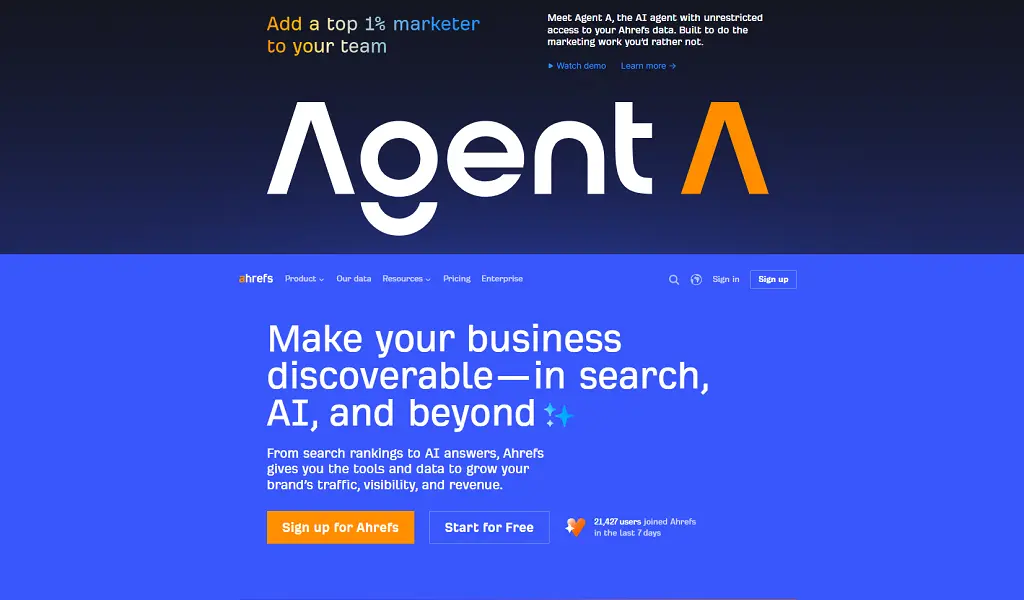
Ahrefs pairs one of the largest backlink and keyword databases in the industry with a growing set of AI features, including AI keyword suggestions and content grading. Its Keywords Explorer uses a “Parent Topic” model that groups keyword variants under the primary term most likely to rank for them, showing the traffic potential of the full topic rather than a single keyword.
For content planning, this shifts prioritization from individual keyword volume to the total opportunity a topic represents. Ahrefs also shows SERP history and ranking movement data that adds strategic depth to your decisions.
Pros:
- Industry-leading keyword and backlink data
- Parent Topic model is intuitive for pillar content planning
- Traffic potential metric reveals the true opportunity behind a topic
Cons:
- No free plan
- Advanced features require Standard tier or higher
- One of the priciest options on this list
What Our Team Said
Ahrefs gives you a level of keyword intelligence that’s hard to match. The parent topic model is intuitive for planning pillar content, and the traffic potential metric changes how you evaluate what to write next — SEO Strategist
Pricing
- Lite: $129/month
- Standard and Advanced plans for larger teams
- No free plan; limited free tools available on the Ahrefs website
7. Keyword Insights
Best for: Agencies and content teams that need to cluster large keyword lists at scale with intent detection
How It Works
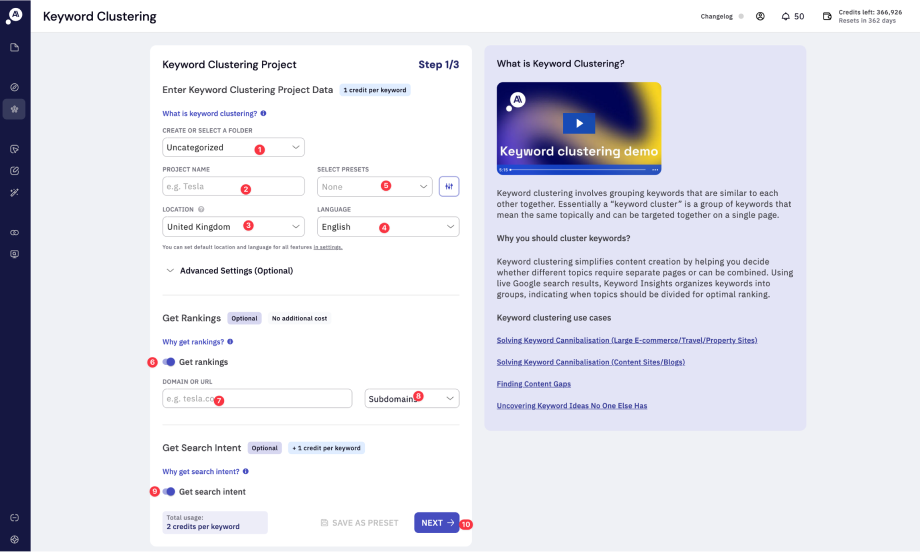
Keyword Insights uses a combination of SERP data and natural language processing to group keywords by both topic similarity and search intent. You upload a keyword list, select your clustering method (SERP-based, semantic, or both), and receive a structured cluster output with intent labels attached to each group.
The intent detection layer means you can directly map keyword groups to your content funnel: awareness clusters go to blog content, consideration clusters feed comparison pages, and decision clusters inform landing pages and CTAs.
Pros:
- Automatic intent labels map clusters to funnel stages
- Choice of SERP-based, semantic, or combined clustering
- Pay-per-use model suits occasional clustering needs
Cons:
- No rank tracking or broader SEO toolkit
- Credit costs add up with constant, high-volume use
What Our Team Said
Keyword Insights is a great tool! The intent labels save significant time in content planning and the SERP-based clustering is accurate. The pay-per-use model works well if your clustering needs aren’t constant — Content Operations
Pricing
- Pay-per-use credits model
- Subscription plans from $58/month
- No traditional free trial; limited free credits available on sign-up
8. ChatGPT
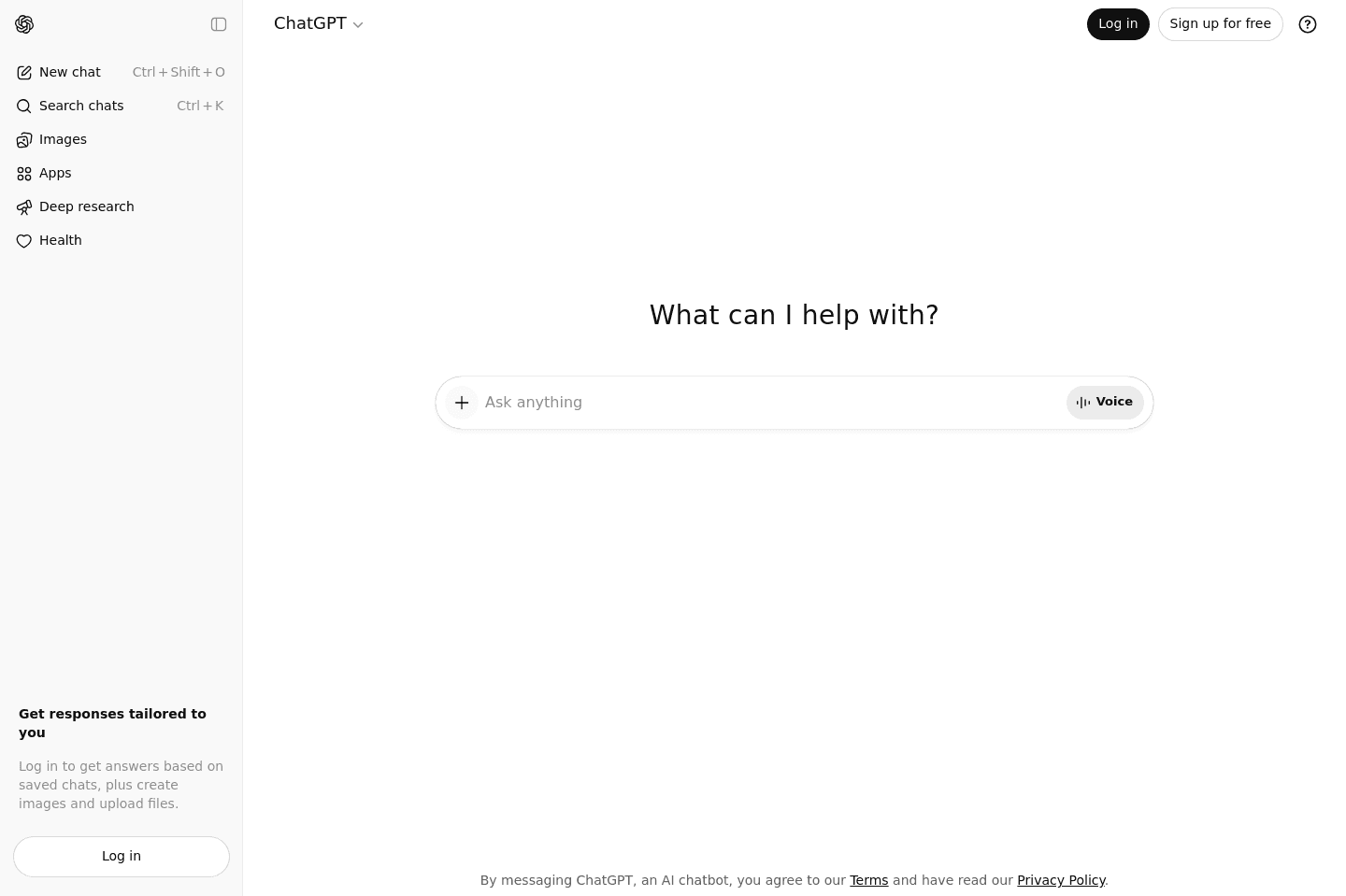
Best for: Solo founders and lean teams that need a zero-cost starting point for AI-assisted SEO
How It Works
ChatGPT handles SEO tasks through prompt engineering: keyword grouping, content briefs, title and meta description drafts, FAQ generation, and more. You paste your inputs and specify the output format you want, from tables to structured outlines, and iterate in the same conversation.
It works, and the output is often surprisingly well-organized. But it comes with real limitations: no access to live SERP data, no keyword volume or difficulty metrics, and no rank tracking. Its outputs are based on language understanding alone, not on how Google actually ranks or groups topics in search results.
Pros:
- Free or very low cost
- Adapts to any custom framework (persona, funnel stage, use case)
- Fast first pass for briefs, outlines, and organizing raw keyword lists
Cons:
- No live SERP data, volume, or difficulty metrics
- No rank tracking
- Outputs reflect language patterns, not actual Google data
What Our Team Said
ChatGPT is a useful first pass especially when you’re starting from scratch and need to organize a raw keyword dump before moving it into a proper tool. On its own, it’s not a replacement for SERP-based data, but it’s a solid zero-cost starting point — SEO Specialist
Pricing
- Free plan available
- ChatGPT Plus: $20/month
- No SEO-specific data included at any tier
Pro Tips to Get the Most Out of Your AI SEO Tool
The tool is only as good as the strategy behind it. Here’s how to make sure it actually moves rankings:
- Be specific about what you’re targeting
Vague anchor keywords produce vague clusters, so before opening any tool, define your primary topic, target audience, and the intent you’re satisfying. A precise seed keyword gives the AI something concrete to work with.
- Build your anchor keyword structure first
Start with your top-level anchor keyword, generate a cluster, and identify the two or three sub-clusters with the best volume-to-difficulty ratio. Build topical authority progressively rather than chasing every keyword at once.
- Track at the cluster level, not just individual keywords
Individual keyword rankings give you data points. Cluster-level tracking gives you a picture of topical authority. A rising cluster means your strategy is working. A stagnant one tells you exactly where to focus next.
- Monitor trends, not just snapshots
Use trend data to spot rising clusters before they become competitive. Entering a topic when difficulty is still low is one of the highest-leverage moves in any SEO strategy.
- Connect clusters to your content calendar
Map each sub-cluster to a blog post, landing page, or supporting content piece. A keyword cluster without a publishing plan is just a spreadsheet.
FAQs: Your Questions Answered
What is the best AI SEO tool in 2026?
It honestly depends on your workflow as SEMrush leads for competitive research, SE Ranking offers the best balance of features and price for growing teams, ClusterView is the strongest option for keyword clustering and strategy planning, Surfer SEO excels at article-level content optimization, DataforSEO is built for technical teams that need data at scale. The right tool is the one that directly addresses your biggest bottleneck.
What is the best affordable AI SEO tool?
ClusterView is the best affordable AI SEO tool option here, it starts at $29/month, offers a free trial in all their plans. DataforSEO and SE Ranking are also worth considering with both of them offering a free trial and a solid coverage of core SEO needs.
Can AI SEO tools replace an SEO specialist?
No and not in the near future. AI SEO tools do force multipliers but at the same time they compress research, surface opportunities, and structure strategy faster than any manual process. But a human still needs to interpret the data, set priorities, and ensure content serves the reader (Think of them as removing the bottleneck, not the specialist)
What is the difference between an AI SEO tool and a traditional SEO tool?
Traditional SEO tools surface data: rankings, backlinks, site health. You interpret it and decide what to do, yet, AI SEO tools go further: they analyze patterns, generate recommendations, and in some cases produce content directly. The best ones close the gap between raw data and an actionable next step.
Do any of these tools offer a free trial?
Yes. ClusterView offers a free trial with no commitment for all their plans, SE Ranking offers a 14-day free trial (no credit card required), SEMrush has a limited free plan, DataforSEO provides a developer test environment.
Final Thoughts
The best AI SEO tools in 2026 aren’t just saving time, they’re also changing how strategy gets built. The gap between teams using AI effectively and those still managing raw keyword lists is widening fast.
Pick the tool that targets your biggest friction point: competitor research, keyword strategy, content optimization, or data infrastructure. Start there, get value, then expand.
About 5 Best AI SEO Tools in 2026 Guide
This guide was authored by Scopic Studios Team, and reviewed by Sonja Somborac, SEO Specialist at Scopic Studios.
Scopic Studios delivers exceptional and engaging content rooted in our expertise across marketing and creative services. Our team of talented writers and digital experts excel in transforming intricate concepts into captivating narratives tailored for diverse industries. We’re passionate about crafting content that not only resonates but also drives value across all digital platforms.