Listen to article – This audio is generated by AI
Your website, sales deck, and proposal templates look like they belong to different businesses. Before you commission a new logo, you need to decide what actually needs to change and who will approve the result.
This guide explains the brand identity design process from your side of the project. You’ll learn how to set scope, evaluate creative work, approve deliverables, and prepare your team for launch.
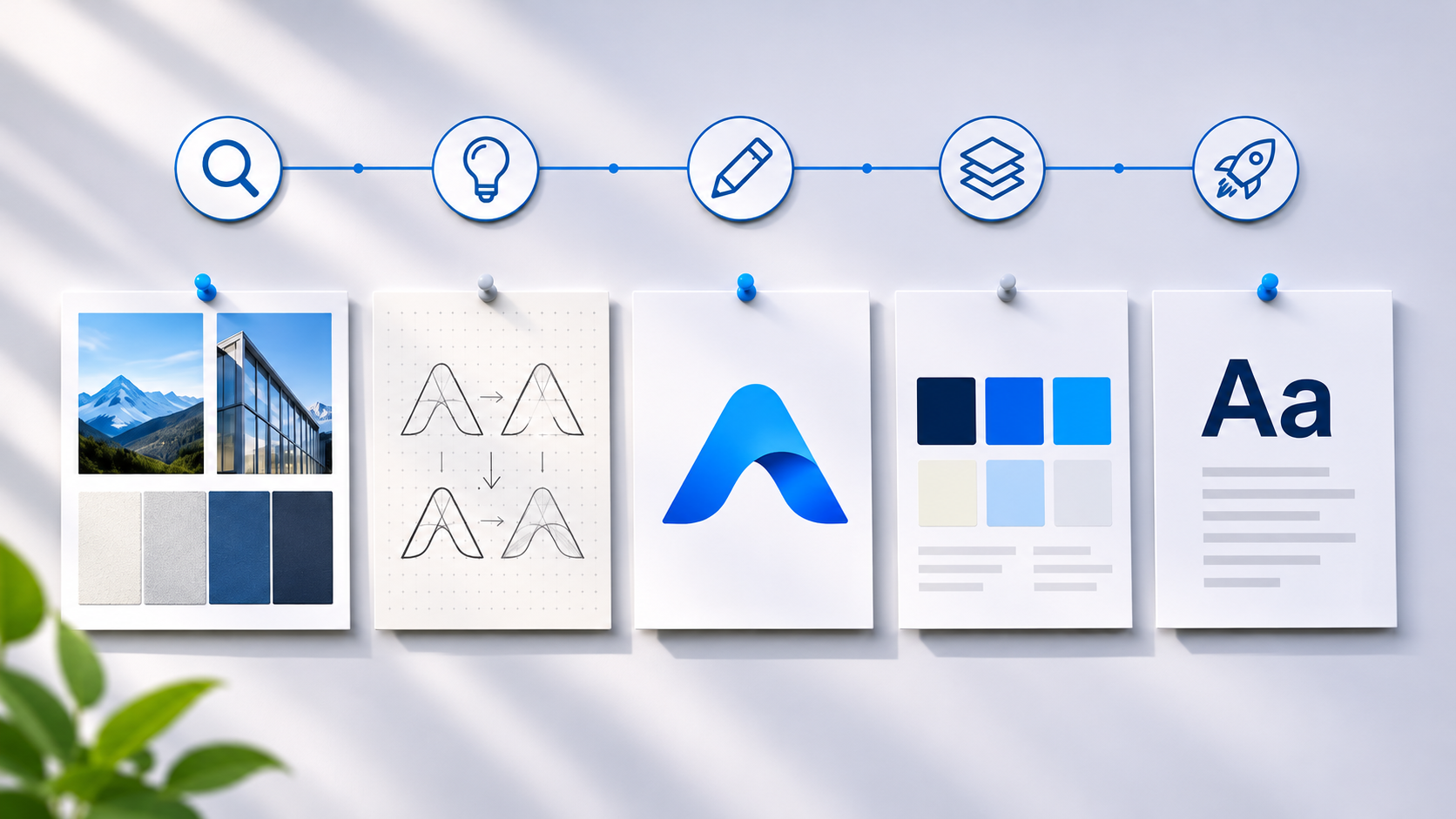
The brand identity design process turns your business’ positioning into a consistent visual and verbal identity. It moves from research and scope decisions through creative development, testing, guidelines, and launch, with agreed deliverables and approvals at each stage.
We’ll work through eight steps.
- Audit your brand and choose the scope.
- Turn research into an approved design brief.
- Develop and select a creative direction.
- Build the visual identity system.
- Test the identity in real applications.
- Create guidelines and prepare the handover.
- Coordinate the launch across channels.
- Maintain consistency and review performance.
What Does Brand Identity Design Include
Brand identity design delivers the assets and rules your team uses to present your business consistently. Your agreement should identify who creates each deliverable, who approves it, and who implements it.
Strategy defines your audience, positioning, and intended associations. Identity expresses those decisions through visual and verbal choices. A logo is one component of that identity.
These brand identity components form a usable system when their relationships are defined.
| Component | Deliverables to confirm |
|---|---|
| Logo system | Primary mark, alternate arrangements, small format versions, and usage rules |
| Color and typography | Color specifications, type hierarchy, font selections, and licensing requirements |
| Imagery and graphic elements | Photography direction, illustration rules, icon treatment, and supporting graphics |
| Messaging guidance, where included | Voice principles, key messages, and practical writing examples |
| Applications | Agreed mockups and editable templates for priority touchpoints |
| Guidelines and source files | Usage documentation, editable originals, exports, and access instructions |
Naming, extensive strategy, website development, packaging, and campaigns require explicit scope agreements. A website mockup demonstrates the identity; developing and deploying the website is separate implementation work. Packaging artwork and packaging production also have different requirements.
Step 1: Audit Your Brand and Choose the Right Scope
A refresh improves an existing identity while retaining its strategic foundation. A rebrand reassesses positioning and identity in response to a material business change. Consider a rebrand when your audience, offer, or market position has changed enough that the existing identity communicates the wrong expectations.
Yes, you can update a logo without changing the whole brand. Positioning and established visual cues can remain, provided recognition checks support the change.
Identify What Works and What Needs to Change
For an established business, a brand identity audit examines recognition, positioning, customer expectations, asset consistency, and usability. Compare current materials with customer feedback and the business’ intended position.
For a new brand, use business and market research to establish these inputs instead.
Ask these diagnostic questions.
- Has your audience, offer, or positioning changed?
- Do customers associate your business with the intended qualities?
- Which assets help customers recognize you?
- Is the problem strategic, visual, or caused by inconsistent execution?
- Which touchpoints must change, and who will maintain them?
Separate weak design from inconsistent implementation. A sound identity can appear fragmented when teams use outdated files or create their own templates.
Choose a New Identity, Brand Refresh, or Rebrand
| Option | What changes | What may stay | Relevant trigger |
|---|---|---|---|
| New identity | Establish identity assets and usage rules | Existing business strategy, if already defined | A new business, product, or standalone offering |
| Refresh | Update selected expression, assets, or templates | Positioning, audience, and recognizable elements | Inconsistent identity or poor performance in current applications |
| Rebrand | Reassess positioning and identity; naming or architecture may change | Valuable recognition and other appropriate elements | Material change in audience, offer, market position, or business structure |
Choose scope according to the business problem. A refresh can extend across many applications. A rebrand can retain a familiar name and recognizable assets.
For example, in 2019, Mastercard removed its name from its brand mark in selected applications while retaining its recognizable interlocking circles. This demonstrates how businesses can update specific brand elements without abandoning the visual assets customers already associate with them.
Step 2: Turn Research Into an Approved Design Brief
An approved design brief converts research into requirements your team can use to evaluate creative work. It gives reviewers a shared basis for decisions before personal preferences enter the discussion.
Define the Audience, Positioning, and Message
Your brand strategy supplies the positioning and audience understanding that guide design decisions. Translate those inputs into practical criteria.
For example, if buyers evaluate complex services through detailed proposals, your identity needs readable documents and a clear information hierarchy. A bold homepage alone won’t demonstrate that capability.
Define the central message and the qualities the identity should communicate. Explain how those qualities should appear in actual materials rather than relying on adjectives such as “modern.”
Agree on Deliverables, Responsibilities, and Approvals
Record the following in the brief.
- Required applications and their technical constraints
- Included deliverables and explicit exclusions
- One named decision maker and a consolidated feedback process
- Agreed review rounds and approval deadlines
- Acceptance criteria tied to the business problem
- Implementation responsibilities after asset approval
We recommend resolving contradictory stakeholder requirements before design starts. Otherwise, the design team receives competing instructions and your approval process becomes unpredictable.
Output is a written design brief. Approve whether goals, scope, and success criteria are clear enough to guide brand identity development.
Step 3: Develop and Select a Creative Direction
A creative direction establishes the visual logic of the identity before the team refines individual assets. Your decision should connect the proposed approach to the approved brief.
Connect Each Concept to the Brief
Moodboards communicate an intended atmosphere through visual references. Concept routes take that thinking further by showing how a proposed direction works through representative design elements.
Ask the design team to explain each route’s relationship to your audience and application requirements. Attractive references alone don’t establish whether a direction will work for your business.
Evaluate Direction Before Refining Details
Evaluate strategic fit, distinctiveness, recognition, and application needs. Personal taste can inform discussion, but the brief should govern approval.
Output is a selected direction with a documented rationale. Approve the route that best meets the brief before requesting detailed refinements.
Step 4: Build the Visual Identity System
A brand identity system defines how individual assets work together across different contexts. During this stage, your team should review connected applications rather than approving every component in isolation.
Develop the Logo, Color, and Typography System
The logo system should accommodate the placements included in your scope. That can require different arrangements for wide headers and compact spaces, plus versions for light or dark backgrounds.
Responsiveness means the identity remains recognizable as space changes. It doesn’t mean shrinking the same detailed artwork until important features disappear.
Color specifications should distinguish screen use from print requirements. Typography should establish a clear hierarchy and remain legible in the materials your customers actually read. Confirm that the selected fonts support the required languages and that the licensing fits intended use.
Review these brand identity components together. A strong logo paired with weak document typography still creates an inconsistent experience.
Extend the Identity Across Supporting Assets
Define how imagery and graphic elements reinforce the core system. Document the relationship between layouts and templates so future materials feel connected without becoming identical.
When developing a brand identity, match the system’s complexity to your team’s needs. Custom motion and a full product design system require separate justification and scope.
Output is a connected set of identity assets and application mockups. Approve whether the system meets the brief across the agreed touchpoints.
Step 5: Test the Identity in Real Applications
Testing checks whether the proposed identity works under realistic constraints before production work expands. Agree on the decision criteria and accountable approver before collecting feedback.
Check Recognition, Readability, and Usability
Test a website header and mobile screen. Review a social profile and sales deck. Include relevant print applications at their intended size.
Check small logo reproduction, text legibility, color contrast, and template usability. For established brands, ask representative customers whether they recognize the business and what cues support that recognition.
Gather Feedback and Approve Refinements
Record findings against the brief. Separate functional defects from preferences, and consolidate feedback through the named approver.
Resolve problems that block intended use before approving production. New requests outside the brief should receive an explicit scope decision.
Output is documented findings and refined assets. Approval confirms that the identity is ready for production use.
Step 6: Create Brand Guidelines and Prepare the Handover
Brand identity guidelines explain how to use the identity consistently. A complete handover also gives your team usable files, appropriate rights, and reliable access.
Approval should depend on whether the receiving team can apply the system without repeatedly asking the designer for missing materials.
Document Usage Rules and Examples
The guidelines, sometimes called a brand style guide, should cover logo placement and clear space, color specifications, typography, and imagery. Include voice guidance and writing examples where verbal identity forms part of the scope.
Use correct and incorrect examples to resolve predictable questions. Show acceptable logo backgrounds and demonstrate which treatments reduce legibility. Explain how a dense business document should apply the same identity as a simpler promotional layout.
Rules need enough context to support decisions. “Use the primary color” is incomplete if the team cannot tell which combinations work for body text.
Deliver Editable Files, Templates, and Access
Agree on file formats according to use. SVG files suit many scalable digital graphics, while PNG exports support common office applications. Print suppliers may need production PDFs. Editable originals remain necessary for future changes.
Our handover checklist would include the following.
- Approved source files and clearly labeled exports
- Editable templates tested in the receiving team’s software
- Font and image licensing records, including restrictions
- Contractual ownership and usage rights
- Shared storage access and named administrators
- An archive that separates approved files from superseded work
Confirm any dependencies on paid software or external accounts. A template that your team cannot open or edit is an incomplete deliverable.
Output is the guidelines, source files, exports, and templates. Approve the handover after a receiving team member successfully uses the materials.
Step 7: Plan and Launch the Identity Across Channels
Launch planning turns approved design assets into a coordinated business change. Start the rollout inventory early enough to identify implementation work before the intended launch.
Prioritize Touchpoints and Coordinate the Rollout
For every asset, record its owner, deadline, dependencies, and approval status. Coordinate website updates with social profiles, sales materials, email signatures, and relevant physical assets.
Prioritize touchpoints according to customer exposure and operational need. A proposal template used daily may deserve attention before a rarely accessed brochure.
Translating the identity into your website requires an implementation decision. A visual update can retain the existing platform and structure. A rebuild changes the underlying website, while a domain migration introduces separate technical responsibilities. Scope web design and development accordingly.
Prepare Employees, Customers, and Partners
Give employees access to approved files and explain when old materials must be retired. Provide partners with replacement assets where they display your identity.
Customer communication matters when a change could create confusion about your business or its services. A limited template refresh requires less explanation than a changed name.
Your Brand Discovery planning can help identify the customer entry points that deserve particular attention during rollout.
Output is a rollout plan and prepared assets. Approve launch only when people, materials, and communications are ready.
Bring your brand identity to your website
Translate your identity into a consistent website experience with Scopic Studios’ web design and development services.
Step 8: Maintain Consistency and Review Performance
Assign a brand or marketing owner to maintain the approved asset library. Establish version control, an exception request process, and a review cadence that fits how often your team creates materials.
Monitor template adoption and consistency across priority touchpoints. Gather customer feedback on recognition and understanding. Review relevant website behavior where the identity has changed the presentation.
Interpret business results carefully. Revenue changes have multiple influences, so identity design alone cannot establish causation.
Output is a maintenance plan with named responsibilities and scheduled reviews. Brand identity creation needs continuing ownership after launch.
How Long Does Brand Identity Design Take and What Affects Cost
Brand identity design timing and cost depend on your scope, approval process, and implementation requirements. A limited refresh requires different research and deliverables from a broader rebrand.
Separate Identity Design From Implementation
Identity design covers the development, testing, and documentation of your brand identity. Implementation applies the approved identity to your website and other customer touchpoints. Plan these as connected workstreams with separate deliverables and approval dates.
Example schedule for an eight week identity project
This hypothetical schedule assumes one brand, existing positioning, limited applications, and prompt approvals. It excludes a full website build and extensive production.
| Period | Planned work |
|---|---|
| Weeks 1 to 2 | Research, scope agreement, and design brief |
| Weeks 3 to 4 | Creative direction and identity development |
| Weeks 5 to 6 | Application testing and refinement |
| Weeks 7 to 8 | Guidelines, handover, and launch preparation |
For instance, Daasign gives an approximate range of 4 to 12 weeks for comprehensive identity projects, depending on scope and responsiveness.
Implementation work can continue after identity approval. Your launch schedule needs to account for website changes, physical production, internal preparation, and customer communications.
Compare Scope, Assumptions, and Exclusions
Compare proposals against the same deliverable list and approval requirements. A price or timeline is useful only when you understand the work it covers.
The following provider published ranges describe different scopes. They are not market averages, comparable quotations, or Scopic pricing.
| Published scope | Published cost range | Published timeline | Attribution |
|---|---|---|---|
| Logo refresh | $5,000 to $25,000 | 2 to 4 weeks | AVO Brands |
| Visual identity refresh | $25,000 to $75,000 | 6 to 12 weeks | AVO Brands |
| Broader rebrand | $50,000 to $500,000+ | 6 to 18 months | Slam Media Lab |
Before approving a proposal, check the factors that determine effort and timing.
- Research depth determines how much discovery and validation the team needs before design begins. Existing positioning can reduce this work if it remains relevant.
- Stakeholder approvals affect the schedule. Name a final approver and set decision dates so conflicting feedback does not leave work unresolved.
- Touchpoint count affects the number of applications that need design and testing. Define priority applications before estimating the work.
- Revision rounds affect design effort. Agree on the included rounds and how additional changes will be handled.
- Implementation work needs explicit treatment. Confirm whether website implementation, production, and rollout support are included or quoted separately.
Ask whether research and naming are included. Confirm responsibility for legal review and licensing costs separately. The published ranges do not establish that these services are included.
Common Brand Identity and Rebranding Risks
The main risks are unclear scope, delayed decisions, inconsistent implementation, and a launch that leaves customers confused. Control these risks through explicit responsibilities and approval criteria.
| Risk | Control |
|---|---|
| Scope expands after work begins | Approve the deliverable list and exclusions, then document changes to cost and timing. |
| Stakeholders give conflicting feedback or delay approval | Name a final approver, consolidate feedback, and assign decision dates. |
| The identity is difficult to use across required touchpoints | Test priority applications before approving the identity. |
| Teams continue using outdated assets | Maintain one approved asset library with version control and a named owner. |
| Customers misunderstand a changed name or service presentation | Prepare clear communications for the customer entry points affected by the change. |
| Legal review or licensing costs are overlooked | Assign responsibility and confirm requirements before launch. |
| Business results are attributed entirely to identity design | Review customer feedback and relevant website behavior while accounting for other influences on revenue. |
A rebrand changes how your business presents itself. Poor products and operational problems require direct corrective work.
If those issues are driving customer dissatisfaction, address them before promising a different experience through a new identity.
Plan Your Brand Identity Project
Before commissioning brand identity work, confirm that your team can answer these questions.
- Goals: What should your brand identity help customers recognize or understand?
- Scope: Are you commissioning a refresh or a broader rebrand, and which touchpoints are included?
- Approver: Who has final authority, and when will decisions be made?
- Assets: Which existing materials will you retain, replace, or retire?
- Budget: What funding covers design and implementation, including separate costs?
- Launch requirements: What must be ready before the identity goes live, and who owns each task?
We recommend approving the scope and schedule together so your team can plan decisions and launch preparation around the same commitments.
Contact us to discuss your brand identity goals, required touchpoints, and implementation needs.
Planning a brand identity project?
Talk to Scopic Studios about your goals, required touchpoints, and implementation needs.
About Brand Identity Design Process From Strategy to Launch Step by Step
This guide was written by Baily Ramsey, and reviewed by Sonja Somborac, SEO Project Manager at Scopic Studios.
Scopic Studios delivers exceptional and engaging content rooted in our expertise across marketing and creative services. Our team of talented writers and digital experts excel in transforming intricate concepts into captivating narratives tailored for diverse industries. We’re passionate about crafting content that not only resonates but also drives value across all digital platforms.