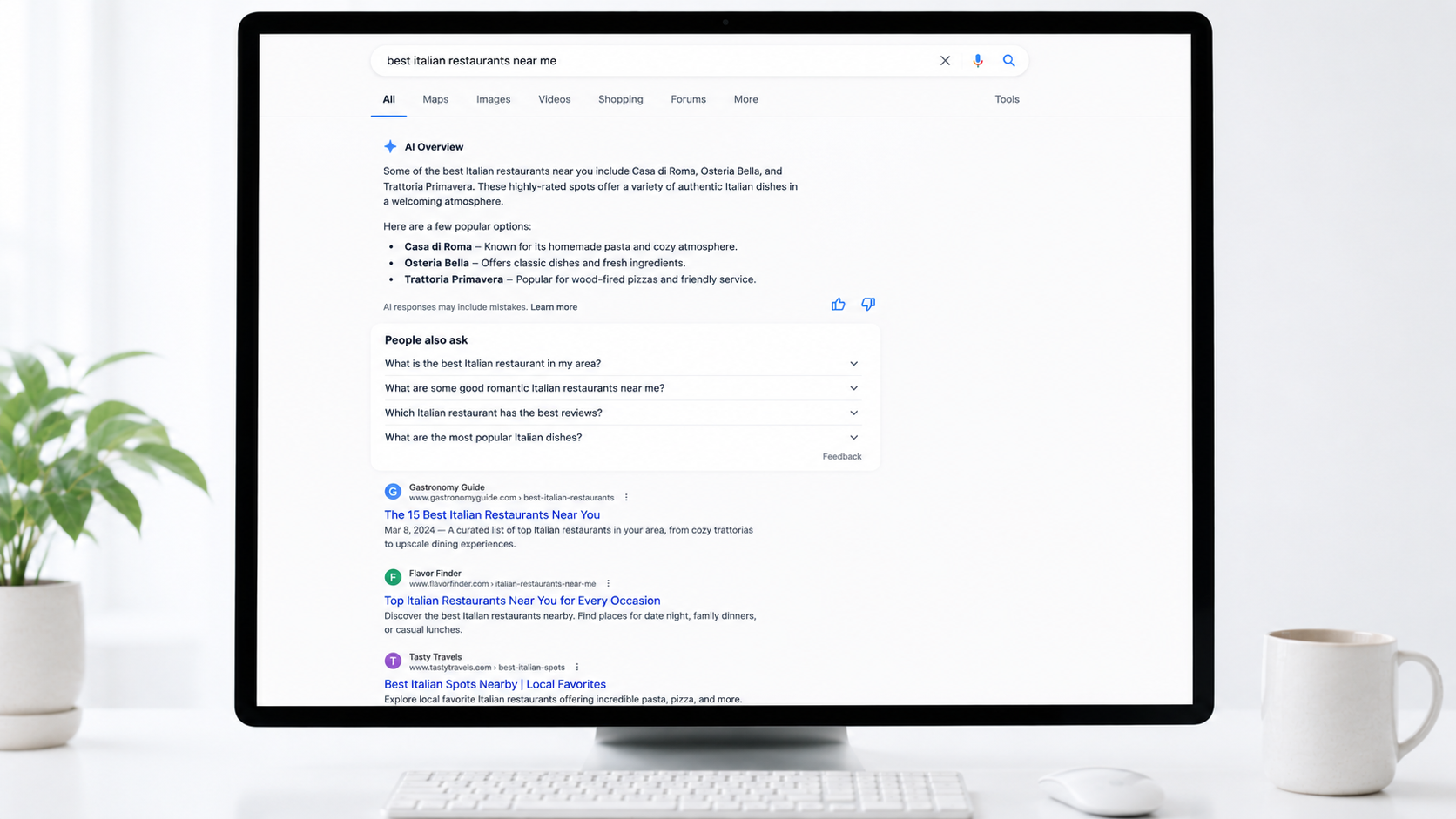

SaaS SEO is a content volume game and keyword clustering is how you win it. Without a structured topic architecture, you end up with duplicate content, missed ranking opportunities, and a blog that grows without building authority.
The right keyword clustering tool changes that and tells you which topics to own, how they connect, and what to publish next before your competitors figure it out.
We evaluated 7 tools across real SaaS SEO workflows. Here’s how they stack up.
What Is Keyword Clustering and Why Does It Matter for SaaS?
Keyword clustering is the process of grouping related keywords into topic clusters based on shared search intent, semantic relationships, or SERP overlap. Instead of targeting keywords one by one, you build a structured content architecture around topics which is exactly how Google evaluates topical authority.
For SaaS companies, this matters more than most as SaaS buyers research extensively before converting. They move through awareness, consideration, and decision stages across dozens of search queries and the brands that show up consistently across a full topic cluster win the trust, and eventually the conversion.
Keyword clustering also solves a structural problem that plagues most SaaS blogs: “keyword cannibalization”. When multiple pages compete for the same query, none of them rank well. Clustering surfaces those conflicts before you publish, so your content works together instead of against itself.
Done right, keyword clustering gives a SaaS content team a clear answer to three questions it should always be able to answer:
- Which topics do we own?
- Where are our coverage gaps?
- What should we publish next?
What Each Tool Is Best at and How We Evaluated Them
We evaluated each tool hands-on using a sample dataset of 1,200 raw, unclustered keywords pulled from the project management software niche—a notoriously crowded, high-intent SaaS category.
To test data reliability and algorithmic depth, the list purposefully included a mix of broad informational queries (“how to manage remote teams”), high-intent commercial terms (“best agile tools for enterprise”), and highly ambiguous semantic variants. We uploaded this exact list to all 7 platforms over a 48-hour window, comparing the accuracy of their intent mapping, processing speeds, and the structural integrity of their final parent-child topic architectures.
How Each Tool Scored
| Tool | Clustering Quality | SaaS Workflow Fit | Ease of Use | Actionability | Pricing Fairness |
|---|---|---|---|---|---|
| ClusterView | 5 | 5 | 4 | 5 | 5 |
| SEMrush | 4 | 4 | 3 | 4 | 3 |
| SE Ranking | 4 | 3 | 4 | 3 | 4 |
| Ahrefs | 4 | 4 | 4 | 4 | 3 |
| Keyword Insights | 5 | 4 | 4 | 4 | 4 |
| Surfer SEO | 3 | 4 | 4 | 5 | 3 |
| ChatGPT | 2 | 3 | 5 | 3 | 5 |
Top 7 Keyword Clustering Tools for SaaS
| Tool | Best For | Standout Feature for SaaS | Free Access | Starting Price |
| ClusterView | Native AI keyword clustering tool for SaaS | AI Topic Generator + weekly rank tracking | Free trial | From $15/mo |
| SEMrush | Enterprise SaaS with large keyword sets | Keyword Magic Tool + topic clustering at scale | Limited free plan | $139/mo |
| SE Ranking Keyword Grouper | Budget-conscious teams needing fast grouping | Fast bulk grouping with SERP-based logic | Free trial (14 days) | $129/mo |
| Ahrefs Keywords Explorer | Data-driven SaaS teams & content strategists | Parent topic mapping + traffic potential data | No free plan | ~$249/mo (Standard+) |
|
|
Agencies & teams clustering at scale | SERP-based clustering with intent detection | Pay-per-use | From $58/mo |
| Surfer SEO | SaaS content teams optimizing existing pages | Content Editor with real-time cluster scoring | No free plan | $99/mo |
| ChatGPT | Solo founders & lean teams on zero budget | Flexible prompt-based clustering, any format | Free plan available | Free / $20/mo |
1. ClusterView
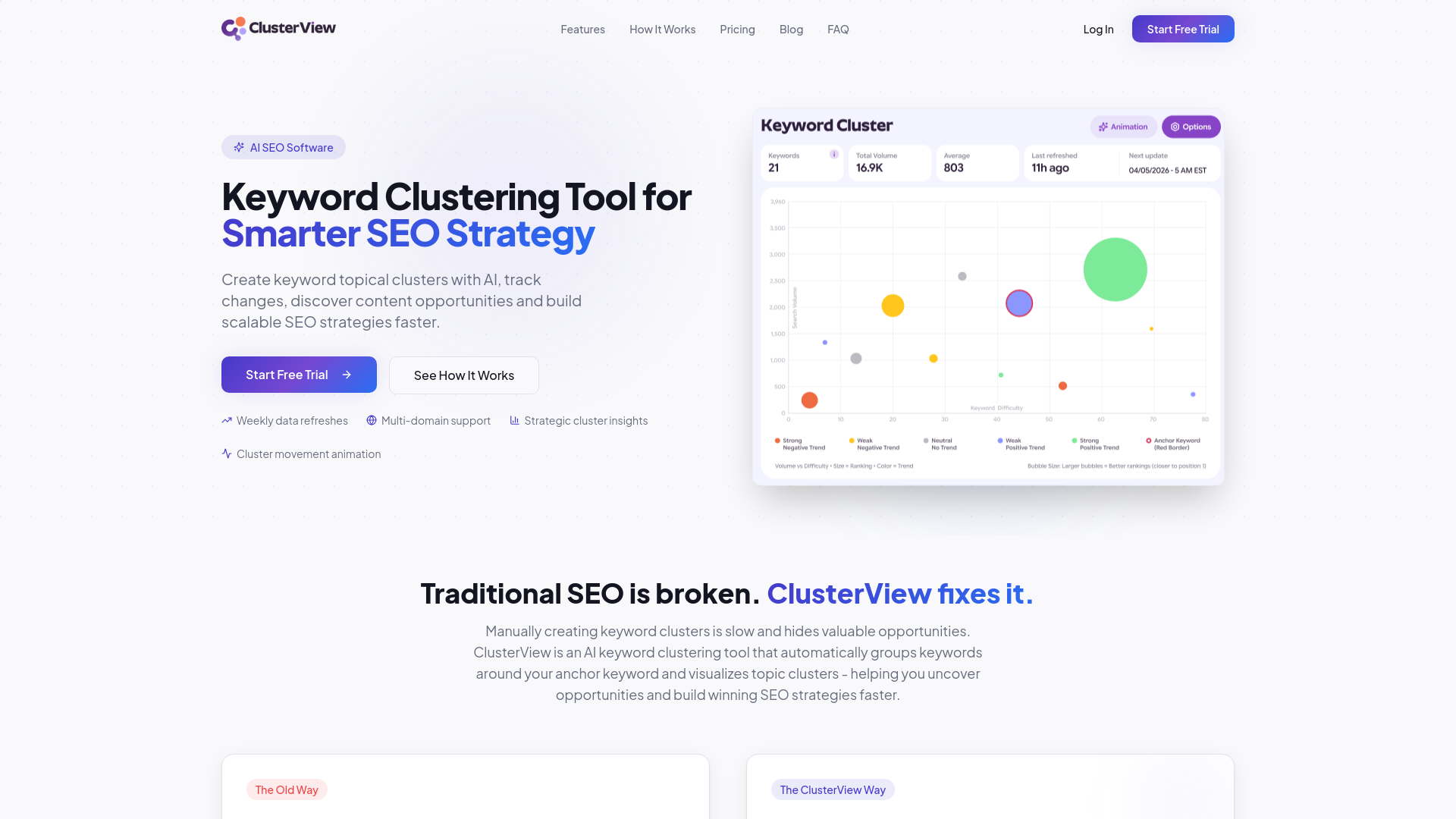
Best for: SaaS teams that want a native AI keyword clustering tool (purpose-built, affordable, and free to try)
How It Works
ClusterView is a native AI keyword clustering tool meaning AI isn’t a layer added on top of an existing SEO platform, it’s what the product is built around. You enter your SaaS domain, an anchor keyword and say, “project management software”, ClusterView’s AI engine will then generate a full topic cluster map based on semantic relationships and search intent signals, not just word overlap.
Each cluster shows search volume, keyword difficulty, current ranking position, and weekly trend data side by side. For SaaS teams, this means you can immediately see which topic groups you already rank for, which are within reach, and which represent untapped content opportunities.
The AI Topic Generator goes one step further: it converts your clusters into specific blog post angles and content ideas, giving your editorial calendar a structured, SEO-driven direction. Rank tracking refreshes automatically every week, so you’re always working with current data with no manual exports or stale spreadsheets.
Multi-domain support and team collaboration are built in, which matters for SaaS companies running separate product, blog, and help center domains, or agencies managing multiple SaaS clients.
Pros:
- Purpose-built for AI keyword clustering, not a bolt-on feature
- AI Topic Generator turns clusters directly into content ideas
- Automated weekly rank tracking, no manual exports
- Affordable entry point with a no-credit-card free trial
Cons:
- Focused tool, so no site audit or backlink features
Standout Feature for SaaS Founders
Most keyword clustering tools bolt AI onto a broader platform as a secondary feature. ClusterView is different: the AI is the product. The combination of AI-generated clusters, automated rank tracking, and an AI Topic Generator in one purpose-built platform means a lean SaaS content team can run a structured SEO strategy without a dedicated SEO specialist managing the workflow.
What Our Team Said
“ClusterView was very useful for me as an SEO PM to quickly visualize all my important clusters, understand the performance of our strategies, find relevant keyword gaps, and access reliable data from multiple sources in one intuitive dashboard. The AI-driven technology saves me so much time in keyword research, clustering, and monitoring.” — Assia B., SEO PM, Scopic Studios
Pricing
- Free trial available
- Paid plans from $15/month
- Usage-based tiers — no paying for features you don’t use
2. SEMrush

Best for: Enterprise SaaS teams that need keyword clustering as part of a broader competitive intelligence workflow
How It Works
SEMrush‘s Keyword Magic Tool generates large keyword sets from a seed term and allows grouping by topic, intent, and SERP similarity. The Keyword Strategy Builder takes this further by automatically organizing keywords into pillar pages and supporting cluster content.
Clustering in SEMrush works best when combined with its broader platform: competitive gap analysis, traffic trend data, and content auditing tools give SaaS teams context that standalone clustering tools can’t match. The trade-off is complexity, getting the most out of SEMrush’s clustering features requires familiarity with the platform.
Pros:
- Clustering combined with competitive gap analysis
- Keyword Magic Tool handles very large keyword sets
- Keyword Strategy Builder auto-organizes pillar and cluster content
Cons:
- Steep learning curve for clustering features
- Expensive if clustering is your main need
- No full-feature free trial
Standout Feature for SaaS Founders
The Keyword Gap tool lets you compare your keyword cluster coverage directly against competitors. For SaaS companies in crowded categories, knowing exactly which topic clusters a competitor owns and which ones are still winnable.
What Our Team Said
“SEMrush is where we go when we need to understand the full competitive keyword landscape. The clustering features are powerful, but they shine most when you’re already using the platform for competitor research. It’s not a lightweight tool, and the price reflects that.” – Content Strategist
Pricing
- Pro: ~$139/month (or ~$117/month billed annually)
- Guru and Business plans for larger teams
- Limited free plan; no full-feature trial
3. SE Ranking Keyword Grouper

Best for: SaaS teams on a budget that need fast, reliable keyword grouping without a full platform commitment
How It Works
SE Ranking‘s Keyword Grouper is a standalone feature within its broader SEO platform. You upload a keyword list, set your grouping parameters, and the tool clusters keywords based on SERP overlap meaning keywords that return similar search results get grouped together. This is a reliable signal for how Google understands topic relationships.
The output is a structured cluster report you can export and use to map content. SE Ranking also includes rank tracking, site audit, and competitor analysis, making it a practical all-in-one option for SaaS teams that want clustering without paying for a dedicated tool.
Pros:
- SERP-based grouping reflects how Google relates topics
- Fast bulk clustering with clean, exportable reports
- Bundled with rank tracking, audit, and competitor tools
Cons:
- Grouper is one feature inside a platform subscription
- No automatic intent labeling on clusters
Standout Feature for SaaS Founders
The SERP-based grouping logic is particularly useful for SaaS keyword sets, where intent can vary significantly across seemingly similar terms. SE Ranking’s approach catches nuances that pure semantic grouping sometimes misses.
What Our Team Said
“SE Ranking’s grouper is efficient and produces clean, usable clusters quickly. For a team that needs to organize a large keyword list and get moving, it’s one of the fastest paths from raw keywords to structured content plan.” — SEO Specialist
Pricing
- Essential: $129/month (includes Keyword Grouper)
- 14-day free trial, no credit card required
4. Ahrefs Keywords Explorer

Best for: Data-driven SaaS teams and content strategists who want deep keyword intelligence alongside clustering
How It Works
Ahrefs‘s Keywords Explorer doesn’t cluster keywords in the traditional sense, it uses a “Parent Topic” model that groups keyword variants under the primary term most likely to rank for them. For each keyword, you can see the parent topic, traffic potential of the full cluster, and the ranking difficulty.
This approach is particularly valuable for SaaS content planning because it surfaces the true traffic opportunity behind a keyword not just the volume of one term, but the combined potential of ranking for the full topic group. Ahrefs also shows SERP history and ranking movement data that adds strategic depth to your clustering decisions.
Pros:
- Parent Topic model is intuitive for pillar content planning
- Traffic potential shows the full opportunity of a topic, not one keyword
- Deep SERP history and ranking movement data
Cons:
- Not a dedicated clustering tool
- No free plan, and cluster-level features require Standard or higher
- One of the priciest options on this list
Standout Feature for SaaS Founders
The estimated traffic you’d get by ranking for an entire parent topic cluster is one of the most useful metrics in SaaS content planning. It shifts prioritization from individual keyword volume to the total opportunity a topic represents.
What Our Team Said
“Ahrefs gives you a level of keyword intelligence that’s hard to match. The parent topic model is intuitive for planning pillar content, and the traffic potential metric changes how you evaluate what to write next. It’s not a dedicated clustering tool, but it handles cluster-level thinking well.” — SEO Strategist
Pricing
- Lite: $129/month (keyword research only; clustering requires Standard+)
- Standard and Advanced plans for larger teams
- No free plan; limited free tools available on the Ahrefs website
5. Keyword Insights

Best for: Agencies and SaaS content teams that need to cluster large keyword lists at scale with intent detection
How It Works
Keyword Insights is a dedicated keyword cluster tool that uses a combination of SERP data and natural language processing to group keywords by both topic similarity and search intent. You upload a keyword list, select your clustering method (SERP-based, semantic, or both), and receive a structured cluster output with intent labels attached to each group.
The intent detection layer is particularly useful for SaaS, where the same product category can attract informational, navigational, and transactional queries that should map to different content types and funnel stages. Keyword Insights surfaces those distinctions automatically.
Pros:
- Automatic intent labels map clusters to funnel stages
- Choice of SERP-based, semantic, or combined clustering
- Pay-per-use model suits occasional clustering needs
Cons:
- No rank tracking or broader SEO toolkit
- Credit costs add up with constant, high-volume use
Standout Feature for SaaS Founders
The ability to cluster by intent — not just topic — means you can directly map keyword groups to your content funnel. Awareness clusters go to blog content; consideration clusters feed comparison and use case pages; decision clusters inform landing pages and trial CTAs.
What Our Team Said
“Keyword Insights is a great tool! The intent labels save significant time in content planning and the SERP-based clustering is accurate. The pay-per-use model works well if your clustering needs aren’t constant.” — Content Operations
Pricing
- Pay-per-use credits model
- Subscription plans from $58/month
- No traditional free trial; limited free credits available on sign-up
6. Surfer SEO
Best for: SaaS content teams optimizing existing pages and scaling cluster-based content production
How It Works
Surfer SEO‘s keyword clustering sits inside its broader content optimization platform. The Topical Map feature generates a cluster of related keywords and content ideas from a seed term, then maps them to suggested article structures. The Content Editor assigns each piece a real-time optimization score tied to its cluster keywords.
For SaaS teams with an active blog, Surfer’s value is in the feedback loop: you plan at the cluster level, then optimize content within that cluster as you write. The result is a content operation that’s both structured at the strategy level and precise at the execution level.
Pros:
- Topical Map is highly visual and easy to brief writers from
- Content Editor ties optimization scores to cluster keywords
- Strong planning-to-production feedback loop
Cons:
- Clustering is tied to the content optimization workflow
- No standard free plan
Standout Feature for SaaS Founders
The Topical Map is one of the most visual and accessible cluster planning tools available. For SaaS founders or content leads who need to brief writers without deep SEO expertise, it produces ready-to-use content outlines directly from cluster data.
What Our Team Said
“Surfer is where strategy meets execution. The clustering sets the direction; the Content Editor keeps writers on track. It’s the most complete workflow for teams that handle both planning and production in-house.” — SEO Content Writer
Pricing
- Essential: ~$49/month (annual) or $99/month (monthly)
- Scale and Enterprise plans available
- No standard free plan; trial access may be available on request
7. ChatGPT
Best for: Solo SaaS founders and lean teams that need a zero-cost starting point for keyword clustering
How It Works
ChatGPT can cluster keywords through prompt engineering. You paste a keyword list and ask it to group terms by topic, intent, or semantic similarity and it will produce a structured output in whatever format you specify: tables, JSON, markdown, or plain lists. You can iterate on the groupings, ask for intent labels, or request content suggestions for each cluster in the same conversation.
It works. The output is coherent and often surprisingly well-organized. But it comes with real limitations: ChatGPT has no access to live SERP data, no keyword volume or difficulty metrics, and no rank tracking. The clusters it produces are based on language understanding alone — not on how Google actually groups these topics in search results.
Pros:
- Free or very low cost
- Adapts to any custom clustering logic (persona, funnel stage, use case)
- Fast first pass for organizing raw keyword dumps
Cons:
- No live SERP data, volume, or difficulty metrics
- No rank tracking
- Clusters reflect language patterns, not actual Google groupings
Standout Feature for SaaS Founders
Flexibility. You can ask ChatGPT to cluster by buyer journey stage, product use case, persona, or any other framework relevant to your SaaS. No other tool on this list adapts to custom clustering logic as quickly or cheaply.
What Our Team Said
“ChatGPT is a useful first pass especially when you’re starting from scratch and need to organize a raw keyword dump before moving it into a proper tool. On its own, it’s not a replacement for SERP-based clustering, but it’s a solid zero-cost starting point.” — SEO Specialist
Pricing
- Free plan available (GPT-4o mini)
- ChatGPT Plus: $20/month (GPT-4o access)
- No SEO-specific data included at any tier
FAQs: Your Questions Answered
What is keyword clustering and how does it help SaaS SEO?
Keyword clustering is the process of grouping related search queries by shared intent, topic, or SERP overlap. For SaaS companies, it solves two structural problems: keyword cannibalization (multiple pages competing for the same query) and content gaps (topics your buyers search for that you haven’t covered). A well-structured cluster map gives your content team a clear publishing roadmap and builds the topical authority that Google rewards with consistent rankings.
What is the difference between SERP-based and semantic keyword clustering?
SERP-based clustering groups keywords that return similar search results. If two queries surface the same pages in Google’s top 10, they likely share the same intent and can be targeted by a single piece of content. This method is highly accurate because it reflects how Google actually understands topic relationships.
Semantic clustering groups keywords by linguistic similarity and meaning regardless of what actually ranks for them. It’s faster and works without live data, but can miss intent nuances that SERP-based methods catch. ChatGPT uses semantic logic. ClusterView, SE Ranking, SEMrush, and Keyword Insights use SERP-based logic or a hybrid of both.
For SaaS SEO, SERP-based clustering is generally more reliable especially in competitive categories where intent varies significantly across similar-sounding keywords.
Which keyword clustering tool is best for a SaaS team on a tight budget?
ClusterView is your strongest keyword clustering option. It’s the only native AI keyword clustering tool on this list, starts at $29/month, offers a free trial with no credit card required, and is built exclusively for keyword clustering so you’re not paying for features you won’t use. ChatGPT is a viable zero-cost starting point for early-stage teams, with the caveat that it lacks SERP data and keyword metrics.
Does keyword clustering replace keyword research?
No, but it extends it. Keyword research identifies individual terms worth targeting. Keyword clustering organizes those terms into a content architecture that builds topical authority over time. You need both: research to fill your keyword pool, and clustering to turn that pool into a structured strategy.
Think of keyword research as collecting the raw material and clustering as the process that tells you what to build with it.
Final Thoughts
The best keyword clustering tool for your SaaS depends on where you are in your SEO maturity. Early-stage teams with a tight budget should start with ClusterView’s free trial or ChatGPT for a first pass. Growth-stage teams running multi-channel content operations will get more from SE Ranking or Keyword Insights. Enterprise SaaS teams with competitive research needs will find SEMrush or Ahrefs the most complete solution.
Whatever stage you’re at, the underlying principle is the same: keyword clustering is how SaaS companies stop publishing randomly and start building topical authority systematically.
About 7 Best Keyword Clustering Tools for SaaS in 2026 Guide
This guide was authored by Scopic Studios team, and reviewed by Sonja Somborac, SEO Specialist at Scopic Studios.
Scopic Studios delivers exceptional and engaging content rooted in our expertise across marketing and creative services. Our team of talented writers and digital experts excel in transforming intricate concepts into captivating narratives tailored for diverse industries. We’re passionate about crafting content that not only resonates but also drives value across all digital platforms.