
Listen to article
YouTube is one of the world’s largest search engines, yet many B2B companies still treat it as a storage shelf for webinars, demos, and brand videos rather than a discovery channel. With more than 500 hours of video uploaded every minute, publishing alone does little to help the right buyer find the right content.
That creates a real gap in the buyer journey. Prospects may watch product demonstrations, solution comparisons, implementation walkthroughs, and thought-leadership videos before they ever complete a form or speak with sales. Without a deliberate YouTube SEO strategy, that research stage can happen without the brand appearing in the conversation.
This guide explains how to optimize a B2B YouTube channel and individual videos for discoverability, how YouTube’s ranking factors influence visibility, and how to connect video search performance to qualified demand and pipeline rather than treating views as the final measure of success.
Why YouTube SEO Matters for B2B Discoverability
For B2B brands, the goal of a YouTube SEO strategy is not simply to collect more views. It is to make useful content discoverable when a potential buyer is actively researching a problem, comparing solutions, or evaluating whether a company understands their needs.
YouTube is a search engine, not just a hosting platform. Videos can rank within YouTube’s own search results and appear across Google search experiences, including video results and other video-rich features. This means SEO for YouTube can support visibility across two connected search environments rather than relying only on subscribers or paid distribution.
B2B buyers use video earlier in the funnel than many marketers assume. Product walkthroughs, comparison videos, implementation demos, and customer testimonials can all influence evaluation before a prospect completes a form or speaks with sales. In fact, 76% of B2B marketers reported using video, while 58% said it produced the best results of any content type. If that content is not structured for discovery, the brand can be absent during the stage where trust and preference are being formed.
Channel authority compounds over time. A consistent library of focused, useful videos gives YouTube clearer context about the channel, which can support the discoverability of future uploads. It also gives prospects a stronger body of expertise to review when they check the company’s channel before a sales conversation.
Video SEO therefore has two layers: channel-level authority and video-level optimization. Both require deliberate strategy, not an upload-and-hope approach.
YouTube SEO Ranking Factors: How the Algorithm Actually Decides What to Show
YouTube does not publish a fixed formula or exact weighting for its search system. Its official guidance points to relevance, engagement, and quality.
A YouTube SEO strategy must account for how relevance, performance, and engagement work together. For practical planning, the YouTube SEO ranking factors marketers can influence can be grouped into three questions.
Relevance Signals: Does the Video Match the Search?
YouTube compares the search query with several elements of the video:
- The title and description
- Tags, although YouTube says they usually play only a minimal role
- Spoken content, captions, and relevant on-screen text
Together, these signals help the platform understand the subject of the video and match it with relevant searches.
Topic consistency matters too. Publishing regularly around a defined subject gives YouTube clearer context about the channel, making it easier to associate its videos with related topic areas.
Performance Signals: Do People Choose the Video and Keep Watching?
Impressions click-through rate measures the percentage of people who click after seeing the thumbnail and title in search, suggested results, or another YouTube surface.
Average view duration and audience retention show how much of the video people watch and where attention drops. YouTube also considers watch time in relation to specific searches.
Moving viewers into a related video or playlist can extend their viewing journey, although YouTube does not publish session duration as a standalone ranking factor.
Engagement Signals: Do Viewers Respond?
Likes, comments, shares, and subscriptions generated directly from a video provide evidence of audience response, but none should be interpreted in isolation.
Playlist adds and saves are also worth tracking because they show that viewers consider the content useful enough to revisit. They can also expose viewers to more videos on the same topic, supporting broader channel engagement and authority.
Relevance gets a video into consideration; performance and engagement influence whether it keeps showing up. Strategy must address both. That is why the channel-level and video-level sections that follow cover structural optimization alongside the audience behavior that turns visibility into sustained buyer discovery and pipeline.
Channel-Level Optimization: Building Authority, Not Just Uploading Videos
Channel-as-a-whole optimization is the work most B2B brands skip entirely. They may optimize individual titles or descriptions, but leave the channel itself functioning as a folder of disconnected webinars, demos, and promotional clips.
A stronger approach to SEO for YouTube channel visibility treats the entire channel as a discoverable asset. Its keywords, About section, content pillars, playlists, trailer, branding, and links should work together to show YouTube what the brand consistently covers and help prospective buyers find credible information during evaluation.
Use this checklist to strengthen channel-level authority:
- Define a channel keyword strategy. Add relevant channel keywords in YouTube Studio around the core topics the brand wants to be known for. These provide additional context about the channel, but they do not create authority on their own. Reinforce them through consistent videos, playlists, titles, and descriptions.
- Complete the About section. Write the channel description like a concise, keyword-aware landing page. Explain what the company does, who it serves, and which topics viewers can expect. It should help first-time visitors understand the value of the channel while giving YouTube clearer context about its focus.
- Build three to five content pillars. These might include product demonstrations, customer stories, industry education, implementation guidance, and thought leadership. A focused content structure strengthens topic consistency and helps buyers quickly find videos relevant to their stage of evaluation.
- Organize videos into search-aware playlists. Use clear playlist titles and descriptions based on a specific topic, problem, or buyer question. Playlists can surface in search and guide viewers into related content, extending the viewing journey beyond a single video.
- Create a channel trailer for first-time visitors. In under 60 seconds, answer two questions: “What will I learn here?” and “Why should I trust this company?” Avoid a generic corporate showreel. The trailer should orient a prospect who may be reviewing the channel before a sales conversation.
- Complete the branding and links. Use a recognizable banner and profile image, maintain visual consistency across platforms, and add relevant website or service links. These details help the channel feel credible, current, and connected to the wider brand. Align the channel with the brand’s broader social media marketing so its messaging and visual identity remain consistent across platforms.
In a complete YouTube SEO strategy, YouTube channel optimization and video SEO work as one system. A focused, well-organized channel is easier for YouTube to classify and surface for relevant topics, while also giving buyers a more convincing body of expertise to review mid-evaluation. That allows search visibility to support trust and potential pipeline rather than ending with a single view.
Video-Level SEO: Titles, Descriptions, Structure, and Keyword Targeting
Channel authority creates the foundation, but each upload still needs to earn discovery and attention on its own. A practical YouTube SEO strategy starts before filming and continues through keyword research, metadata, thumbnail design, video structure, and the next step offered to the viewer.
For marketers asking how to optimize YouTube SEO, use this YouTube video SEO optimization checklist when planning and publishing the next upload.
Effective YouTube SEO optimization goes beyond completing metadata fields. They help the right buyer find the content, choose to watch it, and continue toward the information or action that supports evaluation and pipeline.
Which Engagement Signals to Actually Track (and What to Ignore)
Not every visible YouTube metric deserves equal weight. For B2B teams, the priority is to identify which signals show that viewers are choosing the content, staying engaged, and continuing through the channel, rather than focusing on numbers that look impressive without revealing much about buyer intent.
| Watch Closely | Track, but Don’t Over-Index |
|---|---|
| ✓ Average view duration and audience retention | ○ Total subscriber count |
| ✓ Click-through rate on impressions | ○ Like count in isolation |
| ✓ Continued viewing or session duration after the video | ○ Raw view count without watch-time context |
| ✓ Returning viewers and subscriber-driven views | ○ Comment volume, where quality matters more than count |
A B2B channel with 800 subscribers and strong retention can outrank and out-convert one with 8,000 subscribers and poor watch time. The exact result depends on search intent, audience relevance, and content quality, but the comparison illustrates why scale alone is a weak measure of channel performance.
A smaller, highly relevant audience that watches, returns, and progresses into related content is more valuable than a larger audience that drops off quickly.
Optimize for the metrics that predict ranking and pipeline, not the ones that simply look good in a slide deck.
How YouTube Video Content Surfaces in AI Overviews
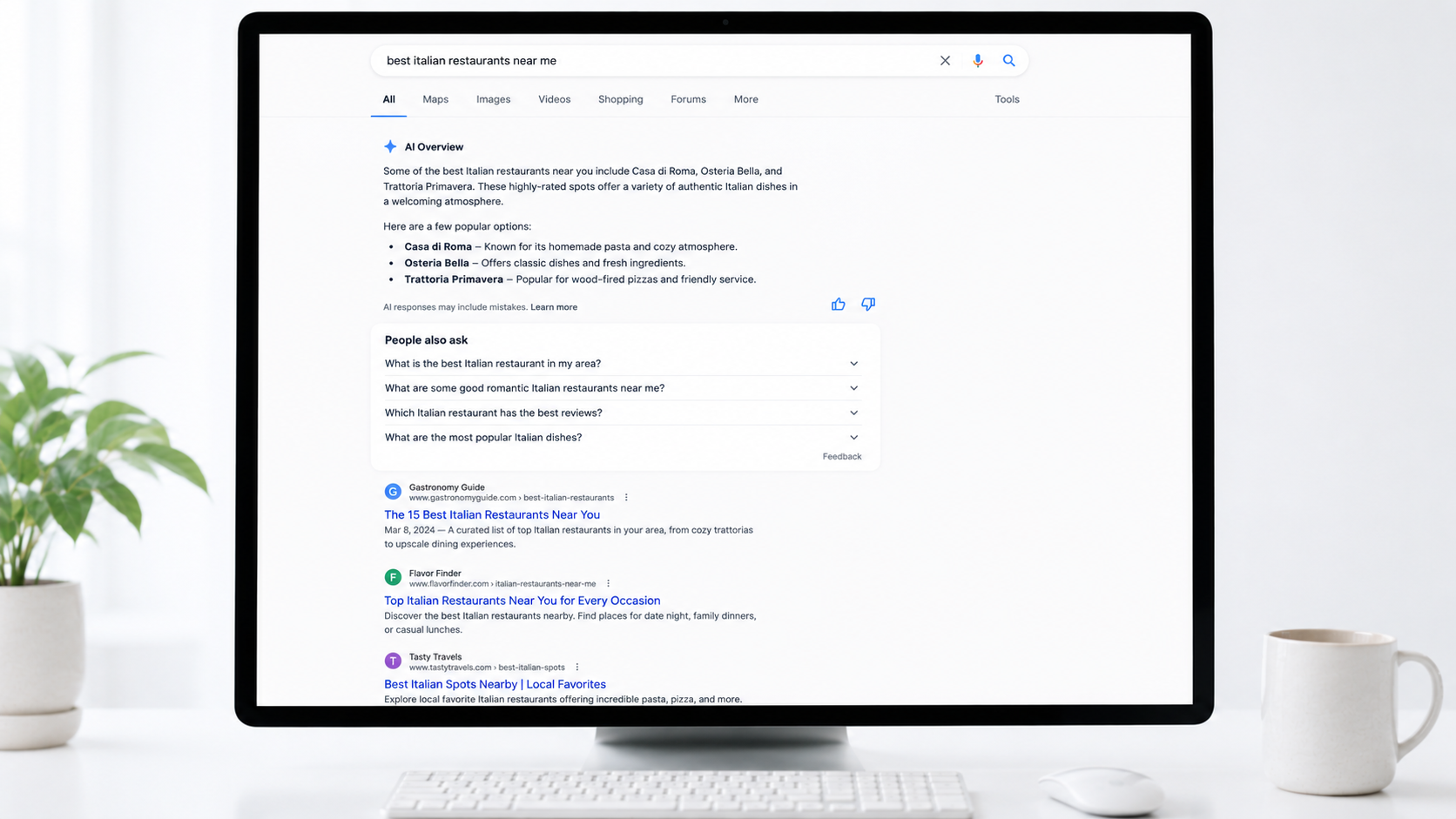
Video is becoming part of AI-assisted discovery, not just traditional search results. Google confirms that its generative search features, including AI Overviews and AI Mode, can surface relevant videos alongside supporting links. For how-to and comparison queries, timestamps can also help searchers jump directly to the most useful part of a longer video. (Google Search Central)
The same elements that support YouTube visibility can make video content easier for AI search systems to reference, summarize, and surface:
- Clear, specific titles
- Accurate descriptions and metadata
- Reviewed captions and transcripts
- Descriptive chapters and timestamps
- Consistent coverage of a defined topic area
Captions and transcripts do double duty. They improve accessibility while giving search systems a cleaner, more complete record of what the video covers. For B2B channels publishing technical explanations, demonstrations, or comparisons, reviewed captions should be treated as a core discoverability requirement rather than an optional extra.
This is still an emerging area, not a solved playbook. There is no separate formula that guarantees inclusion in an AI-generated answer. For now, the strongest approach to Generative Engine Optimization is also good YouTube SEO: create useful content, structure it clearly, maintain accurate metadata, and build genuine topical authority over time.
Connecting YouTube SEO to Pipeline
A YouTube SEO strategy only contributes to pipeline when ranking is treated as a means, not the commercial outcome. The value comes from using search visibility to move the right buyer from discovery into deeper evaluation, a relevant next step, and eventually a measurable opportunity. That requires a strategy connecting content planning, calls-to-action, attribution, and reporting.
1. Map Content Pillars to Funnel Stages
Give each content pillar a specific role in the buyer journey:
- Awareness: Industry education, trends, and problem-focused content targeting broader discovery keywords
- Consideration: Comparisons, product demonstrations, and solution explainers targeting lower-volume, higher-intent searches
- Decision: Customer stories, implementation walkthroughs, and branded or near-branded queries
Each stage needs its own keyword strategy. A broad educational video should not be judged by the same conversion expectations as a product comparison viewed by someone actively evaluating vendors.
2. Build Calls-to-Action Into the Video
Do not rely on the description alone, since many viewers will never expand or read it. Mention the next step verbally and make it relevant to the content they just watched. That might be:
- Downloading a related resource
- Watching a deeper product demonstration
- Moving to a related video or playlist
- Exploring a customer example
- Requesting a consultation or demo
Reinforce the same action through a pinned comment, card, or end screen. The goal is to create a natural progression rather than interrupt the video with an unrelated sales pitch.
3. Track YouTube as a Distinct Lead Source
Add UTM parameters to links and record YouTube separately in form and CRM tracking. Do not allow video-driven inquiries to disappear into broad categories such as “organic,” “social,” or “direct.”
This attribution foundation is essential if YouTube is expected to support broader lead generation efforts.
4. Report on Pipeline-Relevant Metrics
Continue tracking watch time, CTR, retention, and returning viewers, but connect them to commercial indicators such as:
- Video-assisted leads
- Video-attributed opportunities and pipeline
- Conversion rate by video or content pillar
- Funnel stage and topic producing the strongest opportunities
This shows whether search visibility is attracting potential buyers or merely generating channel activity.
5. Feed Pipeline Data Back Into the Content Plan
Invest more in the topics, formats, and funnel stages that consistently influence qualified opportunities. Refresh high-performing videos, create related follow-ups, and strengthen viewing paths around them.
Videos that produce views without relevant engagement or pipeline should be reassessed rather than repeated automatically. The objective is not to maximize output. It is to build a searchable video library that helps buyers progress and gives the marketing team clear evidence about what deserves further investment.
Common YouTube SEO Mistakes B2B Brands Make
Most YouTube SEO problems are not caused by one missing tag or an imperfect title. They come from treating video publishing as a series of isolated uploads rather than a coordinated search and pipeline strategy.
- Uploading without a keyword plan
Reactive videos built around internal priorities rarely create the topical consistency needed for sustained discovery. Define the search intent and buyer stage before production begins.
- Treating the description as an afterthought
A one-line description wastes valuable metadata space that could clarify the topic, summarize the value, add timestamps, and direct viewers to a relevant next step.
- Optimizing for views instead of watch time and pipeline
An off-topic video may generate a temporary spike in views while attracting the wrong audience and diluting the channel’s focus. Judge performance through retention, qualified engagement, and commercial contribution.
- Failing to track video-driven leads in the CRM
Without UTMs and distinct source tracking, YouTube’s contribution disappears into broad organic or social categories. When pipeline impact remains invisible, the channel becomes harder to justify and fund.
- Leaving auto-captions unedited
Inaccurate captions reduce accessibility and create an unreliable transcript for YouTube, Google, and AI search systems to interpret.
Avoiding these mistakes helps each upload contribute to a stronger channel, clearer buyer journeys, and measurable pipeline rather than becoming another disconnected video.
Building This In-House vs. Working With a Partner
Most of the work covered in this guide can be handled in-house. Channel setup, metadata standards, keyword research, and mapping video topics to funnel stages are all manageable with a documented process, clear ownership, and consistent execution.
The decision usually comes down to capacity and analytics:
- Build the capability in-house when the team has enough time to maintain optimization alongside video production and can connect performance to leads, opportunities, and pipeline in the CRM.
- Work with an external partner when ongoing keyword research, optimization, reporting, or attribution would otherwise compete with core production and marketing priorities. Some brands use specialist YouTube SEO services, while others choose a broader digital marketing partner that can connect video with the wider search and content strategy.
Either model can work. The same channel, video, and measurement fundamentals apply regardless of who executes them.
Conclusion and Key Takeaways
A B2B YouTube SEO strategy works at two levels: channel authority and video-level optimization. Both require deliberate planning, consistent execution, and content built around real buyer questions, not an upload-and-hope approach.
The strongest performance signals, including watch time, CTR, and continued viewing, are also signs that the content is genuinely useful. That is why good YouTube SEO and good video content are not competing priorities.
The strategy only creates business value when performance is tracked beyond the platform. Tag YouTube-driven leads in the CRM, connect videos to opportunities and pipeline, and let commercial results, not raw view counts, guide what gets produced next.
If you are building a YouTube presence and want help connecting it to your broader search and content strategy, explore our SEO services and talk through what that could look like.
About YouTube SEO Strategy: How to Rank Videos, Build Channel Authority, and Generate Pipeline
This guide was written by Angel Poghosyan and reviewed by Sonja Somborac, SEO Specialist at Scopic Studios.
Scopic Studios delivers exceptional and engaging content rooted in our expertise across marketing and creative services. Our team of talented writers and digital experts excel in transforming intricate concepts into captivating narratives tailored for diverse industries. We’re passionate about crafting content that not only resonates but also drives value across all digital platforms.
Frequently Asked Questions
What Is YouTube SEO?
YouTube SEO is the process of optimizing a channel and its videos so they can be discovered more easily in YouTube and Google search. It includes keyword research, titles, descriptions, thumbnails, captions, playlists, channel structure, and viewer engagement signals that help search systems understand and surface relevant content.
What Are the Most Important YouTube SEO Ranking Factors?
The most important YouTube SEO ranking factors are search relevance, click-through rate, watch time, audience retention, and viewer engagement. Titles, descriptions, spoken content, and captions help establish relevance, while strong viewing behavior shows YouTube that the video satisfies the search and deserves continued visibility.
How Do I Optimize a YouTube Channel for SEO, Not Just Individual Videos?
Optimize a YouTube channel by defining clear topics, completing the About section, adding relevant channel keywords, and organizing videos into focused playlists and content pillars. Consistent branding, a useful trailer, and website links also help YouTube understand the channel and help prospective buyers navigate its expertise.
How Long Does YouTube SEO Take to Show Results?
YouTube SEO can take anywhere from several weeks to several months to produce meaningful results. The timeline depends on search demand, competition, channel authority, publishing consistency, click-through rate, retention, and audience response. Videos targeting specific, lower-competition queries may gain visibility faster than broader or highly competitive topics.
Can YouTube Videos Really Generate B2B Leads and Pipeline?
Yes, YouTube videos can generate B2B leads and pipeline when they address real buyer questions and lead viewers toward a measurable next step. Product demonstrations, comparisons, customer stories, and implementation videos can support evaluation, while UTMs, form tracking, and CRM attribution reveal their contribution to opportunities and revenue.
Do YouTube Video Tags Still Matter for SEO?
YouTube video tags still matter, but they are a minor relevance signal rather than a major ranking factor. YouTube says titles, thumbnails, and descriptions have more influence on discovery. Use a small set of accurate tags, especially for commonly misspelled terms, rather than adding numerous keyword variations.
How Does YouTube SEO Relate to Google Search and AI Overviews?
YouTube SEO can help videos appear in Google search features and AI-assisted search experiences. Clear titles, accurate descriptions, reviewed transcripts, and descriptive chapters make the content easier for search systems to understand, reference, and surface, while also supporting traditional visibility in video results.
Should a B2B Company Build YouTube SEO In-House or Use a YouTube SEO Agency?
A B2B company should build YouTube SEO in-house when it has clear ownership, sufficient capacity, and reliable reporting and CRM attribution. A YouTube SEO agency or broader marketing partner may be more practical when ongoing research, optimization, analytics, and pipeline tracking would otherwise compete with production and other priorities.