
Listen to article
AI content personalization is not just a trend; it’s a necessity for businesses looking to drive higher engagement, conversions, and ROI. With AI, you can create dynamic content that adapts to individual customer preferences, delivering the right message to the right person at the right time.
In this article, we’ll explore key AI-driven personalization strategies that are setting the stage for success in 2025, from dynamic website experiences to hyper-personalized video marketing.
How Widespread AI Usage is Revolutionizing Content Creation
AI’s influence in content marketing has leapt from novelty to necessity, forever altering how brands connect with audiences. Today’s most effective content strategies lean heavily on AI for efficiency, speed, and hyper-personalization, allowing teams to stay competitive without sacrificing creativity. The technology is no longer reserved for early adopters; it’s now a standard toolset for marketing departments of any size.
- Nearly 60% of marketers are utilizing AI in some capacity, with content creation being the most popular application at 52%. Source, Source
- An overwhelming 91% of content marketers were already using AI tools in their content creation processes in 2023. Source
- Looking ahead, 65% of content marketers intend to use generative AI tools for content development. Source
- A significant 85% of marketers believe that integrating AI into content development has led to increased content quality. Source, Source
- HubSpot’s research indicates that 77% of marketers believe AI helps them craft more personalized content, increasing its appeal to their target audience. Source, Source
While businesses are quickly adopting AI to accelerate output and fine-tune relevance, the real differentiator will be how creatively marketers blend human insight with AI-powered optimization. The leaders in this fast-evolving space will be those who balance efficiency with authenticity—using AI not as a replacement but as a catalyst for even better storytelling.
Pro Tip:
Start by mapping out areas in your workflow where automation can take over repetitive tasks, then invest your saved time into enhancing original research, strategic ideation, and the human elements that foster real audience trust.
Marketers Doubling Down on AI Budgets for Sharper Customer Targeting
The race to connect with audiences on a personal level has intensified, motivating brands to give their AI budgets a healthy boost. Today’s shifting digital landscape means guesswork is no longer viable—as modern marketers seek real-time insights and scalable personalization, investment in AI is rapidly moving from optional enhancement to strategic necessity.
- More than 50% of marketers are planning to increase their investments in AI over the next year, signaling a widespread commitment to data-driven decision-making. Source
- 25% of marketers are already utilizing AI to deepen their understanding of customers and improve precision targeting. Source
- With 43% of B2B marketers struggling to break through the content clutter, 56% are prioritizing AI-powered automation for 2025 to help their messaging stand out. Source
As competitive pressures mount and audiences demand more relevant experiences, marketers adopting AI solutions are better positioned to deliver tailored content while freeing up time for strategy and creativity. Embracing AI is no longer about keeping up; it’s about taking the lead.
Pro Tip:
Seek out AI platforms that go beyond automation to offer granular analytics and predictive modeling—empowering you to anticipate customer needs and fine-tune your campaigns for maximum ROI.
The Rising Bar for Personalized Customer Experiences
Customer expectations are evolving fast, fueled by advances in AI and a growing appetite for content that feels as though it’s crafted just for them. Today’s brands aren’t just competing on product or price—they’re measured by how well they can anticipate and address individual needs across every digital touchpoint. The shift toward AI-driven personalization is rewriting the rules for engagement, forcing businesses to rethink not just what they say, but how and when they say it.
- 71% of consumers anticipate brands will deliver content experiences that feel purpose-built for them. Source
- 71% of customers confirm that personalized communication has a significant impact on their buying decisions. Source
- 76% of people express frustration when companies fail to provide tailored interactions. Source
The message is loud and clear: personalization isn’t just a value-add—it’s a prerequisite for earning trust and loyalty. Brands that harness AI to interpret data signals and design content journeys around each customer’s preferences will enjoy a decisive edge. Neglecting this reality risks alienating an audience that’s less patient than ever with irrelevant messaging.
Pro Tip:
Make personalization seamless and scalable by using AI-powered segmentation and predictive analytics. Go beyond surface-level recommendations—analyze behavior patterns, intent data, and browsing context to deliver content that genuinely anticipates customer needs.
How AI-Powered Personalization Translates into Measurable Growth
The competitive edge isn’t just about having more data—it’s about transforming that data into experiences that actually move the needle. AI’s sophisticated algorithms are enabling brands to create one-to-one journeys at scale, finally overcoming the “one-size-fits-all” approach that so often leads to customer fatigue and disengagement. This technology is pushing boundaries, helping companies exceed revenue benchmarks and deepen customer loyalty by delivering content and offers that truly resonate.
- Companies leveraging advanced personalization strategies are seeing conversion rate uplifts between 10% and 30%. Source
- High-caliber personalized campaigns can deliver an impressive 8X return on marketing investment and drive sales up by 10%. Source
- Organizations using next-generation AI personalization report generating 40% more revenue than those relying on legacy tactics. Source, Source
- McKinsey has found that harnessing personalization effectively can slash acquisition costs by up to 50%, increase revenue by 5-15%, and amplify marketing ROI by 10-30%. Source
These figures reveal a pivotal truth: the brands that are surging ahead don’t just deliver more—they deliver what matters, exactly when it matters. As new AI models become adept at interpreting intent and emotional cues, marketers should view personalization as a revenue engine rather than an optional add-on. Advanced personalization platforms streamline segmentation, predictive analytics, and dynamic content—all of which empower marketers to outpace growth targets while building stronger, longer-lasting customer relationships.
Harnessing these AI-driven personalization tools is a prime example of how AI is changing the way we percieve digital marketing, enabling marketers to achieve greater efficiency and effectiveness across every customer touchpoint.
Pro Tip:
Keep your personalization efforts agile. Leverage AI platforms that let you continuously A/B test and optimize experiences in real time, ensuring you’re always adapting to customer needs, market shifts, and new opportunities for revenue expansion.
How Marketers Are Harnessing Generative AI for Personalization at Scale
Generative AI is no longer just a shiny new tool—it’s quickly becoming an essential engine behind tailored content strategies. As competitive pressures mount and audiences demand more relevant experiences, marketers are tapping into AI-powered solutions not just to keep up, but to break creative barriers and capture attention where it matters most.
- A compelling 85% of marketers believe generative AI will dramatically shape content creation in 2024, according to HubSpot.
- 81% of marketers already leveraging generative AI say it improves their roles and daily output. Source
- Despite strong adoption, only 28% of B2B marketers feel highly proficient at integrating AI into their marketing arsenal—even though two-thirds are experimenting with GenAI. Source
- Among B2B users, around 50% use generative AI to spark fresh topic ideas, 45% harness it for headline and keyword research, and another 45% turn to AI for drafting content. Source
- Free tools dominate the AI stack: 91% of marketers using generative AI prefer no-cost options (like ChatGPT), while just 27% commit to paid platforms for content creation. Source, Source
What’s clear is that generative AI is steering the future of content personalization, yet the competitive edge goes to those who can move beyond surface-level experimentation. As more marketers jump on the AI bandwagon, true differentiation will come from developing deeper expertise—combining AI’s efficiency with human storytelling and strategic oversight.
Pro Tip:
Don’t just use AI to scale content—invest in upskilling your team so they can harness premium features, fine-tune prompts, and monitor outputs for brand consistency. The magic happens when you’re not just generating more content but delivering richer, more relevant experiences at every touchpoint.
The Expanding Impact of AI Chatbots on Customer Touchpoints
Businesses seeking more agile and responsive marketing tactics are increasingly looking to AI chatbots—not just for cost savings, but to reshape how they acquire and nurture leads. Rather than replacing human interaction, these chatbots act as a scalable frontline, available 24/7, and tuned to deliver personalized, context-aware support. With the growing appetite for instant answers and tailored recommendations, organizations are rethinking their digital engagement strategies to meet customer expectations in real time.
- While 36% of marketers currently use AI chatbots, 58% plan to increase their investment in and reliance on these tools in 2024. Source
- 57% of B2B marketers in the United States have integrated AI-enabled chatbots into their demand generation programs to gain deeper insights into their audience. Source
- 26% of B2B marketers in the U.S. who use chatbots have seen a 10-20% increase in lead generation volumes. Source
Today’s leading organizations see AI chatbots as a competitive advantage, allowing them to gather actionable data, qualify leads faster, and create seamless digital journeys that customers have come to expect. As investment in chatbot technology accelerates, the most successful brands will be those that blend automation with a human touch—making handoffs to live agents simple and ensuring conversations feel authentic rather than transactional.
Pro Tip:
Start by mapping out your customer journey to pinpoint where chatbots can add real value, such as handling repetitive queries, offering tailored content, or nudging visitors toward conversion. Regularly review chatbot transcripts to identify friction points and continually refine your bot’s responses for a more natural and effective user experience.
AI’s Transformational Role in Shaping Personalized Marketing Outcomes
AI isn’t just a buzzword in marketing circles—it’s actively redefining how brands engage with their audiences and outmaneuver competitors. What once took entire teams of analysts and months of experimentation can now be achieved algorithmically, delivering hyper-relevant experiences in real time. Early adopters in marketing are discovering that the strategic use of AI is not just nice-to-have; it’s a performance multiplier.
- Marketing and advertising are at the frontline of AI innovation, boasting a 37% adoption rate of generative AI in the workplace. Source
- AI-driven personalization is widely embraced by leadership—92% of business leaders now rely on it to accelerate growth and revenue. Source
- Personalization campaigns powered by AI can lower customer acquisition costs by up to 50%, providing a critical edge as customer expectations and competition intensify. Source
Pro Tip:
To maximize the benefits of AI-driven personalization, regularly audit your data streams and algorithms to ensure your messaging stays responsive to changing customer needs and market trends. Forward-thinking marketers leverage AI not only to reach more prospects but to forge deeper, more meaningful connections at every touchpoint.
Numbers That Prove AI Personalization Is Transforming User Engagement
Brands are no longer settling for generic content; the new gold standard is individualized messaging at scale. AI-driven personalization is helping marketers anticipate needs and dynamically optimize every touchpoint, producing measurable gains across the funnel—not just in clicks, but in loyalty and lifetime value. Here’s a closer look at how key AI strategies are shaping performance in real time:
- 80% of consumers are more likely to make a purchase when brands offer personalized experiences. Source
- Marketers find that AI-enabled personalization can drive conversion rates by up to 35%. Source
- AI algorithms can help reduce customer acquisition costs by as much as 50%. Source
- 63% of marketers say that data-driven personalization has increased their conversion rates. Source
- Real-time personalized recommendations drive up to 26% of total ecommerce sales. Source
- Over half of consumers (54%) expect brands to anticipate their needs and offer relevant suggestions. Source
- Websites that leverage dynamic, AI-powered content modules see up to 43% higher engagement rates. Source
Takeaway: Precision + Relevance = Competitive Edge
AI personalization isn’t just raising the bar—it’s redefining what customers expect. Progressive businesses that successfully leverage smart segmentation, real-time predictive analytics, and dynamic content aren’t just seeing higher conversions—they’re building deeper trust and stronger brand advocacy. In an era where attention is fleeting, relevance is your best retention strategy.
Pro Tip:
To push your results further, build a feedback loop between AI insights and your content creators. Regularly review performance data, customer responses, and emerging patterns—then experiment with AI-powered A/B testing or hyper-targeted offers to fine-tune your approach in real time.
Unlocking AI-Powered Experiences on Your Website
While the days of static, “one-size-fits-all” websites are long gone, most brands are still scratching the surface when it comes to using AI for true real-time personalization. The modern website can—and should—act as a dynamic digital concierge, adapting in the moment as it senses what each visitor is seeking. Leveraging AI for website personalization allows businesses to go beyond the basics, presenting hyper-relevant messages, product selections, or offers based on intricate segmentation and live behavioral cues.
- Website personalization can be based on segments created in marketing automation tools, allowing for customized website views that offer relevant and needs-based content. This goes beyond typical adjustments like location or currency. Source
Adaptive, AI-powered web experiences aren’t just “nice to have” anymore—they’re rapidly becoming the expectation, especially in competitive markets where capturing interest within seconds is critical. Businesses that go beyond surface-level personalization and leverage granular segmentation, recommendation engines, and predictive analytics will win the loyalty game.
Pro Tip:
Map your site’s key personas and journeys, then deploy AI to anticipate visitor intent—think personalized banners, content blocks, and product carousels that evolve in real time. For fast results, start by integrating marketing automation platforms that sync seamlessly with your CMS, making segment-based personalization quick to implement and scale.
How AI-Driven Personalization is Shaping the Future of Video Ads
Video marketing is entering a dynamic new era, with artificial intelligence taking center stage in crafting experiences that genuinely speak to individual consumers. Brands are moving past generic content and leveraging AI to tailor video messaging—showcasing products, offers, or stories most relevant to each viewer’s unique interests and purchase history. This elevated approach doesn’t just captivate attention; it lays a foundation for deeper trust and brand loyalty in a crowded digital environment.
- AI is enhancing personalization in video marketing, helping build stronger connections with audiences through dynamic video ads that reflect the viewer’s interests, past purchases, or demographics. Source
- In 2025, AI-powered personalization is expected to be a cornerstone of video marketing, offering a more seamless and engaging experience for consumers. Source
If you’re looking to future-proof your video strategy, now is the time to start harnessing the power of AI for ultra-targeted storytelling. Brands that leverage AI to map and predict customer intent can deliver video content that feels almost tailor-made, translating into higher engagement rates and ultimately, conversions. With AI changing the way we percieve digital marketing, integrating advanced personalization in video doesn’t just set your brand apart today—it positions you for the rapidly evolving landscape ahead.
Pro Tip:
Tap into AI analytics platforms to continually refine your video campaigns. Use granular viewer data—like watch time, click patterns, and engagement hotspots—to automate content customization and boost relevance at scale.
Predictive AI: Anticipating Customer Desires Before They’re Voiced
With the rapid evolution of marketing technology, brands are moving away from simply reacting to customer data—they’re harnessing AI to predict what customers want next. Predictive analytics is emerging as the powerhouse behind hyper-personalized marketing, enabling brands to craft experiences that feel intuitive and tailor-made, often before a customer even expresses a need. This proactive approach doesn’t just strengthen loyalty; it creates a sense of anticipation that can set savvy marketers apart.
- By 2025, predictive analytics will be the engine propelling hyper-personalized marketing, equipping AI to foresee customer needs in advance. Source
- AI-driven personalization is set to take the lead in mobile marketing, empowering brands to present content uniquely aligned with each user’s habits and preferences. Source
The impact of predictive analytics goes beyond improved targeting—it empowers businesses to delight their customers by delivering the right message, on the right channel, at precisely the right moment. As the line between brand intuition and customer expectation blurs, those leveraging AI’s predictive potential will create the kind of frictionless, memorable experiences that keep audiences coming back.
Pro Tip:
To stay ahead of the curve, explore AI-driven platforms that not only segment your audience but also forecast customer behavior and intent. Layering predictive insights with real-time personalization will put your brand in a position to surprise and truly satisfy your audience—often before they even ask.
Unlocking Unprecedented Efficiency and Engagement Through AI
The competitive edge in marketing no longer comes solely from creative flair—it’s increasingly decided by how effectively teams leverage AI to work faster, smarter, and with deeper customer understanding. As businesses embrace automation and predictive analytics, artificial intelligence is catalyzing a shift from resource-heavy manual processes to data-informed decisions and hyper-personalized engagement.
- Roughly 76% of marketers are now using AI to increase productivity, while 52% leverage it to heighten customer engagement. Source
- 50% of B2B marketing leaders are currently utilizing AI, and adoption is set to surge, with 75% planning to deploy generative AI for promotional efforts. Source
- AI-driven content creation is streamlining the production pipeline, freeing marketers to focus on big-picture strategy and innovation. Source
- Personalization, campaign automation, and customer data analysis are becoming seamless through AI—enabling tailored, timely interactions at scale. Source
- Marketers are deploying AI for real-time campaign optimization, behavior prediction, and process automation, all driving improved ROI and performance. Source
Far from just being a time-saving tool, AI is now the linchpin that turns raw data into actionable strategies—fueling both operational efficiency and authentic, one-on-one customer connections. The organizations harnessing AI aren’t just optimizing current efforts; they’re building agile marketing machines ready for unpredictable shifts in audience needs and digital channels. For additional insight into how AI is changing the way we percieve digital marketing, industry leaders are sharing case studies on transformational results in this evolving landscape.
Pro Tip:
Identify recurring processes within your marketing workflow and experiment with AI platforms designed for those tasks—whether it’s intelligent content distribution, lead scoring, or real-time analytics. The hours you reclaim can be redirected toward creative experimentation, campaign refinement, and bigger-picture innovations that set your brand apart.
Smarter Ad Campaigns: Harnessing AI for Precision Targeting and Creative Scalability
Competition for audience attention isn’t just about ad spend—it’s about relevance, speed, and effective use of data. Modern advertising platforms are equipping marketers with AI-driven tools that go well beyond traditional campaign management, opening the door to hyper-personalized, optimized outreach that keeps up with shifting customer preferences. Staying ahead means understanding not only how AI enhances your reach, but also how quickly you can adapt and scale campaigns.
- Google Ads leverages AI to dynamically optimize bids and build ads designed for individual user intent. Performance Max campaigns, for instance, employ keywordless AI to identify high-converting queries and craft tailored content in real time. Source
- Cutting-edge generative AI capabilities within Google Ads enable marketers to instantly create and iterate on creative assets, making campaign scaling effortless and fast. Source
- Microsoft’s AI-powered suite includes unique solutions such as Conversational Ad experiences, Ads for Chat API, and Copilot, signaling the industry’s rapid move toward interactive, context-aware advertising. Source
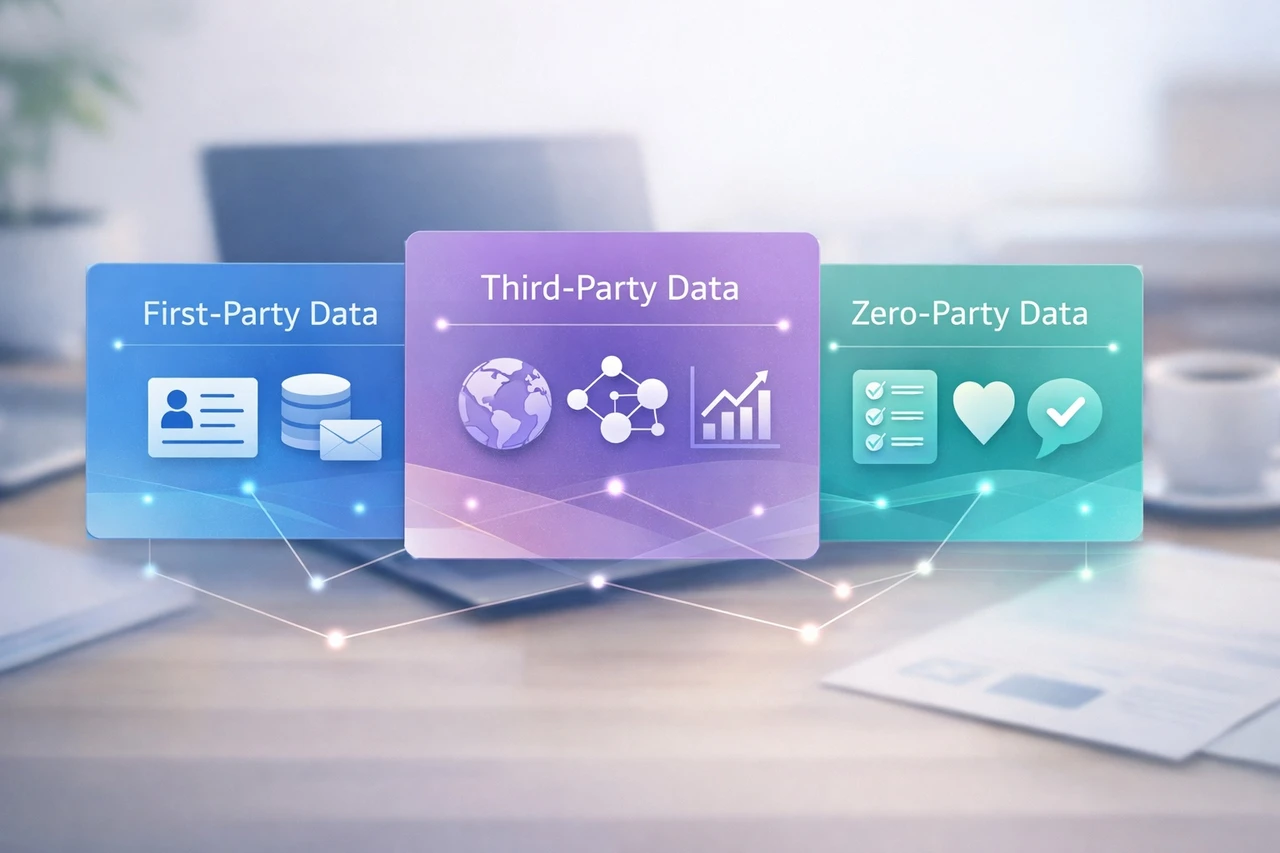
- The shift toward privacy and data security is raising the value of first-party data. Google’s enhanced conversions tap into this data to intelligently inform bidding strategies and serve as powerful audience signals within Performance Max campaigns—achieving both compliance and superior accuracy. Source, Source, Source
AI’s impact on advertising isn’t just about automation—it’s about agility, better creative, and unparalleled targeting built on trustworthy data. Brands embracing AI-driven platforms aligned with a robust first-party data strategy aren’t simply optimizing for clicks; they’re future-proofing their entire marketing approach for continually evolving digital privacy standards and user expectations.
Pro Tip:
Elevate your campaigns by actively building rich first-party datasets—think beyond website forms to include loyalty programs, app engagement, and CRM integrations. The more nuanced your data, the more effectively AI can personalize and maximize your ad performance.
How AI Automation is Revamping Content Production Workflows
The rapid adoption of AI-driven automation is not just a passing phase—it’s resetting expectations around how efficiently content teams can ideate, create, and iterate. In a climate where brands are under pressure to stay top-of-mind and relevant, organizations leveraging AI are finding themselves several steps ahead, able to produce high-quality content at a scale and speed that was previously unattainable. But beyond efficiency, AI is also becoming a muse, fueling more inventive campaigns and delivering genuine competitive advantages.
- 57% of B2B companies are using generative AI to produce more content in less time. Source
- 41% of marketers use generative AI to craft more creative campaigns. Source
- 35% of marketers apply generative AI to gain a competitive edge. Source
The growing prevalence of AI automation signals a shift where content marketers can now trade tedious manual processes for strategic experimentation. Modern teams are harnessing generative AI not just for volume, but for agility—quickly adapting messaging, personalizing at scale, and launching eye-catching campaigns that otherwise would have strained resources. Brands that invest time in learning, integrating, and iterating with AI tools are quickly distinguishing themselves from their peers.
Pro Tip:
Start by automating time-intensive activities such as keyword research, content outlines, and first-draft generation. This will give your creative team the bandwidth to focus on originality, personalization, and fine-tuning the human touch that drives results. The right mix of automation and hands-on creativity is where real content innovation happens.
Quantifiable Gains: How AI is Elevating Marketing ROI
AI solutions are no longer just experimental tools—they’ve become pivotal for unlocking real, measurable value in the marketing pipeline. Organizations implementing AI are discovering that smarter automation, hyper-personalized content, and deeper analytics aren’t just improving campaign efficacy—they’re directly impacting profitability and growth metrics.
- Marketers who use AI experience an average of 70% increase in ROI. Source
Pro Tip:
Build a transparent ROI dashboard dedicated to your AI marketing efforts—monitor campaign performance, refine algorithms, and double down on the tactics delivering the most value. This level of rigorous analysis will ensure your AI investments continue to pay dividends well into the future.
Conclusion
AI content personalization is no longer a glimpse into the future—it’s the present reality shaping how brands engage and convert their audiences. The staggering statistics outlined above make one thing clear: businesses that invest in AI-driven strategies are not just keeping up—they’re leading the charge. From dynamic content marketing to predictive analytics and AI-powered advertising, the tools available today allow marketers to deliver hyper-personalized experiences that resonate with audiences and drive significant ROI.
However, unlocking the true potential of AI requires more than just adopting the latest tools; it demands a strategic approach that blends data-driven insights with human creativity. Companies that embrace this balance can expect to not only meet but exceed customer expectations, transforming casual interactions into meaningful, loyalty-building connections.
Ready to boost your traffic and grow your website? Your customers are looking for you, and our SEO services can help you be found across search engines. Empower your brand with cutting-edge AI personalization strategies, and let’s make your marketing efforts truly exceptional.
Note: This blog’s images are sourced from Freepik.