
Introduction: The Shifting Sands of Search
The End of Google’s Unchallenged Reign
For over two decades, Google dominated search, becoming the default starting point for information across the digital landscape. The search giant established itself through revolutionary innovations like PageRank, AdWords, mobile-first indexing, and the E-E-A-T Guidelines, fundamentally shaping how marketers approach visibility and traffic generation. However, a seismic shift is occurring in 2025. Users are increasingly frustrated with traditional search results cluttered by ads and spammy content, creating an opening for a new generation of competitors.
Today, AI-powered search engines like Perplexity AI, You.com, ChatGPT Search, and Bing Copilot are fundamentally changing the game. Rather than simply listing links, these platforms generate comprehensive answers and summarize knowledge using large language models (LLMs). This represents far more than a technological upgrade—it’s a massive transformation in consumer behavior that demands immediate attention from marketers who’ve built their strategies around Google SEO.
How AI Search Engines Work Differently
The distinction between traditional and AI-powered search is profound. Generative AI tools deliver direct, personalized answers instantly through conversational interfaces, eliminating the friction of scanning multiple results. These platforms prioritize user experience and context-aware responses over traditional indexing methods, offering instant clarity, personalized results based on query intent, and a distraction-free environment without advertisements.
The data tells a compelling story: 55% of U.S. users now prefer generative AI over Google for specific tasks like trip planning, writing, coding, and shopping research—with particularly strong adoption among Gen Z and Millennials. While Google has responded with its Search Generative Experience (SGE), featuring AI-generated summaries and conversational options, many users continue gravitating toward ad-free, standalone AI platforms that deliver pure, uncluttered answers.
This shift represents a fundamental challenge to the marketing playbook that’s dominated for decades. Understanding these changes isn’t optional—it’s essential for staying competitive in the evolving search landscape.
Understanding the Three Layers of Search
How Traditional Search Engines Work
Traditional search engines have operated on a fundamental principle for decades: indexing content to match keyword queries. The process is straightforward but mechanical. These engines crawl the internet, parse and analyze web content, index pages, and rank them using complex algorithms to present a Search Engine Results Page (SERP). However, this approach has inherent limitations. Traditional search engines rely heavily on keyword matching and ranking algorithms, which sometimes miss deeper meanings or the actual user needs behind a query. The result? Users receive a list of links and must often check multiple sources to find their answer. Additionally, personalization remains limited, typically based only on location and search history.
The GenAI Search Revolution
The emergence of generative AI search represents a fundamental shift in how information is discovered and presented. GenAI search uses Large Language Models (LLMs) to provide direct answers rather than just a page of results. These intelligent systems understand user intent from natural language queries, deliver detailed explanations, combine information from multiple sources, and enable follow-up conversations—creating a more conversational search experience.
The Key Differences in Approach
AI search engines leverage Natural Language Processing (NLP) and Machine Learning to understand the context of queries and analyze user intent in ways traditional engines simply cannot. They focus on providing direct answers and summaries by analyzing content from various sources and presenting the most relevant information upfront. More importantly, AI search engines are continuously learning and improving based on user interactions, while traditional search engines rely on fixed algorithms updated only occasionally.
The personalization gap is particularly striking. AI search engines provide highly personalized results by considering user preferences, past searches, and current situations—far beyond what traditional engines offer. Additionally, AI search engines support multimodal search, processing different types of input like text, images, and voice, whereas traditional search engines primarily focus on text-based searches. This evolution demands a new approach to search experience optimization and generative engine optimization for marketers.
The Rise of AI Search Engines and Changing User Behavior
How AI Search Works Differently
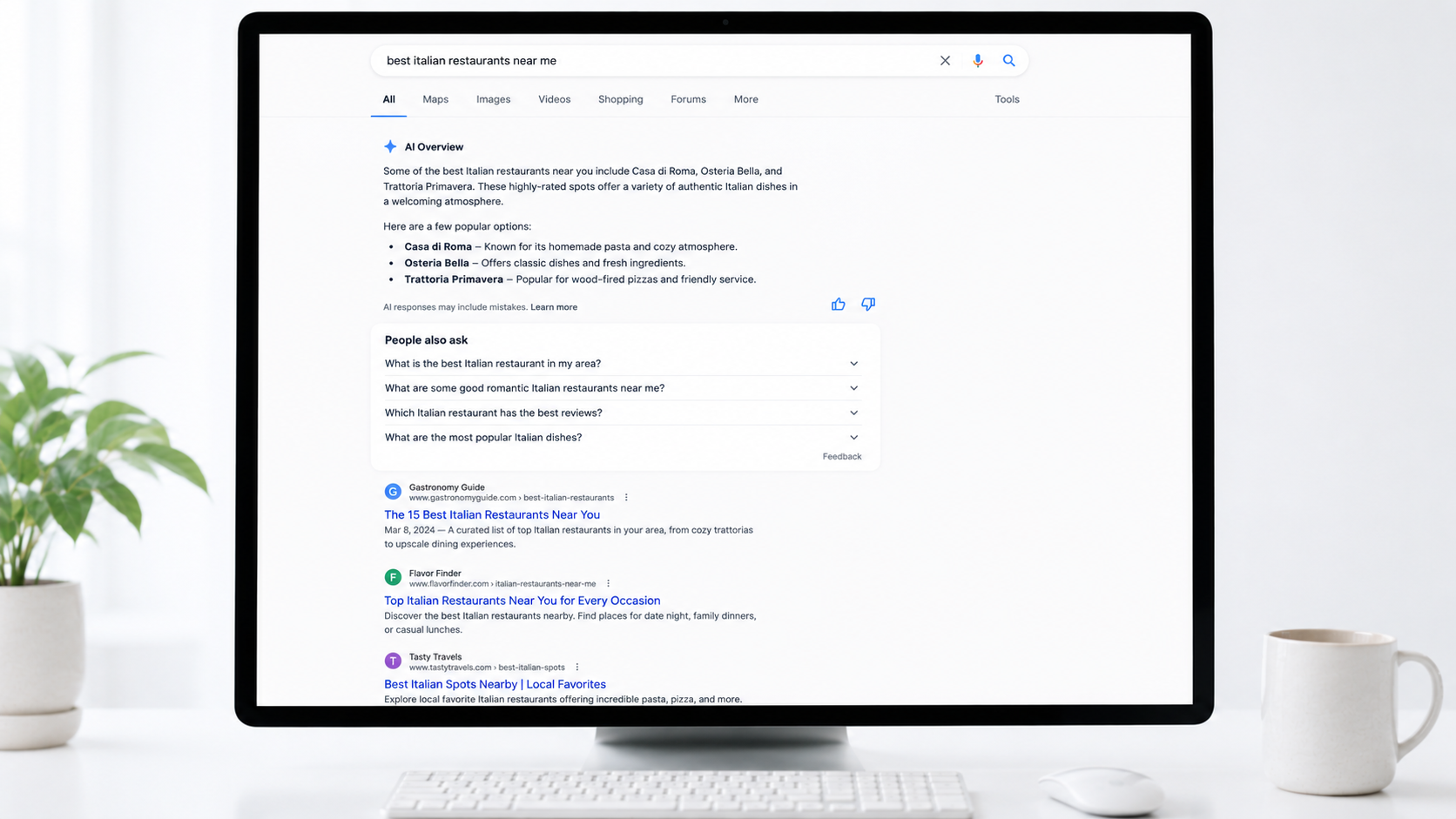
The fundamental shift from traditional search to AI-powered answers represents a seismic change in how information is discovered online. Rather than serving up a ranked list of links, AI search writes answers directly, pulling insights from multiple sources to deliver synthesized responses. Generative engines like Google AI Overviews, Perplexity, and ChatGPT function as intelligent editors, summarizing and stitching together content into coherent, single responses that blend text, data, and visual context seamlessly.
This fundamental difference in approach means success in AI search is no longer measured solely by ranking position and click-through rates. Instead, inclusion, visibility, and citation frequency within AI-generated summaries have become the new metrics that matter. Brands must now think about how their content gets extracted, synthesized, and presented within these AI summaries—a completely different optimization paradigm than traditional SEO.
The Evolution of Search Queries and User Expectations
User behavior is evolving rapidly in response to these new search capabilities. Queries are becoming longer and more complex as users seek concrete answers rather than generic information. People are now asking full questions in natural language, expecting AI systems to interpret their intent and deliver exactly what they need. AI search organizes multi-source insights into tables, lists, and bullet points, creating a more interactive and digestible experience than traditional search results.
The adoption of multimodal search is accelerating, with AI platforms blending text, images, voice, and video into unified queries. Google Lens alone processes over 12 billion visual searches monthly, demonstrating the massive scale of this shift. Younger demographics are leading this transformation—58% of U.S. adults under 30 have used ChatGPT, nearly double the share of older adults. About 31% of Gen Zers now start searches using AI platforms or chatbots, compared to just 20% of the general population.
The Impact on Click-Through Rates and Content Discovery
Perhaps most concerning for marketers, click-through rates are decreasing as AI summaries provide direct answers on the results page itself. CTR dropped by 15.5% across queries triggering AI Overviews, with clicks nearly twice as high when no AI summary appears. Remarkably, only 1% of users click links inside AI summaries, fundamentally changing how traffic flows to websites.
AI Overviews are expanding rapidly—appearing for 6.49% of searches in January 2025 and jumping to 13.1% by March 2025. These overviews typically trigger for complex questions, instructional searches, product comparisons, current events, and information-dense topics. Success requires clear writing, self-contained sections, and concrete data that AI systems can easily extract and cite.
Marketing Implications: SEO in the AI Era
From Link Rankings to Answer Authority
The marketing landscape is undergoing a fundamental shift. Search has moved from links to answers, with AI systems synthesizing comprehensive information from multiple sources rather than ranking individual pages. This represents a seismic change in how visibility is earned. Instead of optimizing for traditional ranking factors like backlinks and domain authority, marketers must now focus on becoming citation-worthy sources that AI systems naturally reference.
The implications are stark: 99% of users who see an AI Overview don’t click any cited sources, and over half of all Google searches already ended without a single site visit in 2024. However, this doesn’t mean the end of search marketing—it means evolution. Users who do click through from AI summaries tend to be more qualified and convert better, making the traffic that remains significantly more valuable.
The Rise of Answer Engine Optimization (AEO)
Traditional SEO is giving way to Answer Engine Optimization. Marketers must shift from keyword-focused strategies to answer-focused frameworks that prioritize factual accuracy, comprehensiveness, and clear information hierarchies. Content that performs well in AI synthesis—such as how-to guides, comparison articles, FAQ pages, and research reports—gets cited 4.2x more frequently in AI-generated responses.
The technical foundation matters too. Pages with comprehensive schema markup are 2.5x more likely to be featured in AI-generated responses. Beyond markup, focus on semantic HTML, clear heading hierarchies, and accessibility. Organizations that pivot to AI search optimization see 67% higher brand mention rates in synthesized results, while SaaS companies establishing early authority experience 45% higher conversion rates from search-driven traffic.
Building Long-Term Competitive Advantage
Early adoption creates winner-take-most dynamics. The average AI search visitor is 4.4 times more valuable than traditional organic search visitors based on conversion rates. While AEO typically costs 20-40% more than traditional SEO initially, the long-term ROI justifies the investment.
Original research is crucial—answer engines prioritize primary sources and unique data points. Visibility increasingly comes from third-party websites like reviews, news, forums, and social media rather than direct brand citations. This demands a strategic pivot: audit existing content for AI compatibility, implement topic clustering, establish authority through primary research, and optimize for multi-modal search. The brands that act now will dominate visibility for years to come.
Marketing Implications: Content Strategy for Answer Engines
Shifting from Keyword Ranking to Answer Synthesis
The fundamental shift in search behavior demands a complete rethinking of content strategy. AI search engines prioritize synthesizing comprehensive answers from multiple sources rather than ranking individual pages based on links and authority signals. This means your content’s success no longer hinges solely on keyword placement and backlink profiles—instead, it depends on becoming a trusted source that AI systems can extract from and cite.
This transition marks the move from traditional SEO to Answer Engine Optimization (AEO). While SEO optimizes for ranking individual pages, AEO focuses on creating content that AI systems can easily extract and synthesize into coherent responses. The strategic implication is clear: your content must be authoritative, structured, and designed for easy extraction by AI algorithms.
Optimizing Content Format and Structure
To thrive in this new landscape, focus on creating authoritative, structured content with clear hierarchies that AI can readily parse. The most effective formats include:
- How-to guides with step-by-step structures
- Comparison articles with structured pros and cons
- FAQ pages in question-answer format
- Research reports featuring primary data and citations
- Definition content with clear, concise explanations
AI systems favor content with clear topic sentences, bullet points, and numbered lists for easier extraction and presentation. Implement proper heading hierarchies, semantic HTML structure, and comprehensive schema markup to signal content organization to search algorithms.
Building Authority Through Original Research
Original research has become invaluable in the AI search era. Answer engines prioritize primary sources and unique data points over aggregated content, making original research crucial for standing out. This shift encourages brands to invest in proprietary studies, surveys, and data-driven insights that AI systems will naturally cite as authoritative sources.
Redefining Success Metrics
Traditional SEO metrics require supplementation with AI search-specific measurements. Track citation rates, answer synthesis inclusion frequency, and source attribution across AI platforms. Your content distribution strategy should shift from driving direct traffic to becoming a cited source in AI-generated responses across multiple platforms—a fundamental change in how we measure content ROI in the age of answer engines.
Marketing Implications: Building Brand Authority
The New Authority Paradigm
The rules of visibility have fundamentally shifted. Brand legitimacy now drives sustainable visibility in AI-powered search environments, replacing the traditional link-counting model that dominated for decades. Google’s algorithms have evolved to ask a critical question: “Who authored this content, and how are they recognized elsewhere?” rather than simply “Who links to this page?” This represents a seismic shift in how search engines—and increasingly, AI answer engines—evaluate credibility.
The difference is stark: helpful content paired with strong brand authority now outperforms over-optimized sites that rely on outdated tactics. LLMs infer reputation through the frequency, consistency, and context of brand mentions across the open web—Reddit, Quora, LinkedIn, YouTube, G2, and beyond. Authority has become externally validated and significantly harder to manipulate, shaped by how convincingly your brand appears across the wider digital ecosystem. This means brand building is the new SEO multiplier, influenced by digital PR, brand advertising, events, partnerships, and even offline activity.
The Three Pillars of AI-Ready Authority
Building authority for AI search engines requires a structured approach grounded in three interconnected pillars. Category authority means owning the truth and defining how your industry is understood. Canonical authority involves creating definitive, explanation-first content designed to answer questions properly and be cited by others. Distributed authority proves your legitimacy beyond your website through PR coverage, social mentions, video platforms, communities, reviews, and events.
AI search engines prioritize brands they recognize, trust, and can confidently cite. This requires sending consistent, clear, and scalable signals across all platforms—your website, Google Business Profile, social channels, and third-party listings. The shift isn’t just about publishing advice; it’s about demonstrating verifiable experience through case studies with real numbers and context. Treat your content as a connected ecosystem rather than isolated assets, ensuring consistent expertise across blogs, videos, social posts, emails, and landing pages.
The Urgency of Now
The window to build organic authority in answer engines is closing fast. If your brand isn’t showing up in AI-driven search results, you’re missing critical visibility. While AI platforms will increasingly feature paid placements, organic trust will matter even more. The only defense against pay-to-play dominance is being undeniably credible—through reviews, media mentions, brand coherence, and proof that AI systems can’t ignore. Investing in systemized visibility infrastructure now secures your organic real estate for the decade ahead.
Marketing Implications: Analytics and Measurement
Tracking AI-Driven Traffic in GA4
The rise of AI answer engines is fundamentally changing how we measure marketing success. AI integration into search is leading to a noticeable decline in organic traffic, particularly for informational queries where users get answers directly from AI tools without clicking through to websites. This shift means your Google Analytics 4 dashboard may show fewer organic sessions than you’d expect—and that’s not necessarily a bad thing.
The real challenge lies in attribution. As AI platforms generate traffic, conversions may be underreported or misattributed to “direct” traffic if you’re not tracking properly. The good news? GA4 allows you to configure custom channel groupings and use regex filters to identify sources like ChatGPT, Gemini, or Perplexity. By customizing channel groupings specifically for “AI-driven search,” you can accurately track and analyze AI’s impact on your website traffic and make smarter budget allocation decisions. GA4’s real-time and lifecycle reports are crucial for monitoring these emerging traffic patterns and conversion rates.
Rethinking Your KPIs
Here’s where it gets interesting: AI search visitors convert at significantly higher rates than traditional organic visitors. In fact, the average AI search visitor is 4.4 times more valuable than the average traditional search visitor based on conversion rates. For B2B brands specifically, AI search traffic converts into pipeline at 56.3% higher close rates compared to Google or Bing, with ChatGPT leads showing the highest close rate at 4.08%.
This means you need to stop obsessing over raw traffic numbers. Instead, focus on tracking conversions and engagement metrics. Users who click through from AI results tend to be more qualified and ready to convert because LLMs provide comprehensive information upfront, leading to more informed decisions before they ever visit your site.
Measuring AI-Driven Lead Quality
To properly measure AI’s impact, track AI search traffic and conversions using referrer tracking and UTM parameters. Create a separate cohort in your pipeline reports to measure AI-driven leads independently—track their MQL-to-Closed rates separately from traditional search leads. This approach reveals the true ROI of AI traffic and helps you understand why fewer clicks might actually mean better business outcomes.
Additionally, audit and monitor your brand visibility in LLMs to identify citation and perception gaps. As AI search is projected to surpass traditional search for digital marketing topics by early 2028, getting ahead of these measurement strategies now positions you to capitalize on this shift.
Future-Proofing Your Marketing Strategy
Shift Your Focus from Rankings to AI Citations
The marketing landscape is undergoing a fundamental transformation. AI search visitors are projected to surpass traditional search visitors by early 2028, making it critical to adapt now. The old playbook of chasing page-one rankings is becoming obsolete. Instead, forward-thinking marketers need to prioritize being cited by AI engines as the new standard of visibility.
Here’s what’s changed: AI-powered search engines like Perplexity AI, You.com, ChatGPT Search, and Bing Copilot generate comprehensive answers and summaries rather than listing links. This shift means less direct website traffic from search results, but the visitors who do arrive are significantly more valuable—the average AI search visitor converts 4.4 times better than traditional organic visitors because they’ve already received detailed information for decision-making.
The key insight? ChatGPT search primarily cites lower-ranking results, with nearly 90% of citations coming from positions 21 and beyond. This means you don’t need to dominate traditional rankings to gain AI visibility—you need to create content tailored to specific use cases and audiences.
Build Authority and Optimize for AI Discovery
To future-proof your strategy, focus on the fundamentals that AI engines actually prioritize: expertise, authority, and trustworthiness. Google’s E-E-A-T Guidelines remain crucial in the AI era, but implementation has evolved.
Create content that’s easily quotable and machine-readable. Use structured data and schema markup extensively, include author credentials and original research, and ensure your messaging is consistent across platforms. Diversify your presence beyond Google—engage on high-authority sites like Quora and Reddit, where content is frequently cited in AI overviews.
Balance long-form, in-depth content with concise, bullet-pointed summaries and multimedia integration. This hybrid approach ensures AI engines can extract and cite your information while maintaining comprehensive value for human readers. Topic clustering and a human-AI synergy for content creation will become standard practice for competitive advantage.
Conclusion: Adapting to the Hybrid Search Landscape
The New Reality: Hybrid, Not Binary
The future of search isn’t about choosing between AI answer engines and Google—it’s about thriving in both. The future is hybrid, with Google continuing to evolve through innovations like SGE while AI-first platforms simultaneously capture significant market share. Data consistently shows traditional search traffic declining as ChatGPT and similar platforms gain dominance, signaling a fundamental shift in how people discover information. The reality is clear: ignoring AI search represents a missed opportunity that could cost you competitive ground.
Rethinking SEO for an AI-Powered World
SEO isn’t dead—it’s transformed. Traditional tactics are being reshaped by AI-driven considerations around intent, authority, and context. Success now demands creating content that serves dual purposes: genuinely useful for human readers and easily processable by AI systems. This means shifting focus toward synthesis-first environments where answers matter more than links, and where comprehensive, authoritative content gets extracted and cited by AI systems.
The measurement framework must evolve too. Beyond traditional metrics, you’ll need to track AI search-specific indicators like citation rates, answer synthesis inclusion, and source attribution frequency. This requires closer collaboration between content, SEO, and analytics teams to build integrated strategies that work across both search landscapes.
Your Path Forward
A balanced approach is essential for 2025 and beyond. Maintain practices that drive results in traditional search while strategically pivoting toward authoritative, comprehensive content that AI systems can easily leverage. Organizations investing in this transition now will establish competitive advantages as AI search adoption accelerates.
The time to adapt isn’t tomorrow—it’s today. Whether you’re optimizing for Google or ChatGPT, the principles remain consistent: create valuable, authoritative content with clear intent signals and structured data. Ready to navigate this transformation? Contact us to develop a comprehensive search strategy that captures opportunities across both traditional and AI-powered search channels.
Note: This blog’s images are sourced from Freepik.