
The AI Search Visibility Audit: Ensuring Your Brand’s Presence in the New Digital Landscape
Understanding the Stakes of AI Visibility
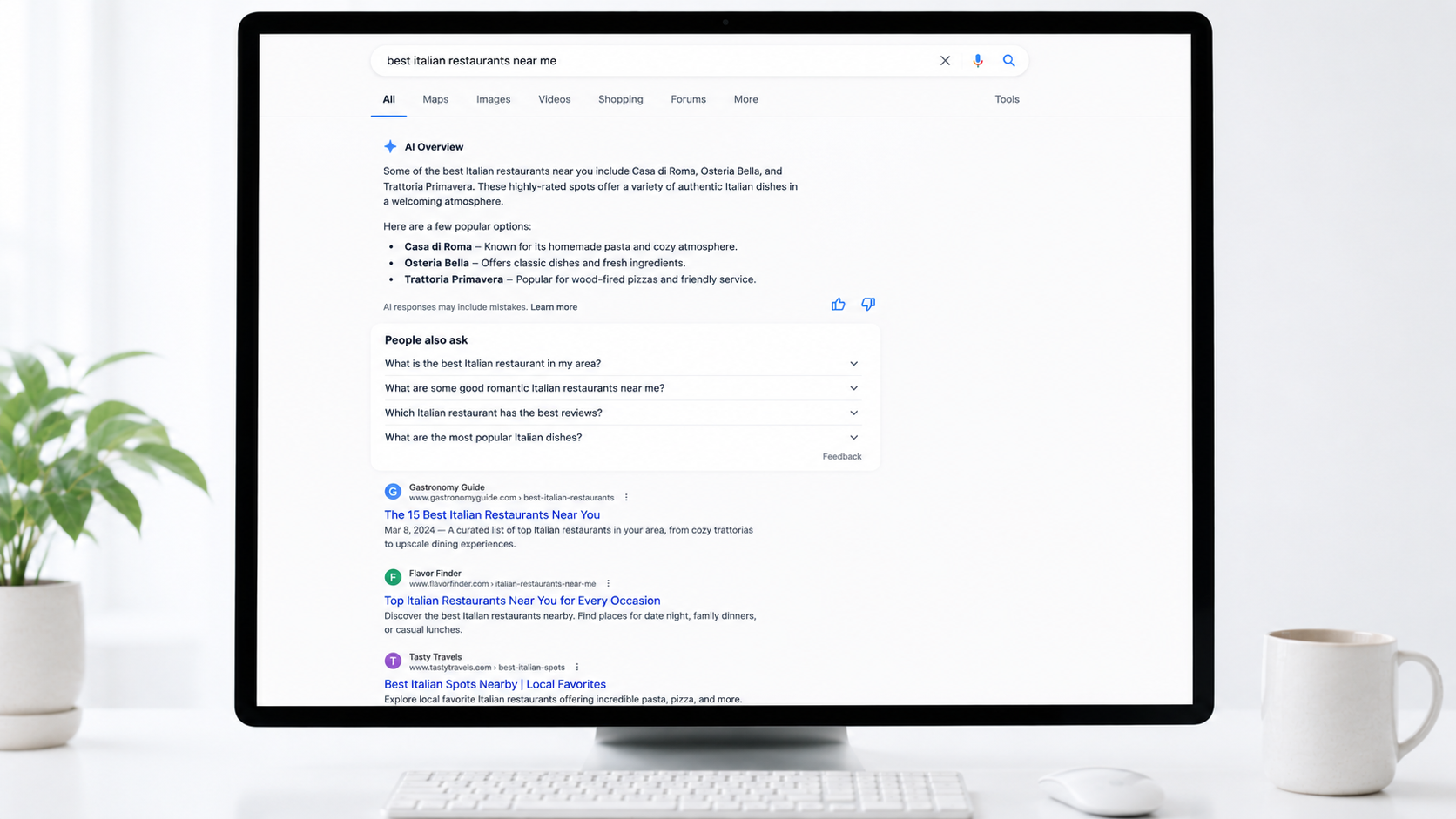
The digital landscape has fundamentally shifted. With a significant number of consumers now using AI-powered search, your brand’s visibility in AI platforms like ChatGPT, Google AI Overviews, and Perplexity has become as critical as traditional SEO. The numbers tell a compelling story: according to the latest research conducted by Advanced Web Ranking, Google AI Overviews appear in 60% of searches, while ChatGPT commands 59.7% of the generative AI market share. Yet here’s the challenge—when AI Overviews appear, organic click-through rates plummet by 61%, from 1.76% to just 0.61%.
This is where an AI visibility audit becomes essential. An AI visibility audit is a structured approach for search and brand teams to assess how their brand appears on these emerging platforms. It measures where your brand is mentioned, how often, how accurately, and which sources AI systems cite. Unlike traditional SEO audits, this process evaluates citation frequency, citation quality, sentiment analysis, competitive positioning, and technical accessibility across multiple AI platforms simultaneously.
Why Your Brand’s AI Presence Matters
Early industry observations show that brands cited in AI-generated answers tend to see increases in branded search demand, direct traffic, and downstream engagement signals, even when direct clicks from AI interfaces remain limited.
According to Pew Research, users are less likely to click external links when AI summaries are present, reinforcing the importance of being included directly within AI-generated answers.
However, your brand’s reputation is increasingly shaped by how AI assistants talk about your company when millions of users ask for recommendations and advice. AI responses often present a single, authoritative-sounding recommendation, making the stakes higher and visibility lower than traditional search. This reality demands a proactive, comprehensive audit strategy to ensure your brand not only appears but appears accurately and favorably across all major AI platforms.
The Audit Framework
The audit process involves defining your scope—which AI platforms, entities, and regions matter most—then benchmarking current visibility, analyzing responses for accuracy and sentiment, identifying your top-cited pages, and comparing your position to competitors. Key metrics include mentions, citations, impressions, and AI Share of Voice, providing a complete picture of where your brand stands in this new digital ecosystem. This ongoing cycle should ideally run monthly or quarterly, given how rapidly AI platforms evolve and update their models.
Why a Manual + Structured AI Visibility Audit is Crucial Now
The Shift in How Customers Discover Brands
The digital landscape has fundamentally changed. AI-driven search referrals surged over 1,300% during the last holiday season alone, signaling a shift in consumer behavior. More striking still: 58% of consumers now rely on AI for product and service recommendations, up from just 25% in 2023. This isn’t a niche trend—it’s becoming the primary discovery channel for millions of potential customers.
Here’s the critical problem: if your brand isn’t mentioned when a customer asks an AI for recommendations, it’s filtered out before reaching traditional search engines like Google. You’re not just losing visibility; you’re losing the opportunity entirely. Traditional tools like Google Search Console show impressions and clicks, but AI platforms provide no direct measurement of brand visibility. This gap creates a blind spot that most businesses haven’t yet addressed.
Why Traditional Monitoring Falls Short
Your existing brand monitoring tools—social media trackers, news aggregators, forum monitors—simply don’t capture AI responses. Unlike published web pages that persist and can be indexed, AI responses are generated fresh and disappear, leaving no trace for traditional monitoring systems to detect.
There’s another layer of complexity: ChatGPT mentions brands 3.2 times more often than it cites them with links. If you’re only tracking citations, you’re missing the majority of your AI visibility. Additionally, implied mentions—where AI describes your product without naming your brand—signal that the model understands your category but hasn’t yet confidently associated your brand name with it. This is particularly important for newer brands or products with unique features.
The Foundation: Manual Testing First
Before investing in expensive automated tools, manual prompt testing is the most reliable foundation for understanding your AI search visibility. Perplexity is uniquely useful because it transparently shows its sources, allowing you to reverse-engineer exactly how AI platforms perceive your brand.
A manual + structured audit is crucial because AI search adds a new layer to how customers find brands, complementing traditional search. Starting with at least one quarter of manual testing helps you understand your baseline before adopting paid tools. This approach gives you imperfect but actionable data—far better than total blindness—and positions your business ahead of competitors still relying solely on legacy monitoring solutions.
Step 1: Define Your Audit Scope and AI Platforms
Before diving into your AI search visibility audit, you need to establish a clear framework for what you’re measuring and where. This foundational step ensures your audit delivers consistent, comparable data across all platforms and time periods.
Choose Your AI Platforms
Start by identifying which AI platforms matter most for your brand. An AI visibility audit assesses how a brand appears on AI search platforms like Google AI Overviews, ChatGPT, and Perplexity. The major players you should consider include:
- Google AI Overviews
- Google Gemini
- ChatGPT
- Perplexity
- Claude
- Microsoft Copilot
Not every brand needs to track all six platforms equally. If your audience primarily uses ChatGPT and Google, focus there first. However, as generative engine optimization becomes increasingly important, monitoring at least the top three to five platforms gives you a comprehensive view of your AI presence.
Define Your Brand Entities
Next, list all the brand entities and sub-entities you’ll analyze throughout the audit. This goes beyond just your company name. Include:
- Your main company name
- Product or service names
- Key authors and thought leaders
- Executive names
- Any brand variations or acronyms
This comprehensive approach prevents gaps in your audit and reveals how different aspects of your brand are represented across AI platforms.
Set Geographic and Linguistic Boundaries
If your brand operates internationally, define which geographic regions and languages you’ll include in your audit. This is especially important for brands with multilingual content or region-specific products. Setting these boundaries upfront ensures you’re measuring what actually matters for your business strategy.
By clearly defining your audit scope—platforms, entities, and geographic focus—you create a repeatable framework for tracking your brand in AI answers and measuring progress over time. This structured approach is what separates effective AI visibility audits from scattered, inconsistent efforts.
Step 2: Manual Prompt Testing for Direct and Implied Mentions
Testing Direct Brand Mentions
Manual prompt testing is the most reliable method for tracking your brand’s visibility across AI platforms. The process is straightforward: run targeted queries on ChatGPT, Perplexity, Google AI Overviews, and other major platforms, then document exactly what appears in the responses.
When conducting these tests, focus on capturing critical data points. Does your brand get mentioned? If so, where does it appear in the list—first position or buried further down? What’s the sentiment of the mention, and which competitors are being highlighted alongside your brand? Taking screenshots of every response is essential for building a reliable historical record and tracking changes over time.
To maximize your testing efficiency, use query templates across multiple scenarios: category-specific questions (“What are the best project management tools?”), comparison queries (“How does Tool A compare to Tool B?”), problem-solution questions (“How do I automate my workflow?”), and direct brand queries (“Tell me about [Brand Name]”). A complete baseline audit typically takes 45-60 minutes but provides invaluable insight into your current AI search presence.
Tracking Implied Mentions
Beyond direct mentions, your brand may receive what’s called “implied mentions”—when AI describes your product’s unique features or capabilities without explicitly naming your brand. This happens when the AI understands your product category but hasn’t yet confidently associated your brand name with it.
To identify implied mentions, start by listing your product’s unique differentiators and capabilities. Then query for those specific features without mentioning your brand name. For example, if your software has proprietary automation features, search for “software with [specific capability]” and see if the AI response describes your solution without naming it.
Document these implied mentions separately, noting the platform, exact query used, the AI’s response type, your confidence level in the match, and any additional context. Implied mentions are particularly significant for newer brands, products with distinctive features, or niche market categories. When they occur without direct mentions, they signal an important gap: the AI recognizes your product category but needs stronger brand-name association in its training data.
Establishing Your Tracking System
Create a structured tracking spreadsheet with columns for Date, Platform, Query, Brand Mentioned?, Position, Competitors Listed, Sentiment, Inaccuracies, and Screenshot Link. Conduct these manual checks monthly or quarterly to monitor visibility changes over time. While manual testing isn’t infinitely scalable and can be affected by model updates or personalized responses, it remains your most direct window into how AI platforms present your brand to users.
Step 3: Citation Analysis
Understanding Perplexity’s Citation Transparency
Perplexity stands out as a uniquely valuable tool for tracking AI brand visibility because it transparently displays its sources through numbered citations in every response. Unlike other AI platforms, this transparency makes it possible to systematically audit how your brand appears in AI-generated answers.
To begin your citation analysis, head to perplexity.ai and enter category-specific queries relevant to your industry—for example, “What are the best project management tools for remote teams?” Perplexity’s response structure includes a synthesized answer, inline numbered citations, and a dedicated “Sources” section listing all consulted URLs. The key is to click through each source, screenshot the full response with visible citations, and document everything in a tracking sheet. Note the query used, each source cited, whether your site was included, and your brand’s position in the response.
Identifying Patterns and Source Preferences
Perplexity’s source preferences differ significantly from ChatGPT. Reddit dominates as its most-cited domain, accounting for approximately 6.6% to 46.7% of total citations, followed by YouTube and other community platforms. To uncover actionable insights, run multiple queries—aim for at least 10 different variations within your category—and track which sources appear most frequently.
Pro Tip:
directly visit Perplexity’s most-cited source URLs to determine if your brand is mentioned. If it’s not, you’ve identified a critical gap. This insight should drive your outreach strategy, whether that means requesting G2 profile reviews, monitoring relevant Reddit threads, or pitching for inclusion in updated roundup articles.
Scaling Your Analysis with Tools
While manual checks provide valuable insights, they’re not scalable and can be influenced by model updates or personalized responses. Tools like Ahrefs’ Brand Radar enable you to track brand visibility across multiple AI platforms, including Perplexity, with consistent, comparable data.
Key metrics to monitor include Mentions (how often your brand is named), Citations (how often your website is linked), Impressions (estimated exposure), and AI Share of Voice (your brand mentions versus competitors). Brand Radar’s “AI responses” report filters for queries containing your brand, responses mentioning you, or citations from your domain. The “Topics” report reveals which subjects associate with your brand on Perplexity, helping identify content gaps.
Cross-reference your top-cited pages from Brand Radar with web analytics data to understand which pages actually drive clicks from AI search. Additionally, analyze top-cited third-party content—like Zapier or Reddit threads—that frequently appear alongside your brand mentions. This reveals influential web mentions and content formats worth replicating.
Finally, use the “Others only” report to identify queries where competitors appear on Perplexity but your brand doesn’t. These gaps represent immediate opportunities to expand your AI search presence and strengthen relationships with authoritative sites that AI platforms rely on for citations.
Step 4: Technical Accessibility Audit (GEO Audit Checklist)
A technical accessibility audit ensures that AI crawlers can actually find, access, and understand your content. Without removing these technical blockers, even the best content won’t get cited in AI responses. This is where most brands stumble—they optimize for Google but forget that AI bots have different crawling requirements.
Allow AI Bots Through Your Technical Barriers
Start by checking your robots.txt file to verify that major AI crawlers are permitted to access your site. You need to allow GPTBot, Google-Extended, ClaudeBot, PerplexityBot, and FacebookBot. Many sites accidentally block these bots, which completely prevents AI systems from discovering your content.
Don’t stop at robots.txt—check your Cloudflare settings too. These often default to blocking AI bots, creating an invisible wall that keeps your brand out of AI answers. Remove these technical blockers and you immediately improve your visibility potential.
Implement llms.txt to Signal Content Priorities
Create an llms.txt file on your domain to tell AI platforms exactly which content deserves priority. This emerging standard acts like a roadmap for AI crawlers. Early adopters are seeing impressive results—organizations using llms.txt report 18-22% better citation rates for prioritized pages. It’s a simple file that delivers outsized impact.
Optimize Structured Data for AI Understanding
Structured data is critical for AI comprehension. Implement schema markup for Organization, Person, Article/BlogPosting, FAQ, HowTo, and Product pages. The data speaks for itself: pages with comprehensive schema markup achieve a 191% higher citation rate and 129% better average position in AI responses compared to pages without it.
Ensure Mobile Performance and Core Web Vitals
Your site’s technical performance directly impacts AI visibility. Verify that your mobile load time stays under 3 seconds and that your Core Web Vitals scores are solid. Sites with good Core Web Vitals are 2.1x more likely to be cited in AI Overviews. Additionally, ensure all important pages are included in your XML sitemap and fix any 404 errors that might prevent crawling.
This technical foundation removes friction from the AI discovery process, making it significantly easier for your brand to appear in AI-generated answers.
Step 5: Content Readiness and Optimization for AI Extraction
Audit Your Content for AI Extractability
The foundation of AI visibility starts with content that AI systems can easily understand, trust, and cite. Content scoring frameworks evaluate your pages on clarity, structure, and citation-worthiness. Score your content on how well it answers questions directly, uses bullet points and lists for scannability, and includes statistics, data, and expert quotes.
Here’s the reality: content scoring below 6.0 needs immediate rewrites, 7.0-8.5 requires optimization, and above 8.5 is truly AI-ready. Don’t settle for mediocre scores—AI systems are increasingly selective about which sources they cite.
Optimize with Citations, Statistics, and Expert Authority
The data is compelling: content with authoritative citations performs 29% better in AI responses, statistics boost performance by 31%, and expert quotations deliver a remarkable 41% improvement. This isn’t just about adding random data points—it’s about strategic enrichment.
Implement 2-3 statistics per 1,000 words with proper source citations, weave in expert quotes from recognized authorities, and link to authoritative sources. Make it a habit to update your statistics annually to maintain freshness and relevance.
Structure Content for Maximum AI Citation
Here’s what separates AI-visible content from the rest: content answering queries in the first paragraph gets cited 4.8x more often. This isn’t coincidental—it’s how AI systems prioritize and extract information.
Apply the Answer-First Content Optimization Framework:
– Start with a TL;DR summary
– Use question-based H2 headings
– Follow the inverted pyramid structure
– Add FAQ sections with schema markup (cited 3.2x more often)
– Keep paragraphs short (2-4 sentences maximum)
– Include comparison tables (cited 58% more often)
– Create step-by-step guides with HowTo schema (cited 4.1x more)
Build Topical Authority Through Content Hubs
Brands with comprehensive topical coverage get cited 6.2x more often than those with scattered content. This is where topical authority becomes your competitive advantage.
Create pillar pages (2,500-4,000 words) supported by 8-12 cluster pages around related subtopics. Interlink them strategically and update quarterly. This comprehensive approach signals to AI systems that your brand is a genuine authority, not just a one-off source on a single topic.
Step 6: Analyzing Competitor AI Visibility and Identifying Gaps
Benchmarking Your Brand Against Competitors
Understanding how your brand stacks up against competitors in AI search results is crucial for identifying opportunities and gaps. Ahrefs Brand Radar enables you to benchmark AI visibility by searching your brand alongside one or more competitors, with the tool’s AI suggestions auto-populating your top rivals. The “Overview” tab provides a comprehensive comparison of key AI visibility metrics across platforms—including mentions, impressions, citations, and AI Share of Voice—giving you a clear picture of where each brand stands.
To get more granular insights, Ahrefs offers multiple viewing options. The “Only brand” view shows queries specific to your brand, while “With others” displays queries and responses mentioning all compared brands together. The “Others only” view isolates queries where competitors appear but your brand doesn’t. This segmentation helps you identify which competitors are experiencing rapid AI visibility growth and where you’re losing ground.
Finding Competitive Gaps and Opportunities
Once you’ve identified where competitors outperform you, the next step is pinpointing specific opportunities. Semrush’s AI Visibility Toolkit allows you to stack your performance against chosen competitors and uncover topics, prompts, and sources where rivals have the advantage. Similarly, tools like Writesonic and Otterly AI enable you to track brand mentions, sentiment, and citations across AI platforms while benchmarking your share of voice against competitors.
The “Cited domains” and “Cited pages” reports are particularly valuable—they reveal which websites mention each brand most frequently. By analyzing these reports, you can develop strategies to increase your mentions on sites that currently favor competitors. Additionally, AI Share of Voice metrics indicate who commands the highest visibility share for specific topics, helping you prioritize which areas deserve your attention. Real-time monitoring tools like Profound track AI visibility changes as they happen, making them ideal for large brands that need to stay on top of reputational signals and competitive movements instantly.
Step 7: Integrating Indirect Signals from Traditional Analytics
While AI search engines don’t typically send direct referral traffic to your website, they create measurable downstream signals that you can track using your existing analytics infrastructure. Understanding how to detect these indirect indicators is crucial for building a complete picture of your AI search visibility.
Leveraging Google Search Console for AI Influence Detection
Google Search Console reveals valuable patterns that suggest AI platform activity. Monitor your branded search trends closely—unexplained spikes in branded searches often correlate with increased AI mentions. Pay special attention to searches containing “reviews,” “vs competitor,” or other comparative queries, as these frequently appear in AI-generated responses and can trigger downstream branded search volume.
By tracking these search patterns over time, you can establish a baseline and identify when AI coverage drives measurable changes in how users search for your brand. This indirect signal often appears before you see direct AI citations, making GSC a leading indicator of AI search visibility.
Detecting AI Referral Traffic in Google Analytics
You can identify AI platform traffic directly within Google Analytics by filtering your traffic sources for “openai,” “perplexity,” or “chat.” While this traffic is typically modest in volume, tracking it provides concrete evidence of AI search visibility impact. Even small amounts of referral traffic from these sources validate that your brand appears in AI answers and that users are clicking through to learn more.
Building a Correlation Tracking System
Create a correlation tracking sheet that compares AI mentions with traditional metrics including branded search volume, direct traffic, and third-party coverage volume. This holistic approach reveals how AI visibility influences your broader digital presence. After PR wins or feature launches, observe increases across multiple signals—AI mentions, Perplexity citations, and GSC branded search volume—to understand the full impact of your coverage.
This integrated approach transforms AI search visibility from an isolated metric into a connected component of your overall brand performance.
Conclusion: Establishing an Ongoing AI Visibility Strategy
From Audit to Action
The real value of an AI visibility audit emerges when you transform insights into concrete action. Prioritize your next steps based on impact and effort, focusing on three critical areas: correcting any misinformation about your brand, expanding content across topics and formats that AI systems cite most frequently, and strengthening relationships with authoritative sites that AI platforms rely on for citations.
This isn’t a solo effort. You’ll likely need to collaborate across teams—your PR department, content team, and technical specialists—to execute these recommendations effectively. Before diving into implementation, create a comprehensive report for stakeholders that includes executive summaries, scoring tables, competitor insights, and your action plan. This documentation ensures buy-in and keeps everyone aligned on your AI visibility goals.
Making It a Continuous Discipline
Here’s the critical mindset shift: AI visibility optimization isn’t a one-time project—it’s an ongoing discipline. The AI search landscape evolves rapidly, with new platforms, algorithm updates, and competitive activity constantly reshaping visibility opportunities. Track visibility shifts through monthly or quarterly audit cycles, continuously recording metrics to observe how your brand’s presence changes over time.
The stakes are significant. Brands that appear in AI responses experience a 38% increase in organic clicks and convert at 2-23x higher rates than those that don’t. The competitive advantage goes to brands that commit to continuous monitoring, optimization, and adaptation.
Your 30-Day Starting Point
To establish sustainable momentum, implement a structured 30-day audit timeline: Week 1 focuses on assessment and baseline metrics, Week 2 tackles technical foundations, Week 3 optimizes your content for AI-readiness, and Week 4 builds authority and establishes monitoring dashboards. Beyond that initial sprint, maintain weekly Citation Score monitoring, conduct monthly content refreshes, perform quarterly competitive analysis, and refresh your full audit annually.
Avoid common pitfalls that derail many brands: don’t treat AI optimization like traditional SEO, ensure technical accessibility for AI crawlers, maintain consistent NAP and entity data across platforms, and never adopt a “set-and-forget” mentality.
Ready to build your AI visibility strategy? Contact us to develop a customized roadmap that keeps your brand visible where your audience discovers information.
Scopic Studios delivers exceptional and engaging content rooted in our expertise across marketing and creative services. Our team of talented writers and digital experts excel in transforming intricate concepts into captivating narratives tailored for diverse industries. We’re passionate about crafting content that not only resonates but also drives value across all digital platforms.