
The New Paradigm: AI Search and Selection Probability
From Keywords to Trust and Probability
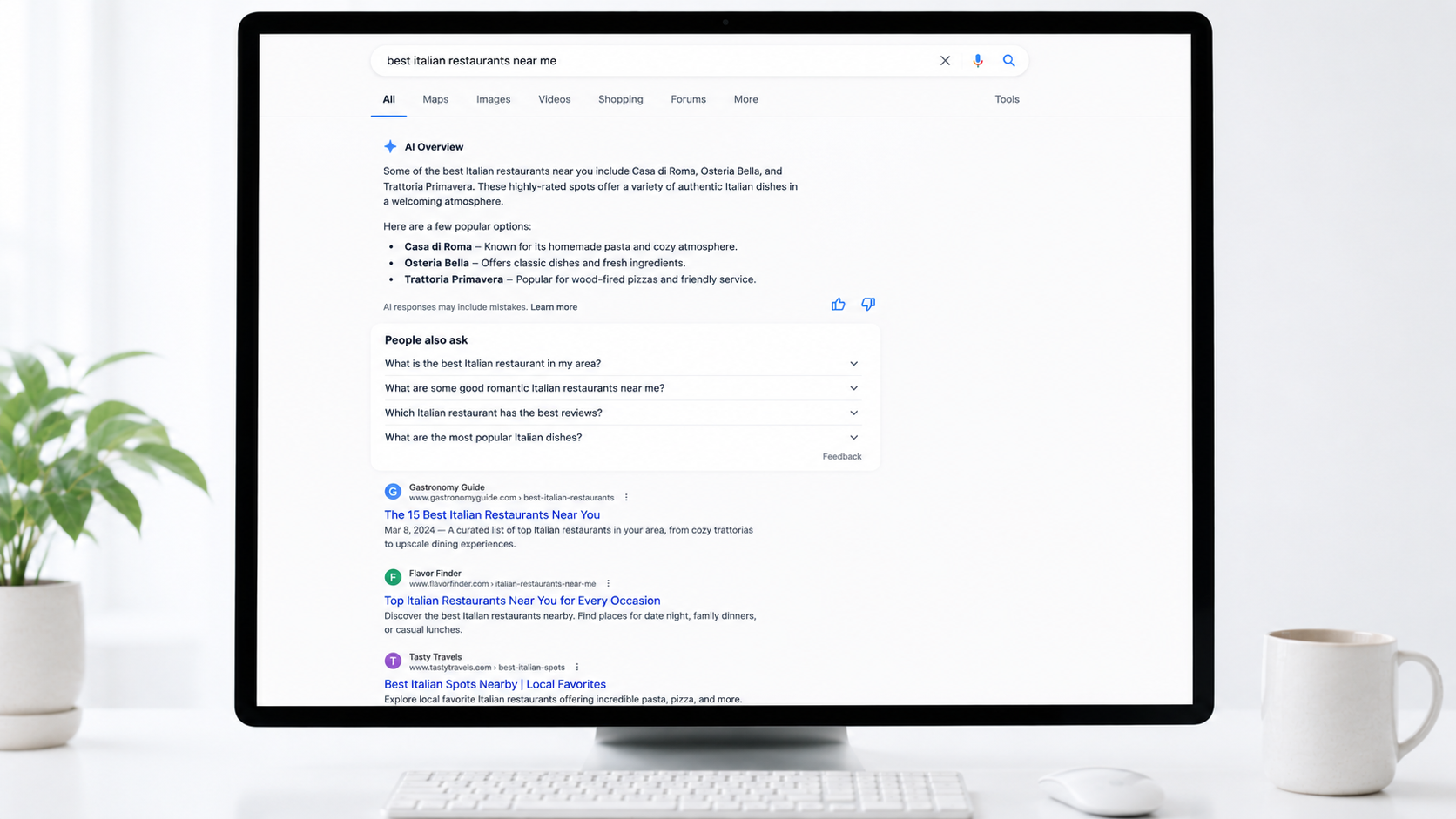
The landscape of search has fundamentally shifted. Traditional SEO operated on a simple premise: match keywords, rank pages. AI-powered search engines like Google’s AI Overviews, OpenAI’s Search, Perplexity, and Bing’s LLM-based results work differently. They operate on probabilities, trust, and entity understanding—moving far beyond keyword matching.
Rather than simply listing results, AI systems interpret, synthesize, and filter information. The core question driving these systems isn’t “Which page has the most keywords?” but rather “Is this the most helpful and trustworthy source for this query?” This represents a seismic shift in how visibility is earned. You no longer rank a page into prominence; instead, you become a trusted entity worthy of citation.
AI models evaluate brand trustworthiness, assess the risk of misinformation, check alignment with broader consensus, and determine whether a source is safe to reference in answers. AI search focuses on probability and safety, asking “Who is most likely to be correct?” rather than “Who has the most links?”
The Role of Traditional Signals and New AI-Specific Factors
Traditional SEO signals—E-E-A-T, content quality, backlinks, page experience, topical authority, and user engagement—remain foundational inputs for AI-driven decision engines. However, they’re no longer sufficient on their own. Large language models act as gatekeepers, analyzing patterns, comparing statements, and evaluating sources based on trust signals, entity validation, historical accuracy, and consensus.
The new generation of AI ranking signals reflects this evolution. Citation-worthiness, semantic relevance, direct answer quality, factual accuracy, low hallucination risk, authorship, real-world entity signals, original research, unique first-party data, content freshness, brand strength, co-mentions, user-generated content, and multimodal signals now carry significant weight.
Success in AI search means being quoted, referenced, linked, and embedded in answers—ultimately treated as an authority. This creates what experts call “cognitive authority,” a new hierarchy of trust that evaluates whether a source is safe, credible, and aligned with consensus to reduce hallucination risk.
Structural Clarity and Safety-First Content
AI systems prefer content that is clear, direct, low-risk, unambiguous, well-structured, comprehensive, and evidence-aware. Structural elements consistently rewarded include clear definitions, short paragraphs, step-by-step instructions, bulleted lists, comparison tables, FAQs, natural headings, and straightforward language.
Here’s the critical insight: “Safe to cite” matters more than “optimized to rank.” AI systems are inherently risk-averse and prioritize sources statistically less likely to create reputational or legal risk. This means reputable sources—government websites, academic institutions, major news outlets, and recognized experts—gain disproportionate visibility in AI-generated answers.
Understanding this paradigm shift is essential for modern SEO strategy. Learn more about generative engine optimization to align your content strategy with how AI actually evaluates and surfaces information.
Understanding Generative Engine Optimization (GEO) Signals
Generative Engine Optimization represents a fundamental shift in how brands approach visibility in AI-powered search environments. Unlike traditional SEO, which prioritizes keyword relevance and backlinks for search engine results, GEO focuses on clarity, structure, and factual specificity that AI systems evaluate when deciding which sources to extract from and cite in generated answers.
The stakes are clear: understanding and applying GEO signals helps your brand become consistently referenced by major AI platforms like ChatGPT, Perplexity, Claude, and Gemini. This isn’t just about visibility—it’s about establishing authority in an increasingly AI-driven information landscape.
The Seven Core GEO Ranking Signals
GEO ranking signals operate across seven primary dimensions that determine citation likelihood. Opening Answer Clarity ensures your page’s opening directly addresses the question it tackles, immediately signaling relevance to AI systems. Content Structure and Extractability formats information into discrete, labeled units—definitions, steps, tables—making it easier for AI to pull and cite your content.
Factual Specificity demands that your claims be specific, verifiable, and concrete rather than vague generalizations. This precision is what AI systems prioritize when selecting authoritative sources. Section Self-Containment means each article section must be understandable in isolation, without requiring readers to reference previous sections for context. This modularity is essential for AI extraction.
Entity Consistency ensures your brand, products, and topic associations are clearly and uniformly represented across your content and the broader web. Topical Authority Depth demonstrates comprehensive expertise through multiple related content pieces forming a cohesive cluster. Finally, FAQ Coverage provides direct, self-contained answers matching the question-answer format AI queries expect.
Optimizing Your Content for GEO
Implementing these signals doesn’t require starting from scratch. Optimizing existing content involves rewriting opening paragraphs for immediate clarity, adding structured blocks throughout your articles, ensuring each section stands alone, and strengthening your FAQ sections. These tactical adjustments position your content for consistent AI citation and visibility in generative search results.
Core AI Ranking Signals: Beyond Traditional SEO
The landscape of search has fundamentally shifted. According to Ahref’s recent report, AI-powered platforms now answer over 54.6% of all queries through generative responses rather than traditional blue links, meaning the ranking signals that matter have changed dramatically. Here’s what’s critical: only 12% of URLs cited by AI systems rank in Google’s top 10, revealing that AI search engines evaluate content through an entirely different lens than traditional SEO.
Authority and Trust: E-E-A-T Reigns Supreme
Traditional domain authority has lost its grip on AI rankings—the correlation has plummeted to just r=0.18 for AI citations. Instead, AI platforms prioritize sources with strong E-E-A-T signals, with 96% of AI Overview citations coming from authoritative sources. The game has changed: brand mentions now outperform backlinks for establishing authority with large language models, since AI systems understand contextual relevance.
Entity clarity—consistent and accurate brand identification across the web—has become your new competitive advantage. Third-party citations from industry roundups and research studies amplify your authority further, as AI cross-references claims to verify credibility. This shift means your brand reputation and consistent online presence matter more than ever before.
Content Quality and Semantic Completeness
Content quality is quantifiable in the AI era. Material scoring above 8.5/10 on semantic completeness is 4.2 times more likely to be cited. AI doesn’t just want keywords; it demands content that directly addresses user questions with specific, actionable information and factual accuracy verified through cross-referencing.
Depth beats breadth decisively—Perplexity cites PDFs 22% more often than HTML pages due to thorough explanations. Uniqueness creates citation opportunities; fresh perspectives and original research stand out. The message is clear: comprehensive, well-researched content with verifiable data and proper citations wins in AI search.
Technical Foundation and Multimodal Content
Don’t overlook the technical layer. Proper schema markup boosts citations by 73%, while multimodal content (text, images, video, structured data) produces 156% more citations than text-only content. Clear heading hierarchies, bullet points, and readable formatting improve extractability—AI systems favor content that’s easy to parse and understand.
Mobile optimization, Core Web Vitals, and crawl accessibility form the foundation. Fast server response times and clean site architecture ensure AI can access and understand your content effectively. These technical signals work together to signal that your content is trustworthy, accessible, and valuable to users.
The Role of E-E-A-T in AI Content Selection
Understanding E-E-A-T as an AI Ranking Signal
E-E-A-T—Experience, Expertise, Authoritativeness, and Trustworthiness—represents a cornerstone framework that AI search systems use to evaluate content quality and credibility. E-E-A-T are fundamental elements AI constructs rely on to determine which sources deserve prominence in generative search results.
Expertise is demonstrated through precise, well-researched, and current information that showcases genuine subject-matter knowledge. Authoritativeness goes beyond individual pages—it’s built by establishing a robust digital presence and earning backlinks from respected websites within your industry. Trustworthiness is cultivated through transparent, sincere, and ethical content practices that prioritize user benefit over manipulation.
The distinction matters: a medical blog authored by a credentialed doctor will outrank an anonymous piece on the same topic, illustrating how AI systems weigh author credentials and domain authority when selecting content to cite.
E-E-A-T for High-Stakes Content
E-E-A-T becomes especially critical for “Your Money or Your Life” (YMYL) topics—subjects that directly impact financial security, health, or personal well-being. AI search engines demand superior demonstrations of expertise, authoritativeness, and trustworthiness for these sensitive areas.
Content addressing YMYL subjects must include citations from credible sources, provide clear and precise details, and maintain transparency about author credentials and organizational affiliations. This heightened scrutiny reflects AI’s responsibility to surface reliable information when stakes are highest.
Building Authority Through Consistent Signals
AI search tools infer trust from consistent brand mentions across credible sources, citations from reputable websites, original research contributions, and strong reputations supported by reviews. Authority signals work best when they reinforce why your content is credible for a specific topic, not just general authority.
Pages earn higher citation rates when they demonstrate subject-matter expertise through depth and specificity, are referenced by other credible sources in the same niche, and show consistent expertise across related content. Brands appearing consistently across trusted sources give AI-powered search greater confidence when deciding what to cite.
To strengthen your E-E-A-T profile, focus on earning reviews and ratings, publishing expert-led content or original research, securing relevant third-party mentions, and maintaining consistent brand information across the web. These signals collectively demonstrate to AI systems that your content deserves visibility in generative search results.
Semantic Completeness and Topical Authority
Understanding Semantic Completeness
Semantic completeness is far more than just hitting a word count—it’s about covering a topic thoroughly enough that AI systems recognize your content as a definitive answer. Content scoring above 8.5/10 on semantic completeness is 4.2 times more likely to be cited in AI responses, making this a critical ranking signal.
The key difference between traditional SEO and AI search optimization lies in how systems evaluate relevance. Rather than simply matching keywords, AI systems understand context, intent, and nuance through natural language processing. This means your content must directly address user questions with specific, actionable information that demonstrates genuine expertise.
Semantic SEO focuses on creating content rich in meaning, contextually relevant, and easily understood by both humans and AI. Subject categorization becomes essential here—identifying main and subordinate themes to generate truly comprehensive content that explores nuances and interconnected concepts.
Building Topical Authority Through Depth
Topical authority signals the content’s ability to demonstrate comprehensive, interconnected coverage of a subject. This isn’t limited to a single page; instead, it encompasses an entire semantic cluster reinforced through hub-and-spoke content architecture, consistent use of co-occurrence terms, and strategic internal linking that reinforces your topical map.
AI constructs favor content demonstrating profound subject acumen. Creating exhaustive guides, penetrating assessments, and thought-provoking pieces establishes you as a luminary in your field. A holistic subject vista—leaving no facet unexplored—communicates to AI systems that your content is informative and valuable.
Here’s where depth beats breadth: Perplexity cites PDFs 22% more often than HTML pages because longer-form content provides more thorough explanations. Additionally, documents that naturally discuss related concepts occupy a richer position in vector space than those merely repeating the primary topic.
Semantic Relevance and Uniqueness
LLMs match meaning through embedding similarity, so your content should naturally incorporate the semantic neighborhood of a topic using varied, precise vocabulary. Uniqueness creates citation opportunities—AI platforms avoid regurgitating identical information, favoring fresh perspectives, original research, or novel frameworks.
Small businesses can compete effectively by focusing on niche expertise, as topical authority and content quality matter more than raw link power for AI search success.
Structured Data and Extractability: Making Content Machine-Readable
The Power of Schema Markup for AI Systems
Structured data markup is one of the most direct ways to communicate with AI search systems. By implementing schema markup, you’re essentially providing AI constructs with explicit details about your content—including content classification, authorship, publication date, and topical context. This clarity dramatically improves how AI systems comprehend and rank your pages.
The impact is measurable: proper schema markup boosts citations by 73% by helping AI systems quickly identify and extract relevant information. Schema.org provides a comprehensive vocabulary of schemas for diverse content types, and tools like Google’s Structured Data Markup Helper make implementation straightforward. The key is choosing the right schema types for your content. Article schema signals credibility through author and date information, FAQPage schema directly maps questions to answers for precise extraction, HowTo schema structures step-by-step processes, Organization schema establishes brand entity, and BreadcrumbList schema reinforces topical hierarchy.
Entity Clarity and Knowledge Graph Signals
Consistent schema implementation creates entity clarity that AI platforms reference for authority and relevance. When you markup your organization, author, and topical focus consistently across pages, you’re building a knowledge graph that AI systems use to understand who you are and what you offer. This entity-level clarity becomes increasingly important as AI search engines evolve to prioritize authoritative sources.
Beyond schema alone, multimodal content integration produces 156% more citations than text-only content. Combining text, images, video, and structured data creates multiple extraction points for AI systems, making your content more valuable and retrievable.
Formatting for Extractability
AI systems don’t just read content—they parse it. Readability directly affects extractability. Structure your content with clear headings, short paragraphs, bullet points, and logical hierarchy to make semantic chunking easier for AI systems. Additional formatting techniques like ordered lists, tables, definition blocks, and bold lead sentences further improve how AI systems break down and retrieve your information.
Implementing these structured data and formatting best practices removes ambiguity from your content, making it irresistible to AI search systems and significantly increasing your visibility in generative search results.
User Engagement Signals in the AI Era
How AI Systems Interpret User Behavior
AI search engines are fundamentally different from traditional search algorithms—they actively monitor how users interact with your content to determine relevance and quality. Page residency duration, bounce rates, and click-through rates serve as powerful indicators of user satisfaction and content value. When visitors spend extended time on your page, AI systems interpret this as a signal that your content delivers genuine value. Conversely, if users bounce within seconds, rankings can drop even if you have strong backlinks backing your site.
The key insight here is that AI doesn’t just measure traffic—it measures meaningful engagement. User interactions like clicks, time spent reading, and follow-up searches create valuable data that continuously improves how AI systems operate. This is especially true with advanced methods like Reinforcement Learning with Human Feedback (RLHF), where human input directly shapes how AI learns to provide better answers.
Building Content That Keeps Users Engaged
To optimize for AI engagement signals, focus on creating content that naturally encourages exploration and extended interaction. Structure your content with clear headings, subheadings, bulleted lists, and visuals that break up text and improve scannability. This approach helps users find information quickly while signaling to AI that your content is well-organized and valuable.
Internal linking is equally critical—guide users to supplementary relevant pages on your site to foster deeper exploration. Rather than obsessing over raw traffic numbers, measure average engagement time, pages per session, and conversion rates. These metrics tell the real story of content quality to AI systems.
Social Proof and Technical Performance Matter Too
Social proof functions as a powerful trust signal that influences both human users and AI systems. Customer reviews, testimonials, popularity badges, and trending indicators signal to search engines that users genuinely value your content. More social engagement naturally attracts links from people discovering your work, and AI rewards consistent cross-platform posting with improved visibility.
Don’t overlook technical performance either. INP (Interaction to Next Paint) measures how quickly your site responds to user actions—not just how fast it loads. Poor responsiveness can trigger ranking penalties, so ensure your site delivers smooth, immediate feedback to every user interaction.
AI Citation Signals: The New Backlinks
Understanding AI Citations vs. Traditional Backlinks
AI citations represent a fundamental shift in how search engines drive visibility. Unlike traditional backlinks—permanent HTML links that directly impact Google rankings—AI citations are references that appear in AI-generated answers without direct ranking impact (yet). However, the performance metrics tell a compelling story. While backlinks typically generate 0.5-5% click-through rates, AI citations consistently deliver 8-12% CTR, making them exceptionally valuable for driving qualified traffic.
The scalability advantage is equally impressive. A single AI citation can propagate across hundreds of prompt variations, offering compound growth that linear backlink strategies simply cannot match. This is particularly significant given that Google’s AI Overviews appear in 15% of search queries—with even higher prevalence in B2B research where 68% of researchers use ChatGPT or Perplexity during early buying stages.
What Makes Content Citation-Worthy
AI systems don’t randomly select sources. They evaluate content through a sophisticated retrieval-and-synthesis process that prioritizes three core factors: topical authority, freshness, and trust signals. AI models specifically look for well-organized structure, evidence-based reasoning, timeliness, authoritative voice, and topical consistency.
The most citation-friendly content shares distinct characteristics. It opens with direct, factual answers in the first 2-4 sentences, uses structured formatting (definitions, tables, steps), maintains section self-containment so each part stands alone, and includes comprehensive FAQ sections. Importantly, only about 38% of cited sources rank in Google’s top 10, meaning AI citation success is largely independent of traditional SEO dominance.
Optimizing for AI Citation Success
To earn AI citations, focus on becoming a primary source through original research and thought leadership. Structure content for machine readability with clear hierarchies, summary tables, and direct answer formatting. Build topical authority clusters—targeting 6-10 related articles on interconnected topics—to demonstrate sustained expertise that AI systems reward.
Different AI platforms have distinct preferences: ChatGPT leans on third-party sources, Perplexity emphasizes retrieval transparency, and Gemini prioritizes brand-owned and structured content. Strengthen entity signals through author profiles, consistent brand mentions, and schema markup. Keep content fresh, contribute to reputable publications, and consider using tools like GEO tools for AI search visibility to track your citation performance across platforms.
The ROI is measurable: monitor citation frequency growth, referral traffic from AI platforms, branded search volume increases, and lead quality improvements. In the AI-driven search landscape, citations have become the new currency of visibility.
Optimizing for LLM Ranking Factors
Understanding the Core LLM Ranking Signals
LLM ranking factors operate fundamentally differently from traditional Google SEO. Rather than prioritizing backlinks and page speed, LLMs heavily weight structured data, direct answers, tables, entity clarity, and content freshness. The key distinction? A page can rank #1 on Google but remain invisible to LLMs if it’s not structured for AI extraction. Conversely, a lower-ranked page can dominate AI citations if it delivers clear, direct answers in easily parsable formats.
The seven core LLM ranking factors include Content Authority and Credibility, Semantic Relevance and Context, Content Structure and Clarity, Freshness and Accuracy, User Engagement Signals, Technical Optimization, and Multi-Modal Content Integration. Understanding these signals is essential because LLM optimization is fundamentally about becoming an authoritative source that AI models naturally want to reference—not just ranking pages, but earning citations.
Structuring Content for AI Extraction
LLMs operate semantically, understanding meaning behind queries and evaluating sources based on how well they answer specific questions. This means content structure is paramount. Direct answers in the first 100-200 words are crucial; LLMs may skip content that takes too long to reach the point.
Implement clear information architecture through tables, bulleted lists, FAQ sections, and comparison charts—all easily parsed and quoted by AI systems. Use proper heading hierarchy (one H1, 4-8 descriptive H2s) to help models navigate your content. Add Schema Markup strategically: FAQPage, Article, Organization, and Product schemas signal to LLMs exactly what information you’re presenting.
Structured data like JSON-LD is essential for machine-readable metadata, ensuring correct entity attribution and topic classification. Pick one canonical name for brands or products and use it consistently throughout your content, reinforced with JSON-LD markup.
Building Authority and Freshness
LLMs assess authority through E-E-A-T signals (Experience, Expertise, Authority, Trustworthiness) demonstrated through content itself, named authors, specific case examples, and technical accuracy. Cross-platform consistency matters significantly—brands present on four or more platforms are more likely to appear in AI responses.
Content freshness is non-negotiable. Update key pages quarterly, reflecting changes in dateModified schema. LLMs prefer recent content for time-sensitive topics, considering reference freshness and content velocity. Additionally, build topical authority by creating comprehensive content clusters with pillar pages and interlinked supporting articles, signaling deep expertise to AI systems.
Original research and data earn disproportionately high citation rates. Include original statistics, verifiable facts, and authoritative citations to strengthen your content’s appeal to LLMs seeking trustworthy sources.
Conclusion: Mastering the Signals for AI Selection
The Shift from Pages to Entities
The landscape of search has fundamentally transformed. AI-driven search evaluates truth, trust, and entities rather than simply ranking individual pages. This represents a seismic shift in how visibility is earned. You’re no longer competing for the top spot on a search results page—you’re competing to become a trusted entity that AI systems recognize and cite as authoritative. The core unit of search has shifted from page-based rankings to entity-based recognition, meaning your brand’s trustworthiness and structural integrity matter more than ever.
Building Cognitive Authority Through Trust
Success in AI search hinges on a single principle: becoming an authority that AI systems consistently quote, reference, link to, and embed in their answers. This is what experts call “cognitive authority”—the recognition that your content is reliable enough to be featured in AI-generated responses. Focusing on relevance, trust, and user experience can earn your content citations in AI-generated answers, positioning your brand as a go-to source.
To achieve this, adopt a phased optimization approach. Start by identifying your target queries and aligning your content with genuine user intent. Then prioritize improving usability and trust signals, followed by strengthening external validation through citations and links. Remember, AI platforms are shaping the next generation of brand discovery—your content must match AI ranking factors to be selected.
The Ongoing Journey of Adaptation
Mastering content signals is an ongoing journey of learning and adaptation. The AI search landscape continues to evolve, and staying updated is crucial for sustained success. Focus on creating superior, exhaustive, and user-friendly content that signals your website’s value to AI systems. The ultimate goal remains unchanged: providing optimal user experiences that naturally improve search placement and SEO objectives.
The real competition in AI search is for trust, not just rankings. By building your brand as a trustworthy entity, creating content that AI systems want to cite, and staying committed to quality and relevance, you’ll position yourself for success in this new era of search. Ready to optimize your strategy for AI search? Contact us to learn how our SEO services can help you master these critical ranking signals.
Scopic Studios delivers exceptional and engaging content rooted in our expertise across marketing and creative services. Our team of talented writers and digital experts excel in transforming intricate concepts into captivating narratives tailored for diverse industries. We’re passionate about crafting content that not only resonates but also drives value across all digital platforms.