
The Challenge: Building Trust in Medical Content
Medical content marketing operates in one of the most scrutinized environments online. Healthcare content falls under YMYL (Your Money or Your Life) criteria—a classification that signals content can significantly impact a person’s health, safety, or financial stability. This designation means your content faces stricter scrutiny from both search algorithms and human quality raters.
The stakes are uniquely high. Unlike other industries, inaccurate medical claims can directly impact patient decisions and health outcomes. Patients often lack the clinical background to evaluate content quality, yet they’re making critical health decisions based on what they find online. Information asymmetry compounds the challenge: search engines and readers demand exceptional accuracy and authority because the cost of misinformation is measured in patient harm, not just lost revenue.
Many healthcare providers struggle with patient acquisition because their content doesn’t align with patient expectations. High bounce rates and low conversions typically stem from content that lectures rather than converses. One barrier is clarity: content written at a seventh to twelfth-grade reading level isn’t oversimplification—it’s accessibility. Medical jargon and complex terminology create barriers between providers and the patients they’re trying to reach.
Healthcare content marketing must also navigate regulatory complexity that doesn’t exist in other sectors. HIPAA compliance, accuracy requirements, and ethical transparency standards mean that every piece of content carries legal weight. Plagiarized or unverified content doesn’t just hurt rankings—it exposes organizations to liability.
Establishing Authority: The E-E-A-T Framework
Google evaluates medical content using E-E-A-T—Experience, Expertise, Authoritativeness, and Trustworthiness. While not a direct ranking factor, E-E-A-T signals influence how algorithms assess content quality and determine search visibility.
Experience means demonstrating firsthand knowledge: clinical involvement, patient care, or direct work with medical technology. Use first-person narratives, case studies, and practical insights from real-world implementation.
Expertise requires formal qualifications. Clearly identify physician authors with their credentials—MDs, DVMs, certifications, and medical education. Label content as “Doctor Verified” when appropriate. List memberships in professional associations and participation in research groups.
Authoritativeness comes from external validation. Build it through backlinks from universities, medical associations, and peer-reviewed publications. Create topic clusters that demonstrate depth in specific medical areas. Publish in recognized medical media and generate unique content that attracts citations from other experts.
Trustworthiness is earned through transparency and accuracy. Cite authoritative sources like PubMed and WHO. Include SSL security, clear contact information, privacy policies, and medical disclaimers. Display author bios with qualifications, show article update dates, and link directly to primary sources. Manage patient and provider reviews thoughtfully, including responses to negative feedback that demonstrate accountability.
This framework applies to all healthcare content—patient-facing materials, B2B medical technology platforms, specialist resources, and treatment methodology guides. Decisions made by healthcare professionals ultimately affect patient outcomes, so the rigor is non-negotiable.
Building Credible Medical Content: Authorship, Review, and Fact-Checking
Assign Credentialed Authors and Reviewers
Medical topics demand writers with real clinical credentials. General medical copywriters are insufficient. Your writers should be credentialed professionals—nurses, medical students, nurse practitioners, or psychologists—who understand clinical context and terminology. Beyond authorship, hire credentialed medical reviewers (MDs, PhDs) to validate every piece before publication. Display a “reviewed by” box with the reviewer’s credentials prominently; this signals trust to both readers and search engines.
Implement Claim-by-Claim Fact-Checking
Every factual statement in medical content needs verification against a primary source—research papers, regulatory pages, official documentation, or direct statements from institutions. Extract each claim, confirm it with a source, check that dates and figures match exactly, and ensure links work. Watch for common errors: hallucinated facts, fake citations, outdated data, and overconfident wording. If a claim is unsupported or the topic is sensitive, rewrite rather than publish. Your editorial standard should include approval thresholds based on risk level and an audit trail for every material claim.
Disclose AI Tool Use and Maintain Accountability
If you use AI tools for drafting or research, transparency is non-negotiable. Authors must disclose AI application in cover letters, methods sections, and acknowledgments—including prompts, query dates, and tool versions. AI cannot be listed as an author because it cannot take responsibility for accuracy or meet authorship criteria. Authors remain fully accountable for all content, even AI-generated portions, and are liable for any breaches of publication ethics. This framework protects your brand, meets compliance standards, and builds the trust required for patient acquisition.
Content Strategy: Formats, Cadence, and Patient Engagement
Multi-Format Content Approach
Effective medical content marketing requires multiple formats that meet patients at different stages of their decision-making journey.
Written content (educational articles and blog posts) remains essential for demonstrating clinical expertise and improving search visibility. These should answer real patient questions using clear language, FAQ sections, and structured content blocks that AI systems can easily parse. Regular updates keep content relevant, while schema markup ensures discoverability.
Video and visual assets build patient confidence by explaining procedures, introducing providers, and showcasing facilities. Short-form social reels and longer explainer videos serve different purposes—quick education versus in-depth understanding. Infographics simplify complex healthcare topics like care pathways, symptom timelines, and procedure comparisons. Always include captions and clear calls to action.
Trust-building formats include patient testimonials, case studies (with proper consent and HIPAA compliance), and interactive tools like symptom checkers, risk quizzes, and cost estimators. These increase engagement, reveal patient intent, and capture leads.
Distribution channels include webinars and virtual events (which establish thought leadership), email newsletters with audience segmentation, and social media posts with active engagement. Repurpose long-form content into shorter clips for broader distribution.
Building a Content Calendar Aligned to Revenue
A strategic content calendar aligns healthcare marketing with revenue objectives rather than operating as a disconnected publishing schedule. Begin by breaking down annual revenue targets into quarterly and monthly milestones. If Q1 prioritizes new patient consultations, content should build trust around clinical expertise and address common patient concerns. If Q2 focuses on program enrollments, shift themes toward outcomes, testimonials, and enrollment pathways.
A practical starting point includes 3–5 social media posts per week, one long-form content piece weekly, and regular patient education emails. Map key dates—webinars, promotions, health observances—then build weekly themes that support those anchors. Follow the 80-20 rule: dedicate 80% to informing, educating, or entertaining, and 20% to direct promotion or conversion-focused calls to action.
Use a calendar tool—Google Sheets, Hootsuite, or similar—with tabs for content inventory, platform-specific schedules, and tracking columns for publish dates, copy, assets, keywords, and CTAs. Track performance through platform analytics to identify which content types, formats, and posting times drive engagement. Consistency matters more than volume; start small, measure results, and scale based on what converts inquiries into consultations.
Managing Interpretive Risk in Medical Content
Generative AI has become a routine tool for drafting patient-facing medical content. While it can accelerate production, it introduces a category of risk that factual or regulatory review alone cannot catch: interpretive risk.
Interpretive risk emerges when content is technically accurate but misleading in practice. The tone, framing, or emphasis can guide patients toward incorrect conclusions about how certain a treatment outcome is, whether findings apply to their situation, or what they should do next. A sentence might pass a fact-check but still create false confidence or unnecessary alarm.
Managing interpretive risk requires professional editorial judgment, not better prompts or more sophisticated automation. AI systems generate language based on pattern recognition, not clinical context or patient psychology. They cannot assess whether a phrase will be read as reassuring or directive, whether a statistic will be understood in isolation or as part of a broader risk profile, or whether the overall message aligns with the standard of care.
Human editors bring clinical literacy, audience awareness, and ethical grounding that AI cannot replicate. They understand the difference between what is factually defensible and what is responsibly communicated. In YMYL categories like healthcare, that distinction directly affects patient decisions and outcomes.
Build review layers that specifically target interpretive risk. Train editors to flag tone shifts, unsupported certainty, or framing that could mislead even when facts are correct. Treat AI as a drafting tool, not a publishing tool, and ensure every piece passes through a qualified human editor before it reaches patients.
Optimizing for AI-Powered Search
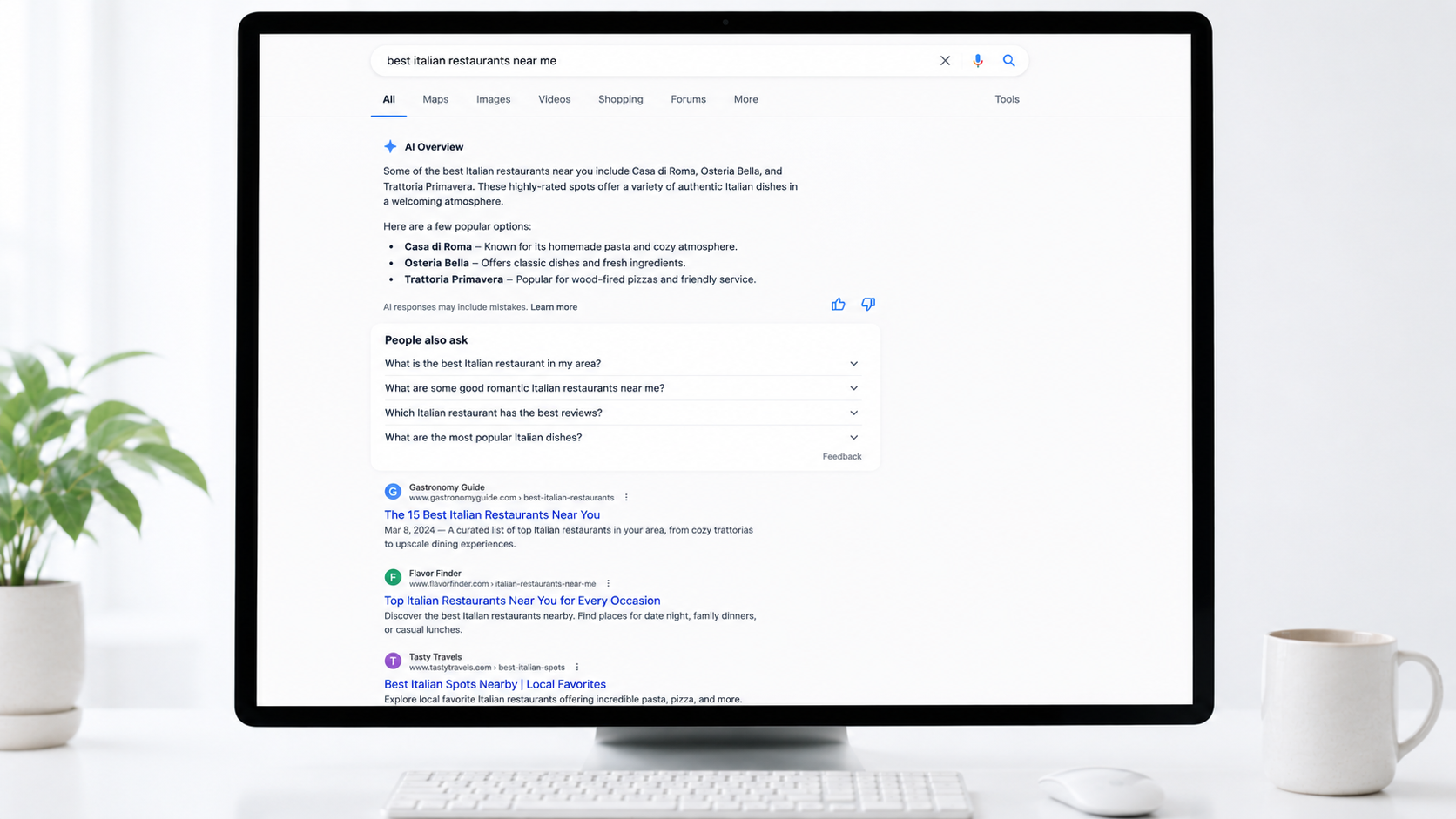
The healthcare search landscape has fundamentally changed. Fewer people are scrolling through traditional search results; instead, they are asking AI for direct recommendations. Healthcare professionals, procurement teams, and patients increasingly rely on AI-powered search engines like ChatGPT, Perplexity, Google AI Overviews, Claude, and Gemini to find information. These platforms deliver synthesized, AI-generated answers rather than a list of links—and users often don’t click beyond the summary.
For medical content marketing, this creates a critical challenge: if your content isn’t quoted or cited directly by AI, it becomes invisible. Traditional SEO still matters as a foundation for discoverability, but it’s no longer sufficient.
Generative Engine Optimization (GEO)
GEO (Generative Engine Optimization) is an approach focused on making content extractable, trustworthy, and preferred by generative AI engines. Unlike SEO, which aims for clicks through rankings, GEO is about becoming the source AI tools quote when answering audience questions. This is particularly important for YMYL content in healthcare, where trust and authority determine whether AI platforms cite your material.
GEO-ready content includes:
– Clear headings and structured data
– Natural language aligned with user query intent
– Embedded statistics and quotations from authoritative sources
– Direct citations and semantic clarity
Success now requires a blended strategy that optimizes for both traditional search and AI visibility. Track AI citation frequency, visibility percentage across platforms, and referral traffic from AI sources to measure impact and adjust strategy accordingly.
Continuous Improvement and Long-Term Value
Medical content marketing is infrastructure, not a campaign. Unlike paid advertising that stops delivering results when spending stops, medical SEO builds compounding value over time. The upfront investment in high-quality content, E-E-A-T compliance, and technical optimization continues to drive patient acquisition long after publication.
Medical content marketing requires ongoing effort. Patient needs shift, search algorithms evolve, and medical information changes frequently. Regular content updates are essential for maintaining accuracy and relevance. Track performance using Google Analytics and Google Search Console to identify what’s working and where adjustments are needed. Build high-quality backlinks consistently, and update existing content as new research or treatment protocols emerge.
Healthcare content operates under stricter standards than most industries because this content directly impacts health decisions. Every piece you publish should reflect absolute accuracy and be authored or reviewed by qualified professionals. The practices that commit to consistent execution, regular performance analysis, and adaptation to changing patient behaviors will see compounding returns over time.
Scopic Studios delivers exceptional and engaging content rooted in our expertise across marketing and creative services. Our team of talented writers and digital experts excel in transforming intricate concepts into captivating narratives tailored for diverse industries. We’re passionate about crafting content that not only resonates but also drives value across all digital platforms.