The Evolving Landscape of Marketing Data
Understanding the Three Data Types
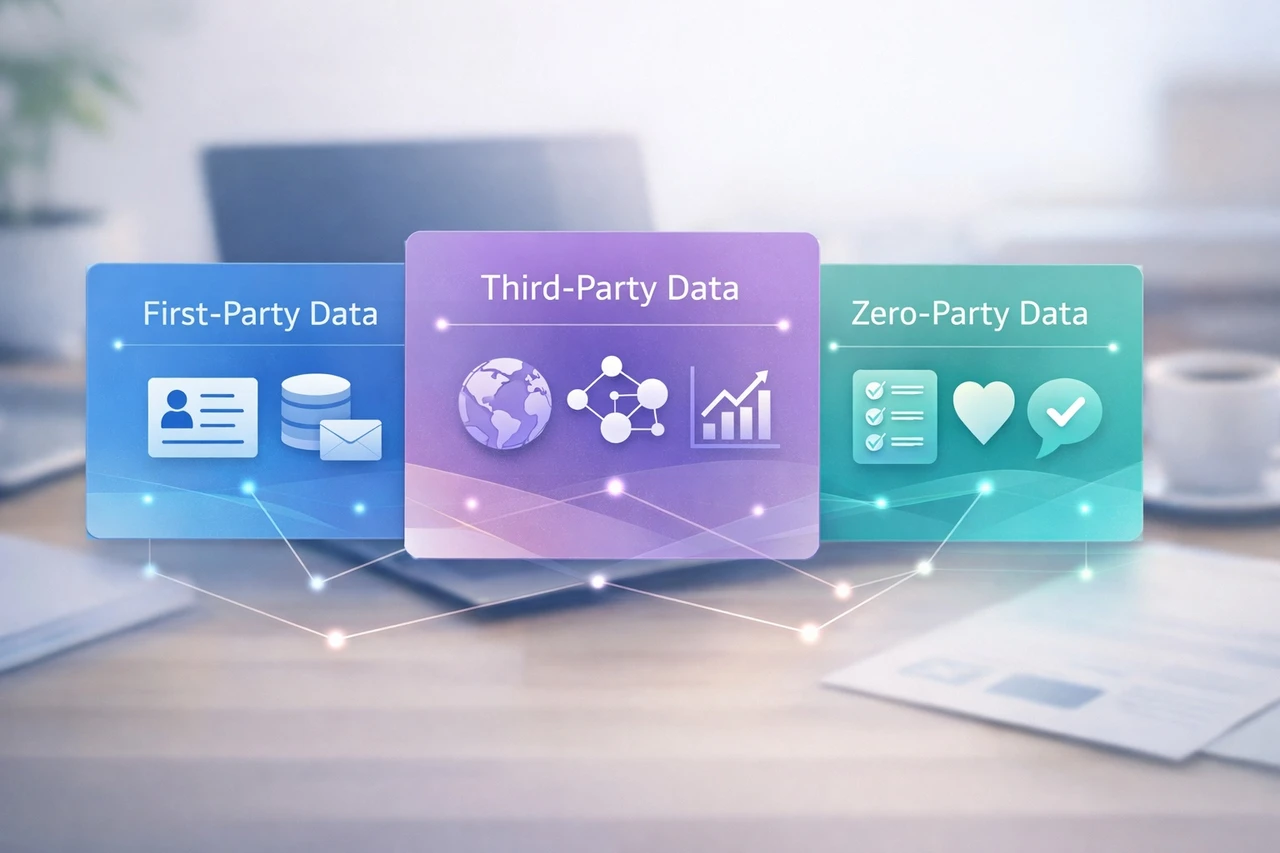
The marketing world is undergoing a fundamental shift in how brands collect and utilize customer data. Today’s landscape is defined by three distinct data categories: zero-party, first-party, and third-party data—each with unique characteristics, benefits, and limitations.
Zero-party data is willingly shared by customers in exchange for personalized experiences or tangible value. This includes information gathered through newsletter sign-ups, interactive calculators, quizzes, surveys, and feedback forms. What makes zero-party data exceptional is that it’s explicit, opt-in, and self-reported—customers intentionally provide it without reliance on third-party sources or inference.
First-party data, by contrast, is collected directly from customer interactions with your brand across owned channels like websites, mobile apps, and social media platforms. This encompasses purchase history, account creation data, website browsing behavior, email engagement, and app usage patterns. First-party data is increasingly replacing third-party cookies for user identification and targeting in programmatic advertising.
Third-party data represents the traditional approach—information aggregated indirectly from various sources through data brokers, publishers, and data management platforms. While it offers significant scale and broader audience reach, it typically lacks the specificity and transparency of first or zero-party alternatives.
Why This Shift Matters
The transition between these data types isn’t arbitrary—it’s driven by regulatory pressure and technological change. Strong regulations like GDPR and Google Chrome’s withdrawal of third-party cookie support are fundamentally reshaping marketing strategies. Privacy concerns and compliance requirements are pushing marketers toward data collection methods that prioritize transparency and consumer consent.
Zero-party data stands out as the most trustworthy option, directly enhancing personalization, customer experience, and audience segmentation. First-party data provides competitive advantage through exclusive customer insights and improved targeting. Third-party data, while offering extensive market reach, increasingly faces challenges around accuracy, relevance, and regulatory compliance.
The key difference lies in intent: zero-party data is shared for personalized benefits, while first-party data is passively gathered through interactions. Understanding these distinctions is essential for building a privacy-first marketing data strategy that balances business objectives with consumer expectations.
Key Takeaway:
The marketing data landscape is shifting from third-party cookies toward zero-party and first-party data due to privacy regulations and changing consumer expectations. Brands that prioritize transparent, consent-based data collection will gain competitive advantages in personalization and customer trust while ensuring compliance with evolving privacy laws.
Data Type Comparison
Understanding the distinctions between zero-party, first-party, and third-party data is essential for building an effective marketing data strategy. Each data type has unique characteristics, collection methods, and strategic applications. Let’s break down how these data categories compare across critical dimensions.
| Feature | Zero-Party Data | First-Party Data | Third-Party Data |
|---|---|---|---|
| Collection Method | Voluntarily shared by customers (quizzes, surveys, preference centers) | Directly collected from customer interactions (website analytics, purchases, forms, CRM) | Indirectly collected from external sources (data brokers, aggregators, ad networks) |
| Data Quality & Accuracy | Most accurate and valuable—comes directly from consumer with explicit intent | Highly accurate and relevant—reflects direct brand interactions | Often less accurate and relevant due to indirect collection and aggregation |
| Trust & Transparency | Highest trust and transparency; consumers knowingly share data | High trust and transparency; consumers aware of brand interactions | Lowest trust and transparency; consumers often unaware of collection and use |
| Relevance & Precision | Highly relevant and transparent; directly addresses customer preferences | Highly relevant; tailored to existing customer behavior | Broad in scope but may lack precision and relevance to specific needs |
| Reach & Scale | Limited reach—restricted to users who’ve interacted with the brand | Limited reach—restricted to existing customers and engaged users | Much larger reach—covers almost every internet user |
| Competitive Advantage | Strong competitive edge through personalization and advanced analytics | Competitive advantage for high-converting activities (content and ad personalization) | Less competitive edge—widely accessible to competitors |
| Privacy & Compliance | Meets GDPR requirements (freely given, specific, informed, unambiguous); gives users control | More straightforward compliance due to direct customer relationship | Complex compliance due to external entities and varying privacy practices |
| Access & Implementation | Collected directly from brand’s website or app | Collected directly from brand’s website, app, or CRM systems | Purchased from DMPs or data brokers as aggregated datasets |
| Primary Use Cases | Hyper-personalization and building strong customer relationships | Targeted marketing, audience segmentation, improving customer experience | Broad audience targeting, market research, competitive analysis |
| Key Differentiator | Proactively given by customers for personalization benefits | Collected through customer interactions and engagement | Obtained from third parties with no direct consumer relationship |
The Core Differences Explained
The fundamental distinction between these data types lies in their origin and intent. Zero-party data is willingly given by customers to brands in exchange for personalized experiences or value, making it the most intentional form of data collection. First-party data, by contrast, is gathered passively through customer interactions—every website visit, purchase, and form submission contributes to your first-party dataset.
Third-party data operates in an entirely different ecosystem. It’s collected indirectly from various sources and aggregated by data brokers, meaning consumers often have no direct relationship with or awareness of the brand collecting it. This fundamental difference in collection methodology directly impacts data quality, relevance, and compliance complexity.
Strategic Advantages & Limitations
For marketers prioritizing personalization and customer relationships, zero-party and first-party data provide superior strategic advantages. Zero-party data enables hyper-personalization while building trust, whereas first-party data excels at audience segmentation and predictive modeling. However, both face reach limitations since they’re confined to your existing audience.
Third-party data compensates with scale, offering extensive market insights and cost-effectiveness. Yet as privacy regulations evolve and third-party cookies disappear, reliance on this data type becomes increasingly risky. The shift toward privacy-first marketing makes investing in zero-party and first-party data collection strategies essential for long-term competitive advantage.
Understanding Zero-Party Data: The “Holy Grail” of Customer Insight
Zero-party data represents a fundamental shift in how brands approach customer relationships. Often described as the “Holy Grail” of marketing, this data type consists of information that customers willingly and intentionally share with your brand—typically when prompted through interactive experiences. Unlike data collected passively, zero-party data is explicit, opt-in, and self-reported, meaning customers knowingly consent to its use for personalization and experience improvement.
The term itself was coined by Forrester Research, emphasizing a customer-centric approach that aligns with tightening privacy regulations worldwide. In an era where trust is currency, zero-party data stands apart because it eliminates guesswork. You don’t need to analyze or infer customer preferences—they’re telling you directly what they want.
How Zero-Party Data Gets Collected
Gathering zero-party data happens through interactive touchpoints that provide immediate value to customers. Common collection methods include newsletter sign-ups, calculators, quizzes, surveys, polls, feedback forms, and preference centers. Customers typically expect something in return for their data—whether that’s an e-book, personalized report, or tailored content recommendations.
To implement this effectively, brands leverage customer engagement platforms integrated with customer data platforms (CDPs) or CRM systems. These tools help build comprehensive single customer views that enrich your understanding of each individual. Importantly, the collection process must comply with privacy laws like GDPR and CCPA, ensuring your data practices are both ethical and legal.
The Business Impact of Zero-Party Data
The business case for zero-party data is compelling. McKinsey research shows that fast-growing companies generate 40% more revenue from personalization—and zero-party data is the fuel that powers this personalization engine. This data enables better customer segmentation, more targeted marketing messages, and product recommendations that actually resonate.
Beyond marketing, zero-party data informs product development and innovation. By understanding what customers explicitly need and want, you can refine existing offerings or develop new solutions that genuinely solve their problems. It also facilitates data clean room collaboration, allowing you to analyze combined datasets with partners while maintaining privacy standards.
Overcoming the Trust Challenge
Despite its potential, zero-party data collection faces a significant hurdle: consumer trust. According to Salesforce research, 74% of consumers believe companies collect more data than necessary, and 61% doubt transparency in data usage. This means earning trust isn’t optional—it’s foundational.
Companies must demonstrate respect for privacy, maintain transparency about data usage, and deliver genuinely beneficial experiences before customers willingly share information. When you succeed, the payoff is substantial: high-quality data that improves conversion rates, enables precise targeting, and builds lasting customer relationships without requiring aggregation or complex analysis.
Key Takeaway:
Zero-party data is the most trustworthy and high-quality customer information available because customers intentionally share it for specific purposes. By collecting it ethically through interactive experiences and respecting privacy regulations, brands can unlock superior personalization, drive revenue growth, and build genuine customer trust in an increasingly privacy-conscious world.
First-Party Data: Your Direct Connection to Customer Behavior
What Is First-Party Data?
First-party data—also known as customer, proprietary, or owned data—represents information collected directly from people who have actively engaged with your brand. Unlike other data types, this information comes straight from your own channels: websites, mobile apps, e-commerce platforms, and social media profiles. First-party data is collected directly from customer interactions, making it the most valuable asset in your marketing arsenal. It captures both who your customers are and what genuinely interests them, providing an authentic window into their preferences and behaviors.
Sources and Examples of First-Party Data
The richness of first-party data lies in its diversity. It encompasses purchase history, account creation details, product downloads, and comprehensive engagement metrics like page views and video watches. Your customers provide this data through multiple touchpoints: when they complete transactions, submit personal information, interact with your content, or engage with your email campaigns. Website analytics, purchase records, mobile app usage, and social media engagement all contribute to a complete customer profile. This multi-channel approach reveals crucial behavioral patterns—from click patterns and time spent on pages to cart abandonment signals—that inform smarter marketing decisions.
Leveraging First-Party Data for Business Growth
The strategic value of first-party data extends across your entire marketing ecosystem. It powers more accurate audience segmentation, enabling you to personalize messages that actually resonate with specific customer groups. First-party data is instrumental in evaluating marketing campaign effectiveness and measuring ROI with precision. In programmatic advertising, it fuels ad targeting, attribution analysis, and conversion optimization. Retargeting campaigns become significantly more effective when based on actual customer behavior, and companies can generate universal IDs from email addresses and CRM data to identify individuals across the web—effectively replacing third-party cookies.
Data Quality and Privacy Advantages
What sets first-party data apart is its inherent accuracy and reliability. Because you collect it directly from your customers through your own channels, quality control is straightforward. Privacy and compliance considerations are also more manageable with first-party data, thanks to the direct customer relationship and explicit consent mechanisms. However, the real challenge emerges when customer data lives in disconnected systems. A central platform like a Customer Data Platform consolidates and standardizes this information, ensuring consistent access across your organization and unlocking its full potential for personalization and revenue growth.
Key Takeaway:
First-party data is your most valuable marketing asset because it’s collected directly from customers through your own channels, ensuring high accuracy and enabling precise targeting, personalization, and ROI measurement—but realizing its full potential requires consolidating data across systems into a unified platform.
The Role and Decline of Third-Party Data
Understanding Third-Party Data
Third-party data has long been the backbone of digital marketing, collected indirectly from consumers by companies with no direct relationship to the end user. This data is typically aggregated across multiple websites and apps, then bundled into audience segments and sold for advertising or analytics purposes. Third-party data is collected through various channels—including third-party cookies, data brokers, ad networks, and other tracking technologies—and often requires stitching together multiple datasets to become actionable.
Examples of third-party data are diverse and abundant: demographic information purchased from data aggregation companies, interests and behavior data from data brokers, purchase intent data from market research firms, social media sentiment data, and browsing history tracked across the open web. Data brokers aggregate these datasets into audience segments based on interests, purchase preferences, income groups, and demographics, often enriching them with offline data sources. The primary advantage of third-party data has always been scale—enabling marketing campaigns to reach exponentially larger audiences than first- or second-party data sets combined, sometimes many times bigger.
The Collapse of Third-Party Data Infrastructure
For years, third-party data powered programmatic advertising, enabling cross-site retargeting and large-scale audience expansion. However, this model is rapidly collapsing. Safari and Firefox blocked third-party cookies years ago through Intelligent Tracking Prevention (ITP) and Enhanced Tracking Protection (ETP), and Google Chrome began its phased deprecation in 2024, expanding it further in 2025 under the Privacy Sandbox initiative.
The decline stems from multiple factors. Third-party data suffers from low relevance and transparency—the direct connection between advertiser and user is lost, and data brokers often provide minimal insight into how audience segments are created. Data accuracy is questionable due to heavy reliance on extrapolation and lookalike modeling, resulting in outdated or inaccurate information. Additionally, since third-party data is widely accessible, competitors have access to the same datasets, eliminating any competitive edge.
Compliance and Trust Challenges
Beyond technical obstacles, third-party data faces mounting regulatory and ethical pressures. Companies must ensure third-party data adheres to privacy laws or risk significant penalties and loss of consumer trust. The most problematic issue is consent—users often don’t know their data is collected or sold, creating compliance risks. Reliance on third-party data introduces substantial non-compliance risks, especially when data brokers cannot prove valid user consent, and enforcement is rising with fines against major platforms.
Consumer sentiment reinforces this shift: 76% of respondents in a Cisco survey would not buy from a company they don’t trust with their data. As privacy awareness grows and more data privacy laws take effect, tracking methods and data access will continue to change, making third-party data an increasingly unreliable foundation for modern marketing strategies.
Key Takeaway:
Third-party data, once the engine of digital marketing, is technically obsolete and legally risky. Marketers must transition to first-party and zero-party data strategies to build sustainable, compliant, and trustworthy customer relationships in an increasingly privacy-conscious landscape.
The Importance of a Privacy-First Marketing Data Strategy
Why Privacy Has Become Non-Negotiable
The landscape of data collection has fundamentally shifted. Privacy regulations are tightening globally—from GDPR to CCPA to Quebec’s Law 25—while browsers like Chrome, Safari, and Firefox are actively limiting cross-site tracking capabilities. More importantly, consumer expectations have evolved dramatically. According to Deloitte’s 2025 Connected Consumer Survey, the percentage of consumers worried about data privacy and security has jumped from 60% to 70%, signaling a seismic shift in how people view their personal information.
This isn’t just a compliance issue—it’s a business imperative. A staggering 76% of consumers surveyed by Cisco wouldn’t purchase from companies they don’t trust with their data, making trust a genuine competitive advantage. The old playbook of relying on third-party cookies and opaque data collection practices is no longer viable. Companies that continue down this path face not only regulatory penalties but also erosion of customer loyalty.
Building Trust Through Transparency and Consent
The path forward is clear: embrace a privacy-first approach centered on first-party and zero-party data. These data types are collected directly from customers with valid consent and transparent value exchanges, naturally aligning with regulatory requirements and consumer expectations.
Zero-party data is particularly powerful because it’s explicitly consented to by consumers, directly addressing privacy concerns while enhancing trust. First-party data, while requiring consent in most jurisdictions, remains highly reliable and compliant when collected responsibly. The contrast with third-party data is stark—it suffers from unclear consent pathways and is facing technical and legal decline as browsers phase out cookie support.
Brands that prioritize privacy choices and communicate transparently build substantially stronger customer relationships. Yet here’s the challenge: only 20% of consumers say tech providers are “very clear” about what data they collect or how it’s used. This gap represents both a risk and an opportunity for forward-thinking marketers.
The Strategic Advantage of Consented Data
High-quality, consented first-party and zero-party data provides cleaner, more actionable signals that competitors struggle to replicate. Rather than viewing privacy compliance as a burden, leading organizations recognize it as a revenue architecture—consented first-party data is becoming the last reliable signal for performance marketing.
Implementing a Preference Management Platform (PMP) unifies consent and preferences across channels, enabling clear value exchanges, regulatory compliance, data activation, and richer customer profiles. This infrastructure transforms privacy from a constraint into a strategic asset.
Key Takeaway:
Privacy-first data strategies built on first-party and zero-party data aren’t just regulatory necessities—they’re competitive advantages that build customer trust, ensure compliance, and deliver higher-quality marketing signals than legacy third-party approaches.
Building a Balanced Customer Data Strategy for B2B
The Foundation: Why Data Integration Matters
In today’s B2B landscape, a one-dimensional approach to customer data simply won’t cut it. Corporations that leverage multiple data types can significantly enhance their marketing and sales strategies. The key isn’t choosing one data source—it’s orchestrating them strategically. First-party data provides deep, reliable customer insights collected directly from your interactions. Second-party data from trusted partners scales your reach and sharpens targeting. Third-party data broadens your market understanding. And zero-party data, intentionally shared by customers themselves, unlocks unparalleled personalization opportunities. When combined thoughtfully, these data streams create a comprehensive view of your customers that drives informed decision-making and sustainable growth.
Prioritizing First and Zero-Party Data in a Privacy-First World
The digital landscape is shifting dramatically. With regulations like GDPR and CCPA tightening, plus the move toward a cookieless future, first-party and zero-party data have become essential. First-party data remains the “gold standard” for personalization—it’s high-quality, accurate, and directly tied to your customer interactions. Zero-party data takes this further: it’s information customers willingly share with you, making it both compliant and incredibly valuable. Smart brands are incentivizing zero-party data collection through rewards like discounts or early access, building trust while gathering genuine insights into preferences and behaviors. This approach isn’t just privacy-compliant; it’s also more effective for incrementality testing and understanding the true impact of your marketing initiatives.
Building Your Integrated Data Strategy
Creating a balanced customer data strategy requires more than just collecting information—it demands intentional architecture. Consolidate all data types into a central platform for validation and standardization, ensuring data quality across sources. Customer Data Platforms (CDPs) are critical here, with 58% of marketers relying on them to extract real value from their customer data. Continuously test and measure how different data sources impact your results. While third-party data can help with broad audience reach, minimize your reliance on it due to accuracy concerns. Instead, focus on integrating zero, first, and second-party data assets to inform strategies grounded in rich customer intelligence. This balanced approach ensures compliance with privacy regulations, builds stronger customer relationships, and ultimately delivers more relevant experiences that drive B2B growth.
Key Takeaway:
A winning B2B data strategy combines first-party, second-party, and zero-party data while minimizing third-party reliance—prioritizing accuracy, compliance, and genuine customer insights over breadth alone.
The Future of Marketing: Embracing Zero- and First-Party Data
Why Zero- and First-Party Data Matter Now
The marketing landscape is undergoing a fundamental shift. As privacy concerns intensify and regulations like GDPR and CCPA reshape how brands collect customer information, the future of marketing increasingly depends on zero- and first-party data strategies. This transition isn’t just about compliance—it’s about building authentic relationships with customers who are growing weary of invasive tracking practices.
Zero-party data, a term coined by Forrester in 2020, represents information that customers willingly and intentionally share with brands. Think survey responses, preference declarations, purchase intent signals, and demographic details provided directly by the consumer. This stands in stark contrast to the “creepy factor” associated with third-party data collection. Meanwhile, first-party data—collected directly from your own channels like websites, apps, and CRMs—remains the most valuable resource for personalization, with 78% of businesses recognizing its importance.
The distinction matters because both data types are consent-based and trust-building. When customers explicitly share their preferences through zero-party data collection, you gain unbiased, accurate insights into what they actually want. Combined with first-party behavioral data, you create a comprehensive customer profile that enables hyper-personalized marketing without the privacy violations that plague traditional approaches.
Practical Collection Methods and Real-World Results
Successful brands aren’t just talking about this shift—they’re implementing it. Zero-party data collection methods include forms, chatbots, surveys, self-segmentation tools, and interactive quizzes. The key is offering genuine value in exchange. Brands that integrate zero-party data into a value-exchange model—rewarding customers with perks like ad-free experiences, exclusive content, or app benefits—see remarkable adoption rates.
Real-world examples prove the impact. The New York Times grew digital advertising revenue by $100 million over five years and significantly increased digital subscriptions through registration walls. Kia and Hyundai, after shifting to first-party data strategies, achieved a 4x higher conversion rate, a 268% increase in click-through rate, and 55% new-user engagement. These aren’t anomalies—they’re proof that transparent, consent-based data collection drives business results.
Research shows that 48% of customers are comfortable sharing personal data when they understand the benefit. By being transparent about your data collection practices and following privacy regulations, you’re not just staying compliant—you’re building customer trust that translates to loyalty and revenue.
Key Takeaway:
The future belongs to brands that embrace zero- and first-party data strategies. By collecting customer data transparently through value exchanges and combining it with first-party behavioral insights, you can deliver personalized experiences that respect privacy while driving measurable business results.
Conclusion: A Holistic Approach to Modern Marketing Data
The marketing landscape is undergoing a fundamental transformation. As third-party cookies fade away, brands can no longer rely on outdated data collection methods. Instead, successful marketers are embracing a more sophisticated, multi-layered approach that combines zero-party, first-party, and strategically-selected third-party data sources.
The key insight? Each data type serves a distinct purpose when deployed correctly. Rather than viewing these categories as competing alternatives, forward-thinking companies are becoming increasingly intentional about which data they collect, how they use it, and the competitive advantages it provides. This strategic mindset shift is essential for maintaining marketing effectiveness in an era where privacy regulations continue to tighten and consumer expectations evolve rapidly.
Creating Trust Through Compliance and Best Practices
Modern marketers must evolve their strategies to ensure they maintain consistent access to quality data while prioritizing privacy compliance and earning customer trust. This isn’t just about regulatory adherence—it’s about building sustainable competitive advantages.
Implementing best practices is non-negotiable. Organizations should deploy consent management platforms, establish robust data security protocols, collect only essential information, verify vendor compliance, and conduct regular privacy audits. These measures protect both your customers and your brand reputation while ensuring your data strategy remains compliant as technologies and regulations evolve.
The Path Forward: Balanced Data Integration
The most effective modern marketing strategy leverages a combination of first-party, second-party, and zero-party data to construct a comprehensive customer view. This balanced approach enables superior personalization, enhanced customer experiences, and measurable improvements in marketing outcomes—all while respecting privacy in an increasingly privacy-conscious world.
Zero-party data has emerged as particularly valuable, allowing brands to build dependable, individualized customer relationships grounded in transparency and consent. When combined with first-party data from direct interactions and second-party partnerships, this creates a resilient foundation that doesn’t depend on depreciating third-party cookies.
The bottom line: success in modern marketing requires strategic flexibility, compliance excellence, and a genuine commitment to customer privacy. Organizations that master this integrated approach will thrive, while those clinging to outdated methods will struggle. Ready to optimize your data strategy? Explore how to build a marketing system for consistent lead generation that leverages modern data practices effectively.
Scopic Studios delivers exceptional and engaging content rooted in our expertise across marketing and creative services. Our team of talented writers and digital experts excel in transforming intricate concepts into captivating narratives tailored for diverse industries. We’re passionate about crafting content that not only resonates but also drives value across all digital platforms.